The Beatles Rooftop Concert
Every amp, instrument, and microphone from the most famous last concert in history — identified.
The scene
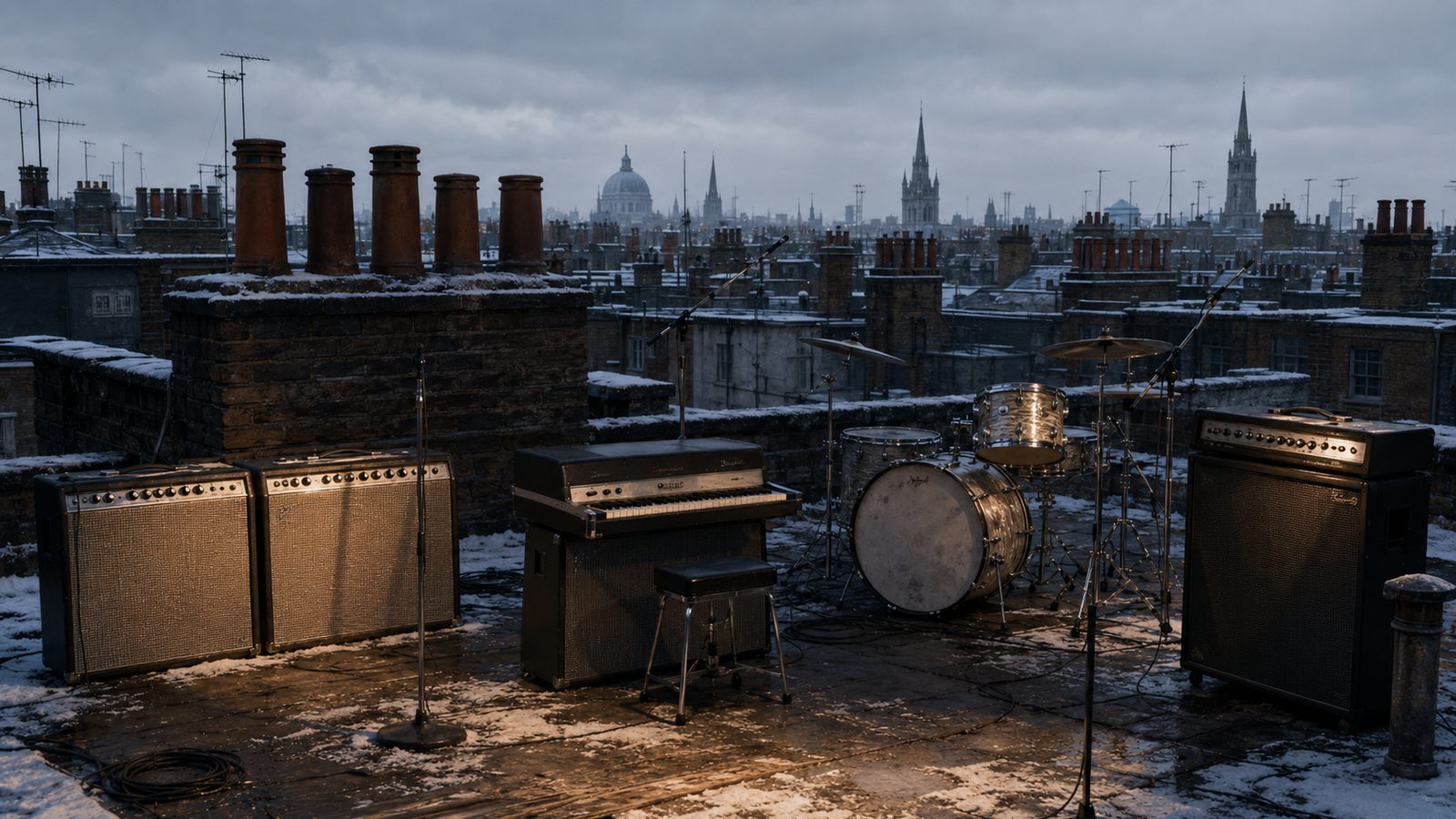
January 30, 1969. The rooftop of Apple Corps, 3 Savile Row, London. It's cold — winter cold, the kind that makes your fingers stiff on guitar strings. The Beatles set up their gear on the roof, plug in, and play live together for the last time.
The concert lasted 42 minutes before the Metropolitan Police shut it down. It was unannounced — people on the street below stopped and stared, climbed onto adjacent rooftops, pressed against windows. The band played "Get Back," "Don't Let Me Down," "I've Got a Feeling," "One After 909," and "Dig a Pony." The wind whipped. The amps buzzed. It was glorious and freezing and sad and perfect.
Peter Jackson's 2021 documentary Get Back gave the world restored, high-resolution footage of the concert, and with it, the clearest look ever at exactly what gear was on that rooftop.
The gear
The amplifiers are definitively identified: John Lennon and George Harrison both played through Fender Twin Reverb Silverface amps — the 1968 model with the silver control panel that replaced the earlier "blackface" design. Harrison also used a Leslie 147RV rotating speaker cabinet for his swirling guitar tone on several songs.
Paul McCartney played his legendary 1963 Höfner 500/1 Violin Bass through a Fender Bassman Silverface amplifier. The Höfner is arguably the most famous bass guitar in history — McCartney bought it in Hamburg in 1961 because it was symmetrical and he was left-handed.
Billy Preston — the fifth Beatle for the rooftop show — played a Fender Rhodes Suitcase 73, the electric piano with its own built-in amplifier and speakers housed in the suitcase-style lower cabinet.
Ringo Starr sat behind his 1967 Ludwig Hollywood drum kit, fitted with his preferred 1963 Jazz Festival snare drum. The kit featured the maple shells and chrome hardware that Ludwig was known for.
The vocal microphones were AKG C30As — shotgun condensers chosen specifically because their elongated body shape photographed well on camera. Sound and vision, even at the end.
"I'd like to say thank you on behalf of the group and ourselves and I hope we passed the audition."
Why it matters
The rooftop concert is the most documented gear setup in rock history, and Peter Jackson's restoration made every serial number and cable visible. For gear obsessives, the Get Back documentary was a treasure map.
The Fender Twin Reverb Silverface is one of the most beloved guitar amplifiers ever made. Clean, loud, and chimey, it defined the sound of late-'60s and '70s rock, country, and jazz. Vintage silverface Twins are workhorses on the used market — reliable, repairable, and they sound as good today as they did on that London rooftop.
McCartney's Höfner 500/1 is in a class by itself. It's the most famous bass guitar on Earth, and the "Beatles bass" cachet makes even modern reissues instantly recognizable. Vintage early-'60s Höfners are museum pieces; the reissue market is where most players land.
The Fender Rhodes Suitcase 73 has become one of the most sought-after vintage keyboards. Its warm, bell-like electric piano tone is all over classic recordings from Stevie Wonder to Herbie Hancock, and the rooftop concert footage showed it performing flawlessly in freezing conditions — a testament to its legendary durability.
Affiliate disclosure: We may earn a commission from qualifying purchases made through links on this page, at no extra cost to you.
Fender Twin Reverb Silverface
The 1968 silverface Twin Reverb — 85 watts of clean headroom, two 12-inch speakers, spring reverb, and tremolo. Both Lennon and Harrison played through matching units on the rooftop.
- Era
- 1968–1982
- Type
- Guitar combo amplifier
- eBay market
- $800–$2,000
- Condition note
- Robust — many still gigging
Höfner 500/1 Violin Bass
McCartney's signature instrument since 1961. Semi-hollow body, distinctive violin shape, short scale length. The bass that played "Come Together," "Something," and every song on that rooftop.
- Era
- 1956–present
- Type
- Semi-hollow electric bass
- eBay market
- $3,000–$10,000+ (vintage)
- Modern reissue
- $500–$3,000
Fender Rhodes Suitcase 73
73-key electric piano with built-in amplifier and speakers in the suitcase-style lower cabinet. The warm, bell-like tone that defined electric piano for a generation.
- Era
- 1965–1984
- Type
- Electric piano
- eBay market
- $1,500–$4,000
- Condition note
- Tines and hammers may need service
Fender '68 Custom Twin Reverb
Fender's modern reissue of the silverface Twin. Same clean headroom, same spring reverb, same legendary tone — with modern reliability. The closest you can get to the rooftop sound without going vintage.
View on Amazon →Höfner Ignition Violin Bass
The affordable entry into the Höfner legacy. Same iconic shape, same short scale, same thumpy tone. Not a vintage instrument, but it looks and feels like the most famous bass in rock.
View on Amazon →Nord Electro 6D
The modern standard for electric piano sounds. Its Rhodes emulation is spookily accurate. Billy Preston would have appreciated the portability — no suitcase required.
View on Amazon →