The Edison Phonograph in BioShock Infinite
In a city that floats above the clouds, the music plays on machines from 1910. Four of the cylinder recordings in the game are traced to real Edison pressings.
The Scene
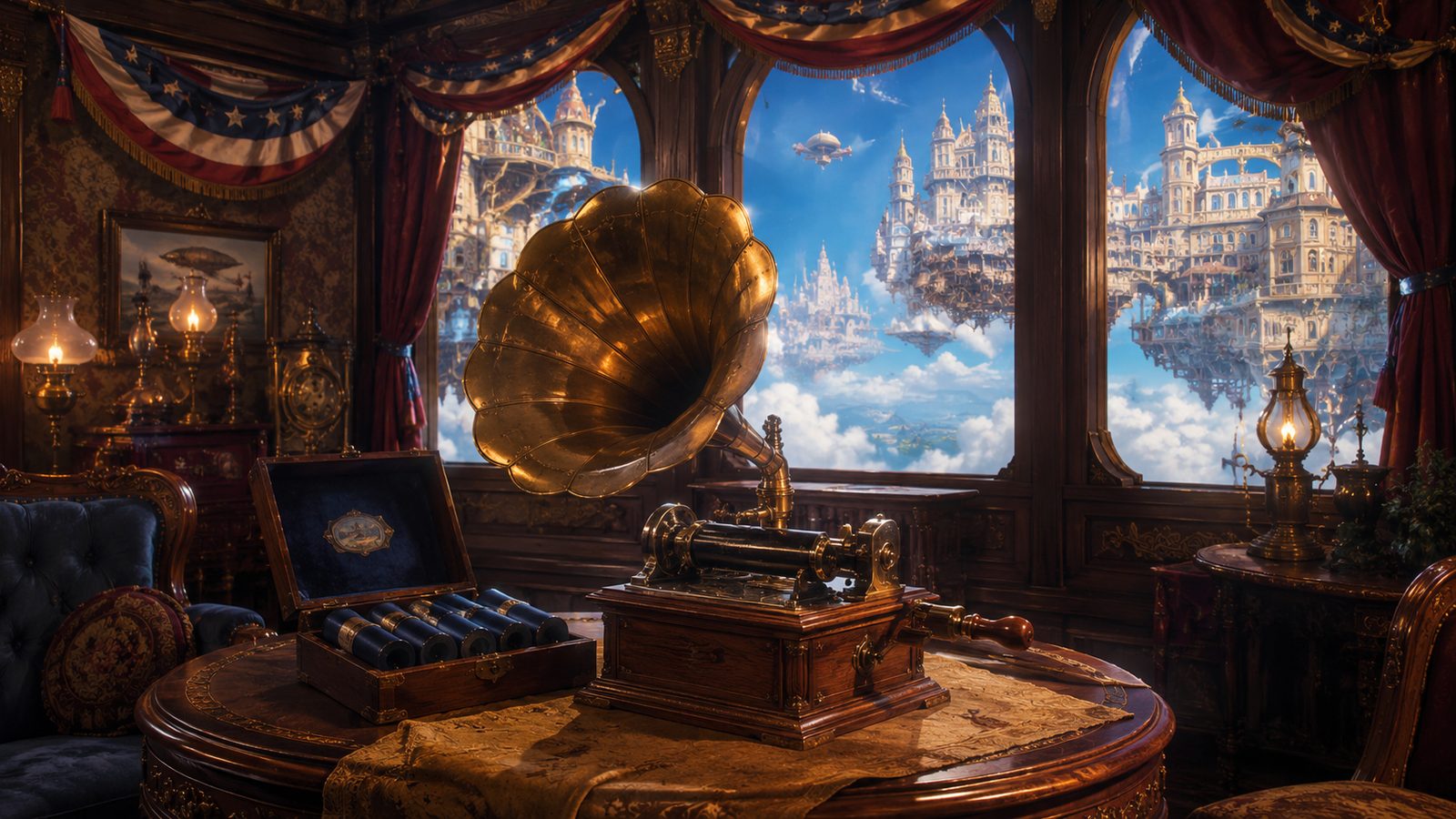
BioShock Infinite takes place in Columbia — a city suspended in the sky above America in 1912, built on a foundation of American exceptionalism, religious fervor, and turn-of-the-century technological hubris. The city's interiors are opulent: velvet curtains, gaslit parlors, patriotic bunting, and gilded furniture. And in those parlors, on polished wooden tables, sit Edison cylinder phonographs — brass-horned, hand-cranked machines playing music from an era when recorded sound was still miraculous.
The phonographs in Columbia aren't just environmental set dressing. Irrational Games embedded real musical history into the game. Four songs in BioShock Infinite were originally issued on actual Edison cylinders — recordings by Polk Miller's Old South Quartette, Billy Murray, and other early 20th-century artists. The Rapture Records Tumblr archive (a community project spanning both BioShock and Infinite) documented the matches, tracing in-game audio to specific real Edison Blue Amberol pressings.
Then there are the anachronisms. Columbia's barbershop quartet sings a Beach Boys song. A ragtime band plays Cyndi Lauper. These temporal ruptures — explained by the game's multiverse narrative — are delivered through the same Edison-era playback devices, creating a surreal dissonance between the ancient hardware and the impossible music coming out of it.
The Gear
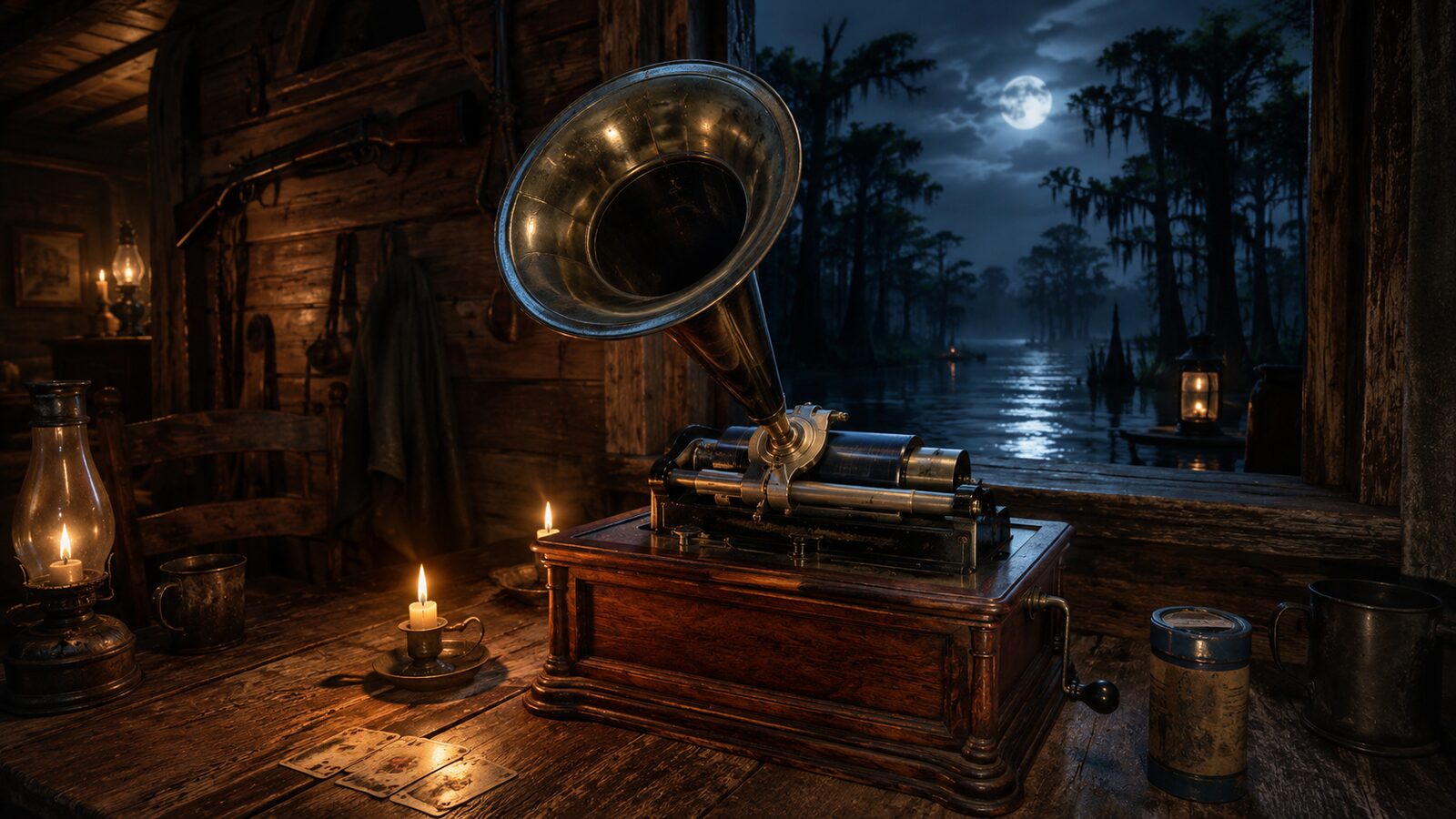
The Edison cylinder phonograph in its various forms — the Standard, the Home, the Gem, the Triumph — was the dominant recorded-music technology from the 1890s through approximately 1912. Edison's system used wax (later celluloid) cylinders approximately 4 inches long, played by a stylus tracing a groove around the cylinder's surface. The sound was amplified mechanically through a brass or nickel-plated horn.
The specific cylinders referenced in BioShock Infinite are Edison Blue Amberol records — a celluloid-based format introduced in 1912 that offered four minutes of playing time (double the original two-minute wax cylinders) and significantly improved durability. The Blue Amberol was Edison's answer to the growing dominance of disc records, and it represented the peak of cylinder technology before the format's decline.
Columbia's phonographs are historically accurate for 1912: Edison cylinders and disc gramophones coexisted in that period, and a wealthy American household would have owned exactly the kind of brass-horned tabletop phonograph seen throughout the game. The only anachronism is the music itself — and that's the point.
The mind of the subject will desperately struggle to create memories where none exist.
— R. Lutece, BioShock Infinite
Why It Matters
BioShock Infinite reached a massive audience — over 11 million copies sold — and placed Edison-era audio technology in front of players for dozens of hours. The phonographs aren't hidden in corners; they're prominently displayed in Columbia's most beautifully rendered interiors, their brass horns catching the light, their cylinders rotating visibly. For many players, this was their first encounter with pre-vinyl recorded music technology.
On the collector market, Edison cylinder phonographs range from $200–$1,500 on eBay, with common Edison Standard models at the lower end and rare or pristine cabinet Amberola models at the top. Individual Blue Amberol cylinders sell for $15–$80 each — affordable enough to start a collection, especially for the specific recordings featured in the game.
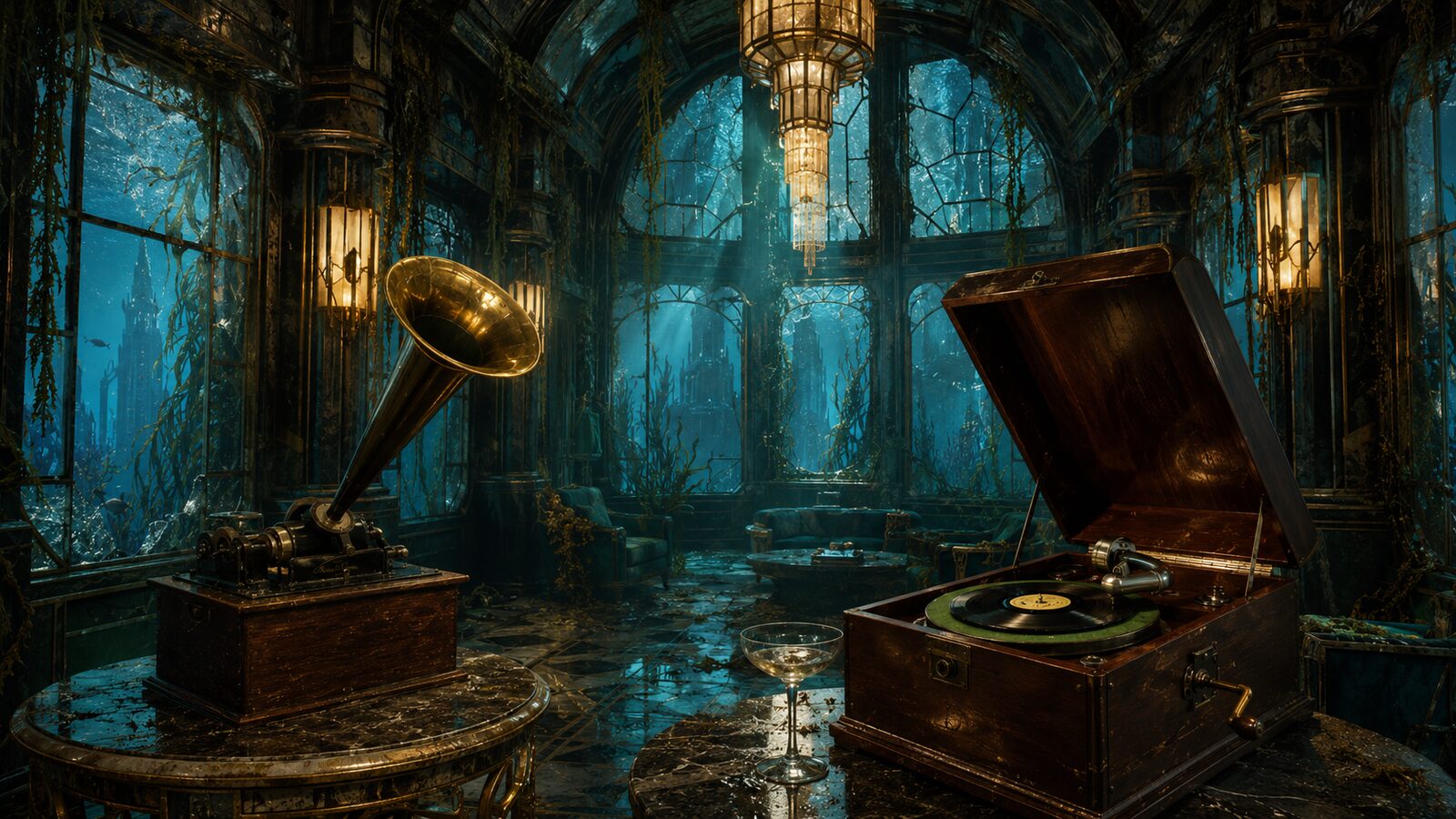
The connection to the original BioShock — which features similar phonographs in Rapture's underwater art deco setting — means the franchise has done more to popularize antique audio technology among gamers than any other media property. Between Rapture's Victrolas and Columbia's Edison phonographs, the BioShock series is essentially a two-game advertisement for the beauty of pre-electric sound reproduction.
The Gear Cards
Edison Cylinder Phonograph
Brass-horned cylinder phonograph from the early 1900s. The model type seen throughout Columbia's parlors. Plays wax and celluloid cylinders.
Edison Blue Amberol Cylinders
The specific four-minute celluloid cylinder format featured in BioShock Infinite. Real recordings from the early 1900s.
Modern Alternatives
Crosley Patriarch Bluetooth Speaker
~$100Vintage gramophone-styled Bluetooth speaker with brass horn. The Columbia aesthetic without the century-old maintenance.
View on Amazon →BioShock Infinite Complete Edition
~$20The full game plus Burial at Sea DLC. Columbia, Elizabeth, and the phonographs — in all their floating-city glory.
View on Amazon →Edison Cylinder Recordings (Various)
~$15–$50Original early-1900s cylinders. Playable on any standard cylinder phonograph. History you can hold — and hear.
View on Amazon →Affiliate Disclosure: Stereos For Sale earns commissions from purchases made through our Amazon and eBay links. This helps keep the site running. Every product we recommend is something we'd genuinely want to own. Learn more.