The Edison Phonograph in BioShock
In an underwater city built on Ayn Rand and art deco, the music plays on real machines. The phonographs of Rapture are all based on actual antiques.
The Scene
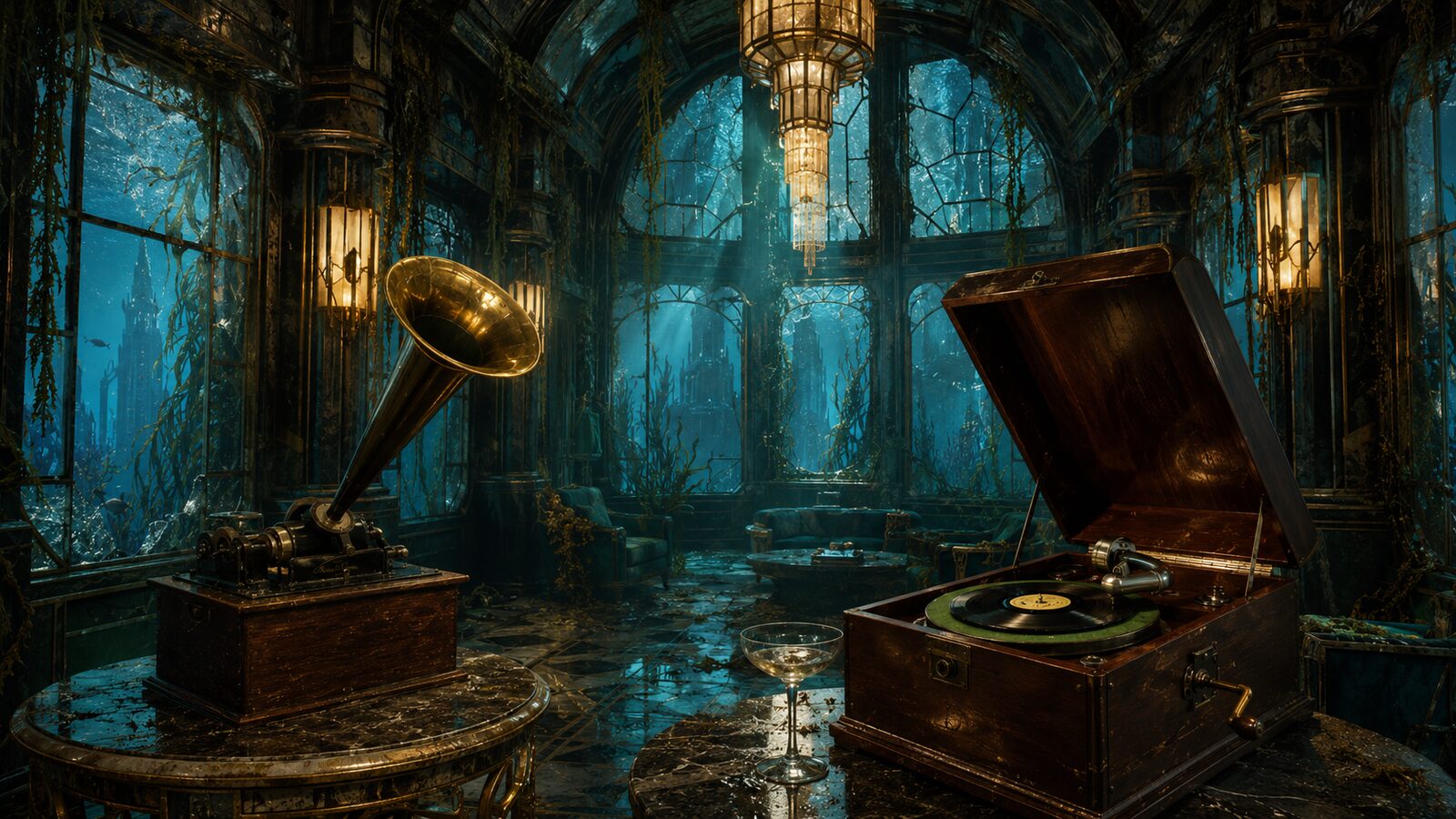
The city of Rapture — BioShock's underwater objectivist dystopia — is one of gaming's most fully realized environments. Every detail of its 1940s art deco aesthetic was designed to evoke a specific era of American luxury: the kind of world where people dressed for dinner, mixed martinis by hand, and listened to music on machines with brass horns and hand-cranked mechanisms.
Throughout Rapture, players encounter Edison cylinder phonographs and Victor Victrola-style disc gramophones playing period-appropriate music — 1930s and 40s jazz, big band, and popular standards. The in-game recordings use the fictional "Rapture Records" label, but the physical playback devices are modeled on real antiques. The cylinder phonographs are clearly based on Edison Standard and Edison Home models from the early 1900s, while the disc players reference Victor Victrola III and IV tabletop models.
In BioShock Infinite (2013), the connection becomes even more explicit. The game features four specific real Edison Blue Amberol cylinders — actual recordings from the early 20th century reproduced as in-game objects. Players who recognize the recordings can trace them to real artists: Polk Miller's Old South Quartette, Billy Murray, and others.
The Gear
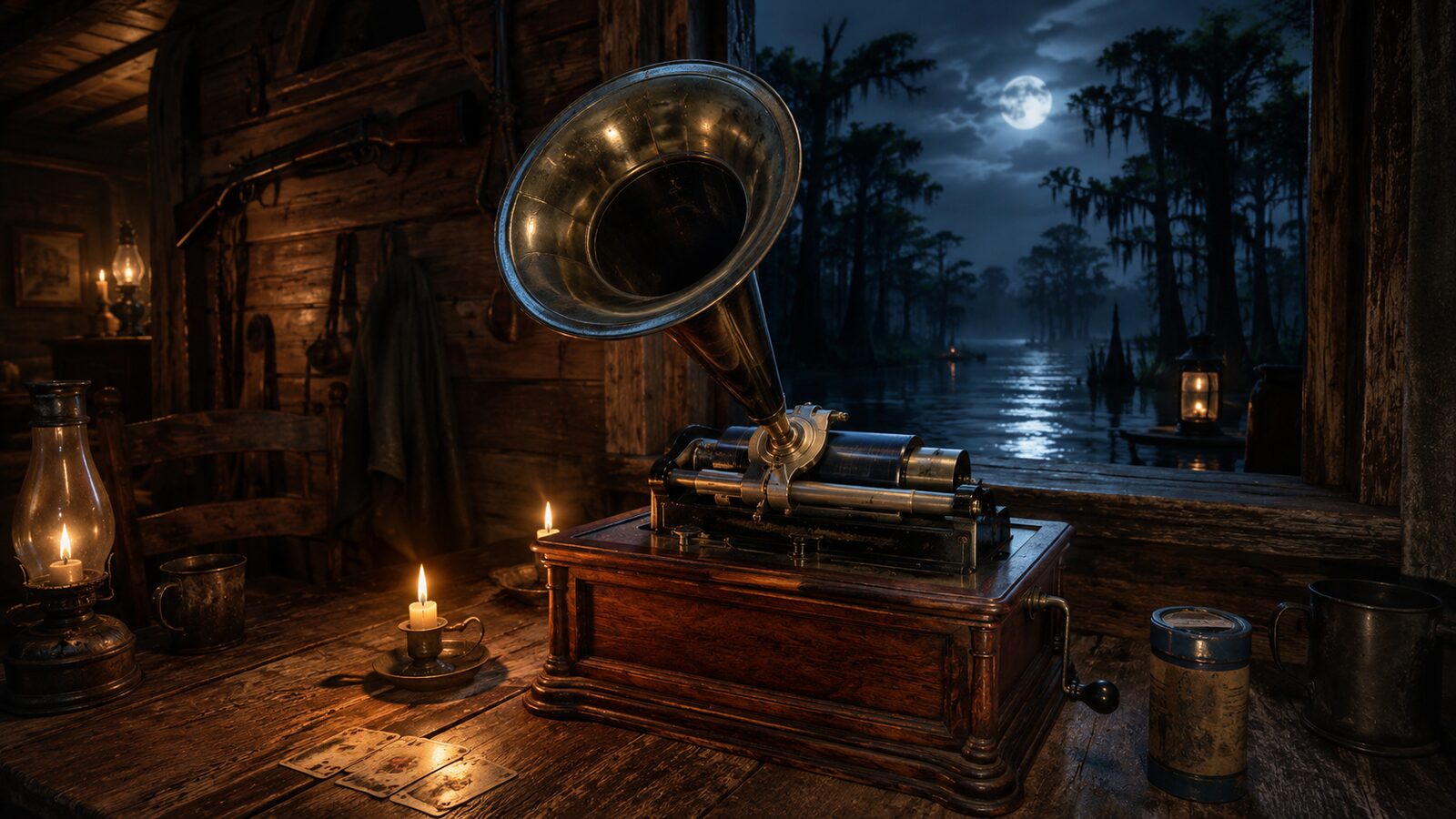
The Edison cylinder phonograph was the first commercially successful sound playback device, invented by Thomas Edison in 1877 and refined through the early 1900s. It plays wax cylinders — typically two to four minutes of audio — using a stylus-and-horn mechanism. The sound is unmistakable: warm, resonant, slightly distant, with the crackling patina of a century-old recording medium.
The Victor Victrola was the dominant disc-playing gramophone of the early 20th century. Unlike Edison's cylinder system, the Victrola played flat shellac discs — the precursors to vinyl records. Victor's tabletop models (the Victrola III and IV) are the closest real-world matches to the gramophones seen in Rapture. They feature hand-cranked spring motors, acoustic horns (sometimes internal), and reproduce 78 RPM recordings with surprising fidelity.
Both technologies coexisted in the early 1900s before Edison's cylinder format was ultimately eclipsed by the disc. BioShock's Rapture, frozen in time at the height of art deco culture, preserves both formats as functional listening devices — a historically accurate detail that most players never notice.
The music of Rapture is its memory. The phonographs still play because no one told them the city was dead.— Environmental storytelling observation, BioShock
Why It Matters
BioShock's use of real phonograph designs introduced millions of gamers to antique audio technology. The subreddit conversations, wiki entries, and Tumblr archives (particularly rapturerecords.tumblr.com) that sprang up around identifying the in-game machines and their real-world counterparts demonstrate genuine collector interest driven by the game.
On the collector market, Edison cylinder phonographs are available on eBay in the $200–$1,500 range, with Edison Standard models at the lower end and rare or pristine Amberola cabinet models at the top. Victor Victrola tabletop gramophones sell for $120–$600 depending on model and condition. Individual Edison Blue Amberol cylinders — the same type featured in BioShock Infinite — sell for $15–$80 each.
For anyone who wants the antique phonograph aesthetic without the maintenance, modern Bluetooth speakers styled after vintage gramophones are available from multiple manufacturers. But for the full Rapture experience — the hand-crank, the brass horn, the crackle of a century-old recording — nothing substitutes for the real thing.
The Gear Cards
Edison Standard Phonograph
Cylinder-playing phonograph from the early 1900s. The model most closely matching BioShock's in-game devices. Plays wax cylinders with a brass horn.
Victor Victrola Tabletop Gramophone
Disc-playing gramophone that dominated early 20th century music. The Victrola III and IV models match the in-game gramophones in Rapture.
Edison Blue Amberol Cylinders
The specific cylinder format featured in BioShock Infinite. Four-minute recordings on celluloid material. Individual cylinders are affordable and widely available.
Modern Alternatives
Crosley Patriarch Bluetooth Speaker
Vintage gramophone-styled Bluetooth speaker with brass horn. The Rapture aesthetic without the antique maintenance.
View on AmazonVictrola Nostalgic Turntable
Budget turntable with vintage styling. Plays vinyl records with built-in speakers. A gateway to physical media.
View on AmazonBioShock Collection (PS4/Xbox/PC)
All three BioShock games remastered. Experience the phonographs of Rapture in high definition.
View on Amazon