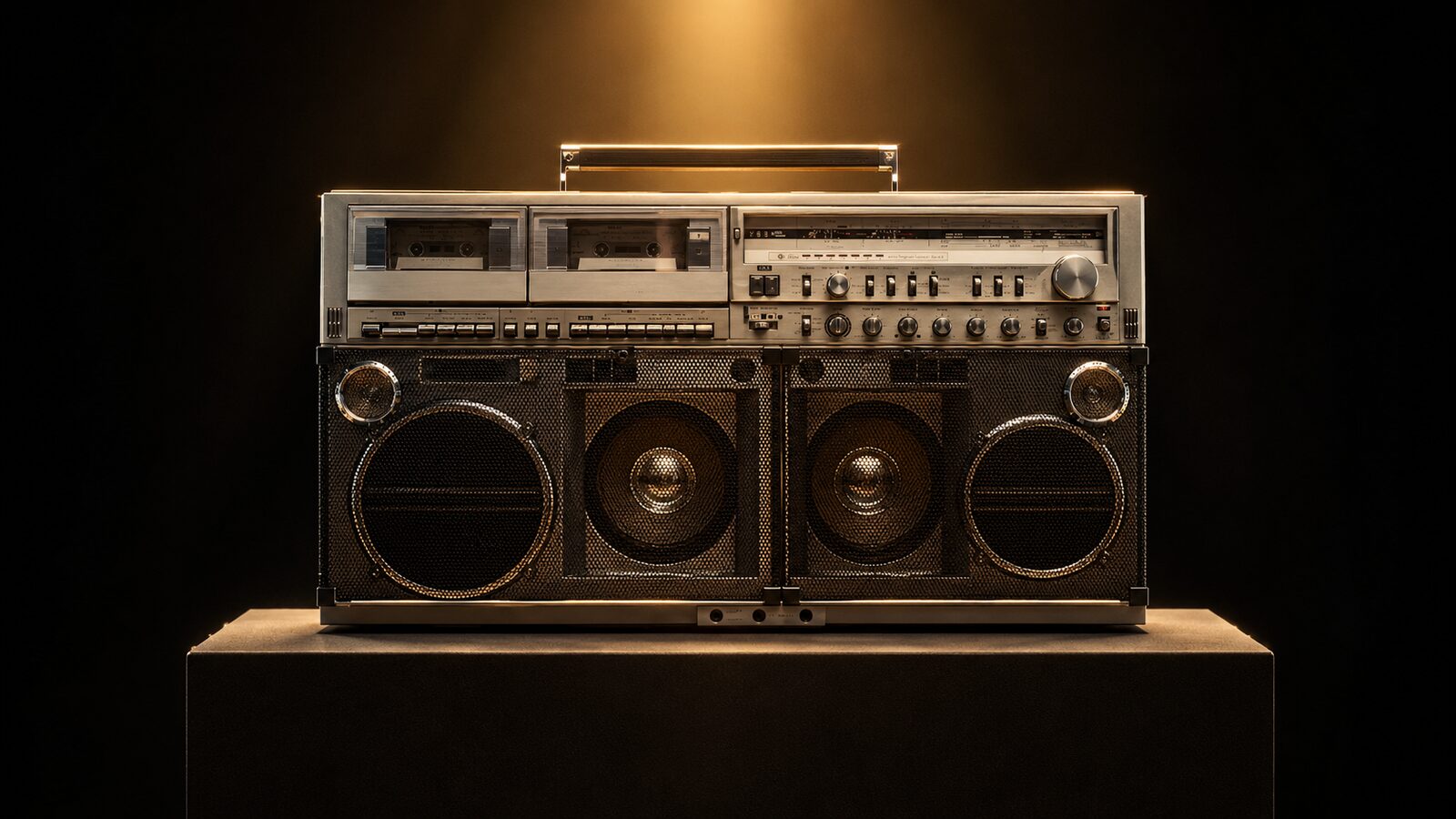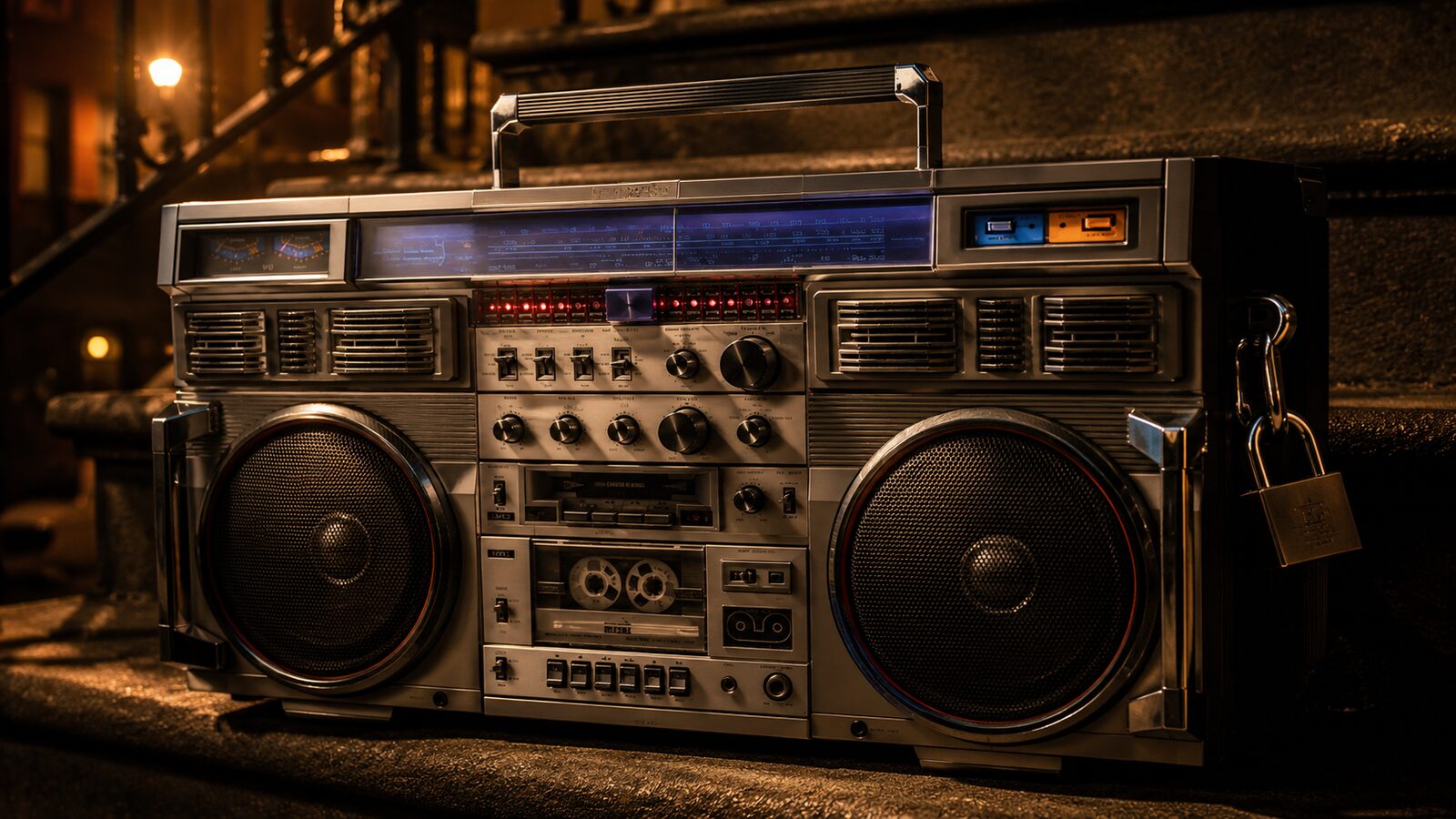
The Conion C-100F
The boombox so valuable, people literally locked it up. Meet the "padlock boombox."
The Story
In the early 1980s, a boombox wasn't just a radio — it was a status symbol, a weapon, and a target. On the streets of New York, boomboxes were stolen so frequently that manufacturers started building in anti-theft features. The Conion C-100F took this to its logical extreme: a built-in metal loop designed to accept a padlock.
That padlock loop wasn't a gimmick. It was a survival feature. The C-100F was expensive, conspicuous, and loud enough to announce its own presence from a block away. Carrying one was an invitation. The padlock said: I know what this is worth, and I'm not letting it go.
The boombox became a fixture of New York's hip-hop and breakdancing scenes, appearing on stoops, in parks, and at block parties across the five boroughs. Its chrome-and-black body, substantial carry handle, and that unmistakable padlock loop made it one of the most recognizable boomboxes of the era.
The Gear
The Conion C-100F (also sold as the Helix HX-4631) was a dual-cassette, four-speaker portable stereo with specs that punched well above its weight class. Its 20-watt output could fill a park, and its shortwave radio bands connected listeners to a world beyond FM.
The build quality was exceptional for a portable unit: a metal chassis, robust transport mechanism, and that iconic carry handle that doubled as an antenna mount. The dual cassette decks allowed dubbing — copying tapes from one deck to another — which made it a mobile mixtape factory in an era when sharing music meant physically creating copies.
But it's the padlock loop that defines the C-100F's legacy. Built into the right side of the chassis, the metal loop was large enough to accept a standard padlock, which could then be chained to a railing, a fence, or a bike rack. It was an acknowledgment that this wasn't just a radio — it was property worth protecting.
You didn't just carry a boombox. You guarded it.
— New York street culture, early 1980s
Why It Matters
The Conion C-100F represents a specific moment in urban culture when personal audio was public audio, when your music taste was literally broadcast to your neighborhood, and when the technology you carried said as much about you as the clothes you wore.
On the collector market, the C-100F commands serious respect. Clean, working examples sell for $500 to $3,000, with pristine units and original packaging pushing higher. The padlock loop — once a practical necessity — has become its most distinctive and collectible feature, a reminder of the era's economics and street dynamics.
For modern collectors, the C-100F sits at the intersection of audio engineering and social history. It's not just a boombox. It's a document of a time when music was physical, public, and worth locking up.
The Original Gear
Conion C-100F
$500–$3,000The padlock boombox. Dual cassette, four speakers, shortwave bands, and the most distinctive anti-theft feature in audio history.
Helix HX-4631
$400–$2,500Same boombox, different badge. The Helix-branded version of the C-100F, sold in certain markets. Identical specs and build.
Modern Alternatives
JBL Boombox 3
~$450The modern spiritual successor to the boombox era. Massive sound, IP67 waterproof, 24-hour battery. No padlock loop, but it can survive a rainstorm.
View on Amazon →Marshall Tufton
~$400Portable Bluetooth with Marshall's iconic amp aesthetic. Multi-directional sound, 20+ hours of battery. The rock 'n' roll boombox alternative.
View on Amazon →