Every Piece of Gear in The Beatles: Get Back
Eight hours of footage from January 1969. Four Beatles. One EMI REDD.51 console. The most documented recording sessions in history, and a gear list that reads like a museum catalog.
The Scene
Peter Jackson's Get Back is not a conventional documentary. It's an eight-hour time machine. Shot from 60 hours of 16mm footage and 150 hours of audio originally captured by Michael Lindsay-Hogg in January 1969, the film drops you into Apple Studio in the basement of 3 Savile Row, London, where The Beatles attempted to write, rehearse, and record an album in three weeks — and nearly broke up in the process.
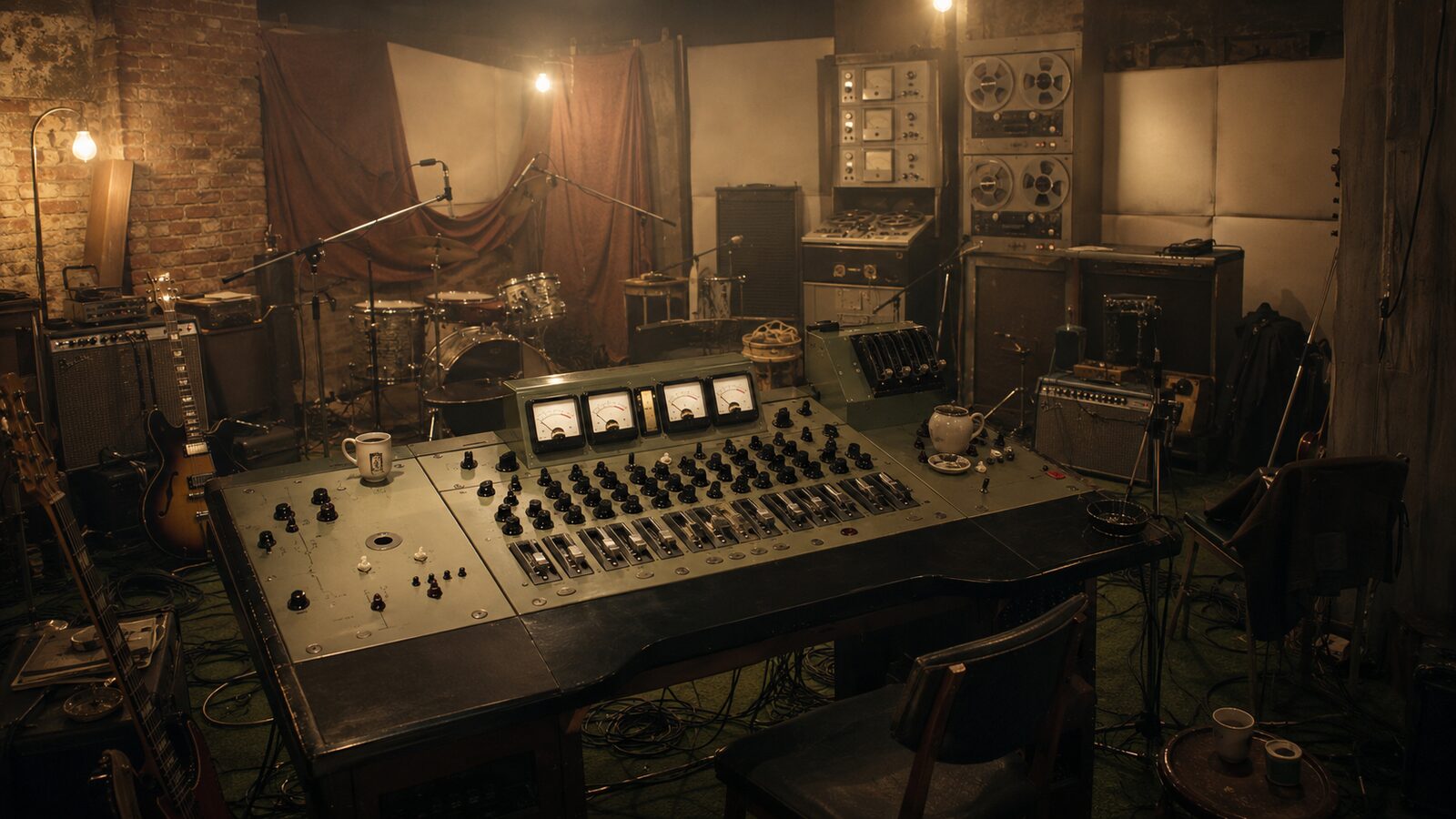
What makes Get Back extraordinary for audio enthusiasts is that the cameras were running constantly, and they captured everything: the consoles, the tape machines, the microphones, the amplifiers, the speakers, the cables. You can see Glyn Johns behind the EMI REDD.51 mixing console. You can watch tape rolling on the Studer A80 8-track. You can identify the microphones on each instrument. For eight hours, you are sitting inside a 1969 recording studio, watching four people make music on gear that no longer exists in the wild.
The Gear
The centerpiece is the EMI REDD.51 — a four-channel mixing console designed and built by EMI's own engineers specifically for Abbey Road and its satellite studios. The REDD.51 used EF86 pentode valve amplifiers and was the successor to the REDD.37 that recorded Sgt. Pepper's. Fewer than a dozen were ever built, and none have appeared on the open market in modern times. They are, effectively, priceless.
The tape machine is a Studer A80 8-track, the Swiss-made workhorse that was the professional standard in European studios from the late 1960s through the 1980s. Unlike the REDD console, Studer A80s do appear on the used market — though finding one in working condition requires patience and a willingness to spend $8,000–$15,000.
For dynamics processing, the Apple Studio sessions used Fairchild 660 limiters — the most sought-after outboard gear in recording history. A working Fairchild 660 now sells for $30,000–$50,000, making it possibly the most expensive piece of vintage audio equipment by unit price.
Microphones visible in Get Back include AKG C30A Nuvistor vocal mics (specifically requested by the band), Neumann U67 drum overheads, and various Coles and STC ribbons. The monitoring system used Vox LS-40 column speakers powered by Leak TL/25 amplifiers — a combination that now seems quaint compared to modern monitoring, but which captured the performances that became Let It Be.
"The tracks were recorded on the REDD.51, and the band specifically requested the AKG C30A Nuvistor microphones — they liked the way they sounded on vocals."— Sound & Vision, "The Making of Let It Be and Get Back"
Why It Matters
Get Back was watched by tens of millions on Disney+ and won five Emmy Awards. For audio enthusiasts, it represents something unprecedented: uninterrupted, high-resolution documentation of a legendary recording session, with every piece of gear visible and identifiable. It's the closest most people will ever get to sitting inside a 1969 recording studio.
The gear in Get Back occupies the highest tier of vintage audio collecting. REDD consoles don't trade hands — they live in museums or private collections. Fairchild 660s are investment-grade assets that appreciate faster than most financial instruments. Even the more accessible items — Leak TL/25 amplifiers ($400–$800), Neumann U67 microphones ($8,000–$12,000) — require serious commitment.
But the documentary's real impact on the market is aspirational. It reminds people why analog recording matters, why these machines were built the way they were, and why a four-channel valve console made in 1964 can capture a performance with a warmth and presence that modern digital systems still struggle to replicate.
The Gear Cards
EMI REDD.51
Four-channel valve mixing console designed by EMI engineers for Abbey Road Studios. EF86 pentode amplifiers. Fewer than a dozen ever built. The console that recorded Let It Be. Does not appear on the open market.
Studer A80 8-Track
Swiss-made multitrack tape recorder. The professional standard in European studios from the late 1960s through the 1980s. Unlike the REDD, these do appear on eBay — but finding a working one takes patience.
Fairchild 660
The holy grail of outboard recording gear. Variable-mu tube compressor/limiter with 20 tubes per unit. Every major 1960s recording used one. Working units now command prices that rival luxury cars.
Modern Alternatives
Warm Audio WA-2A
~$900Optical tube compressor inspired by the Teletronix LA-2A used alongside Fairchilds in 1960s studios. Affordable entry into vintage-style compression.
View on Amazon →Universal Audio 6176 Channel Strip
~$3,000Combines a 610 tube preamp with a 1176 compressor. The modern way to get vintage-grade recording in a home studio.
View on Amazon →Neumann TLM 103 Microphone
~$1,100Uses the same capsule as the legendary U87. Neumann quality at a fraction of the vintage U67 price. The professional home-studio standard.
View on Amazon →