The scene
The opening scene sets the tone for the entire MCU's most joyful franchise. A young Peter Quill sits in a hospital waiting room wearing headphones, lost in a mixtape his dying mother gave him. Flash forward twenty-six years: adult Quill, now Star-Lord, dances through an alien temple on the planet Morag, sliding across the floor, kicking space rats, and singing along to Redbone's "Come and Get Your Love" — all while clutching the same battered Walkman.
The Walkman isn't a prop. It's the emotional core of the entire trilogy. It's the last connection to his mother, to Earth, to his childhood. When it gets destroyed in the sequel, the audience feels it as a genuine loss.
The gear
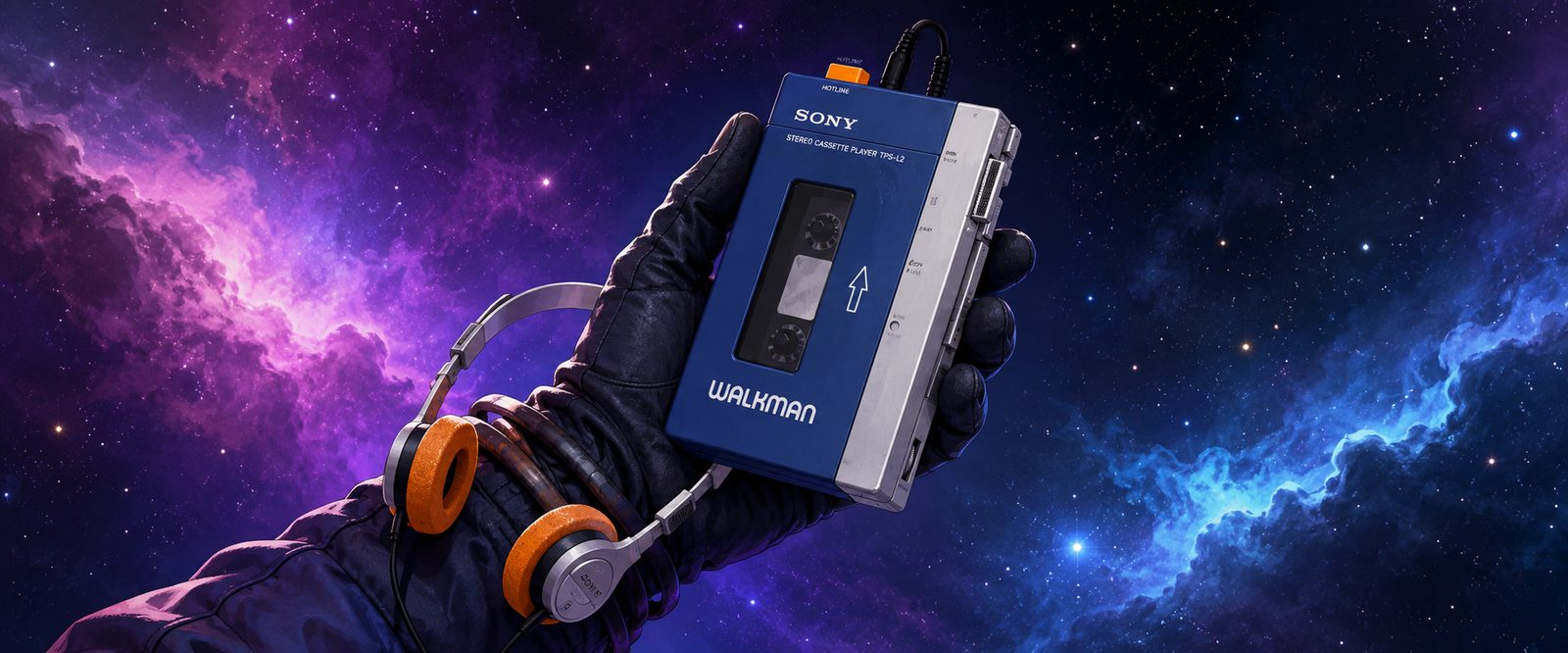
Star-Lord's player is a Sony TPS-L2 — the original Walkman, released in July 1979. It was the first commercially successful portable stereo cassette player in history, and it changed the way human beings interact with music. Before the TPS-L2, listening to music was a stationary activity. After it, music went everywhere.
The TPS-L2 is instantly recognizable: a blue-and-silver body with an orange "HOTLINE" button that let you talk to someone wearing the second headphone jack without stopping the tape. The headphones — those iconic orange foam pads on a metal band — became as iconic as the player itself.
Why it matters
Guardians of the Galaxy didn't just revive interest in the Walkman — it detonated the vintage portable player market. Before the film, a working TPS-L2 might sell for $50–$100 on eBay. After the 2014 release, prices jumped to $200–$800+, with mint-condition boxed units occasionally breaking $1,000. The film also sparked a broader cassette revival, with new blank tapes and portable players hitting the market for the first time in decades.
Sony itself acknowledged the film's impact by releasing limited-edition Walkman products and featuring the TPS-L2 prominently in their corporate history exhibitions.
Affiliate disclosure: We may earn a commission from qualifying purchases made through links on this page, at no extra cost to you.
Affiliate disclosure: When you buy through the links on this page, we may earn a commission from Amazon, eBay, or other partners. This doesn't affect our editorial picks or pricing. Learn more