Haruki Murakami
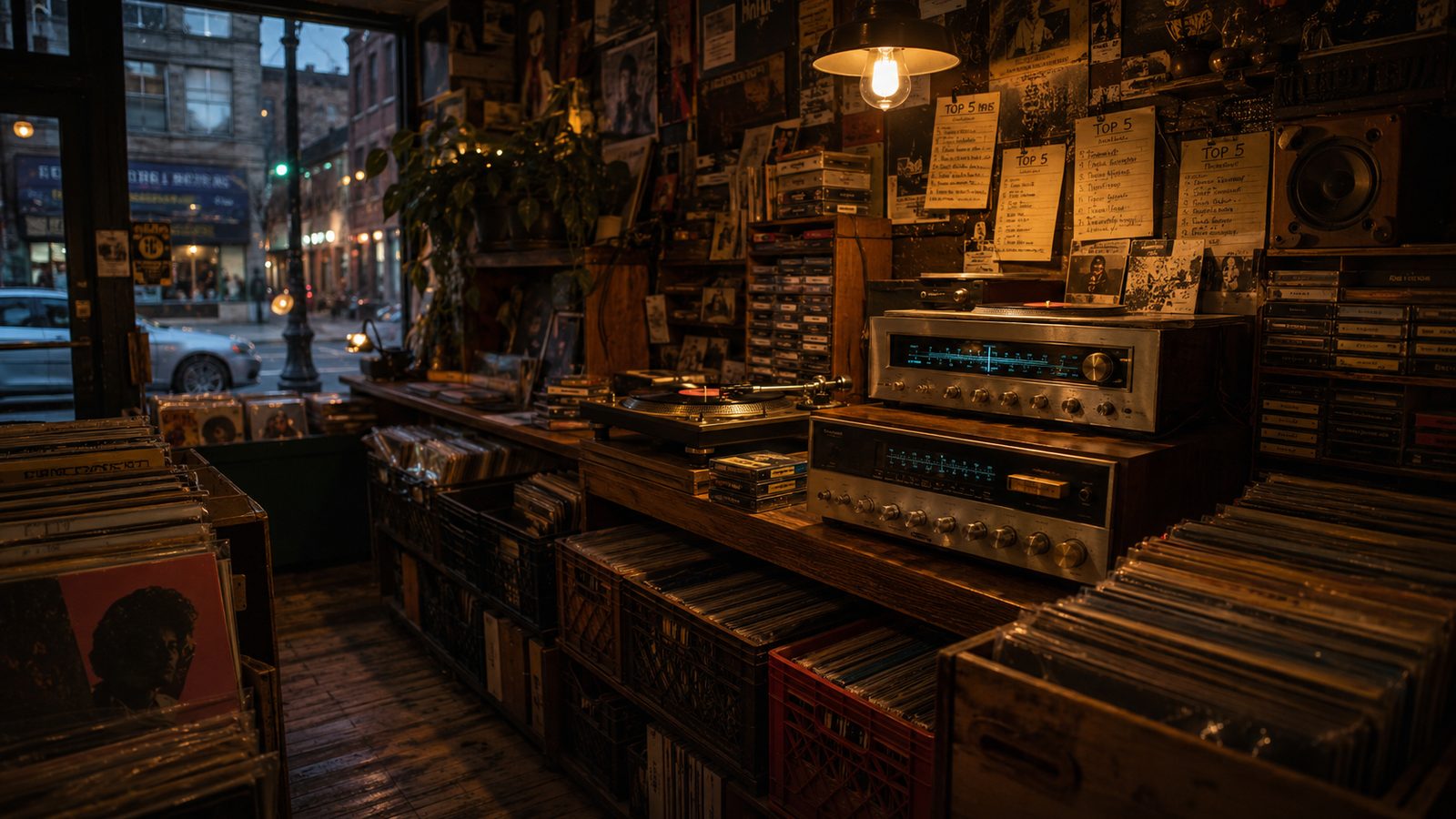
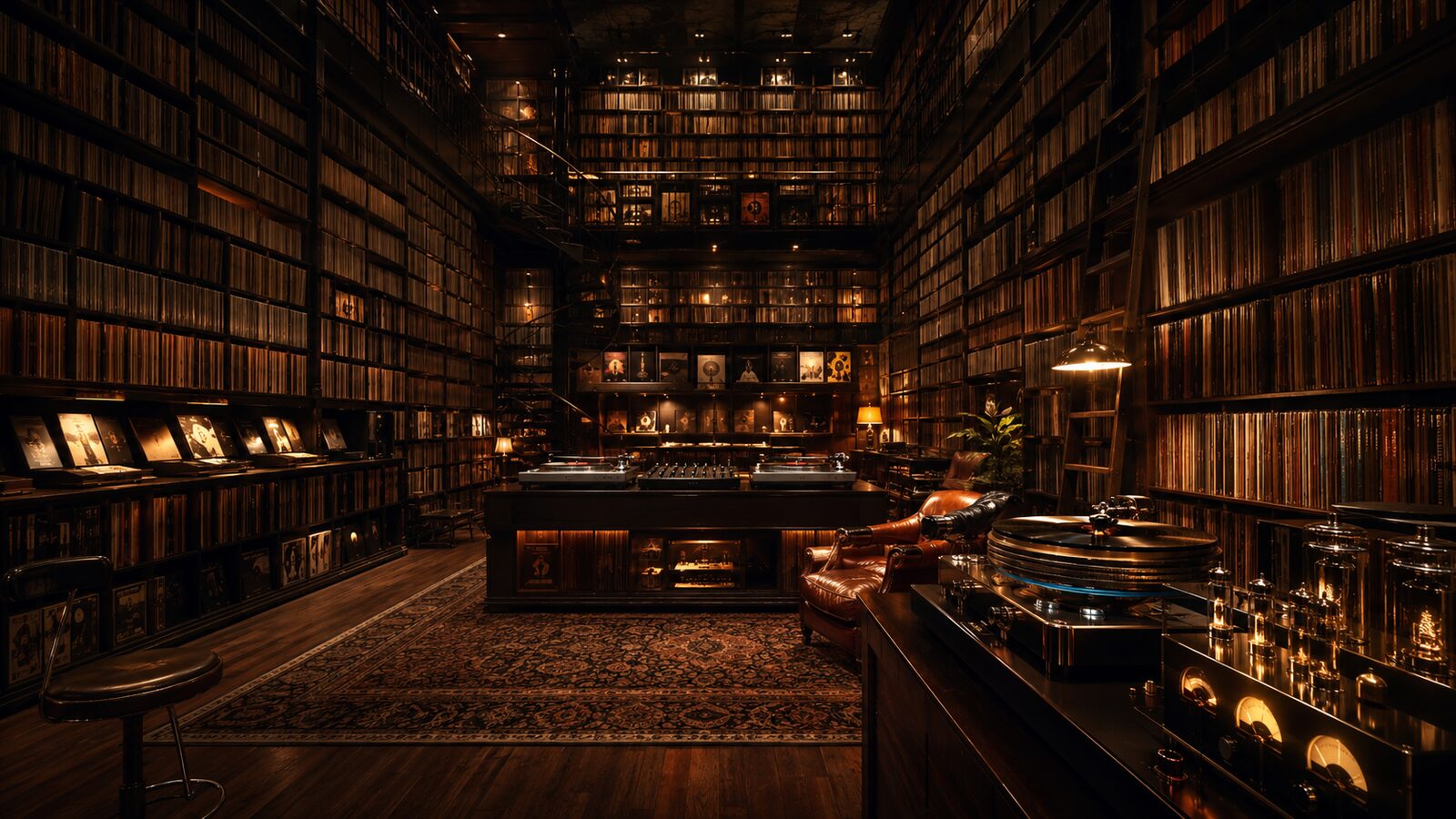
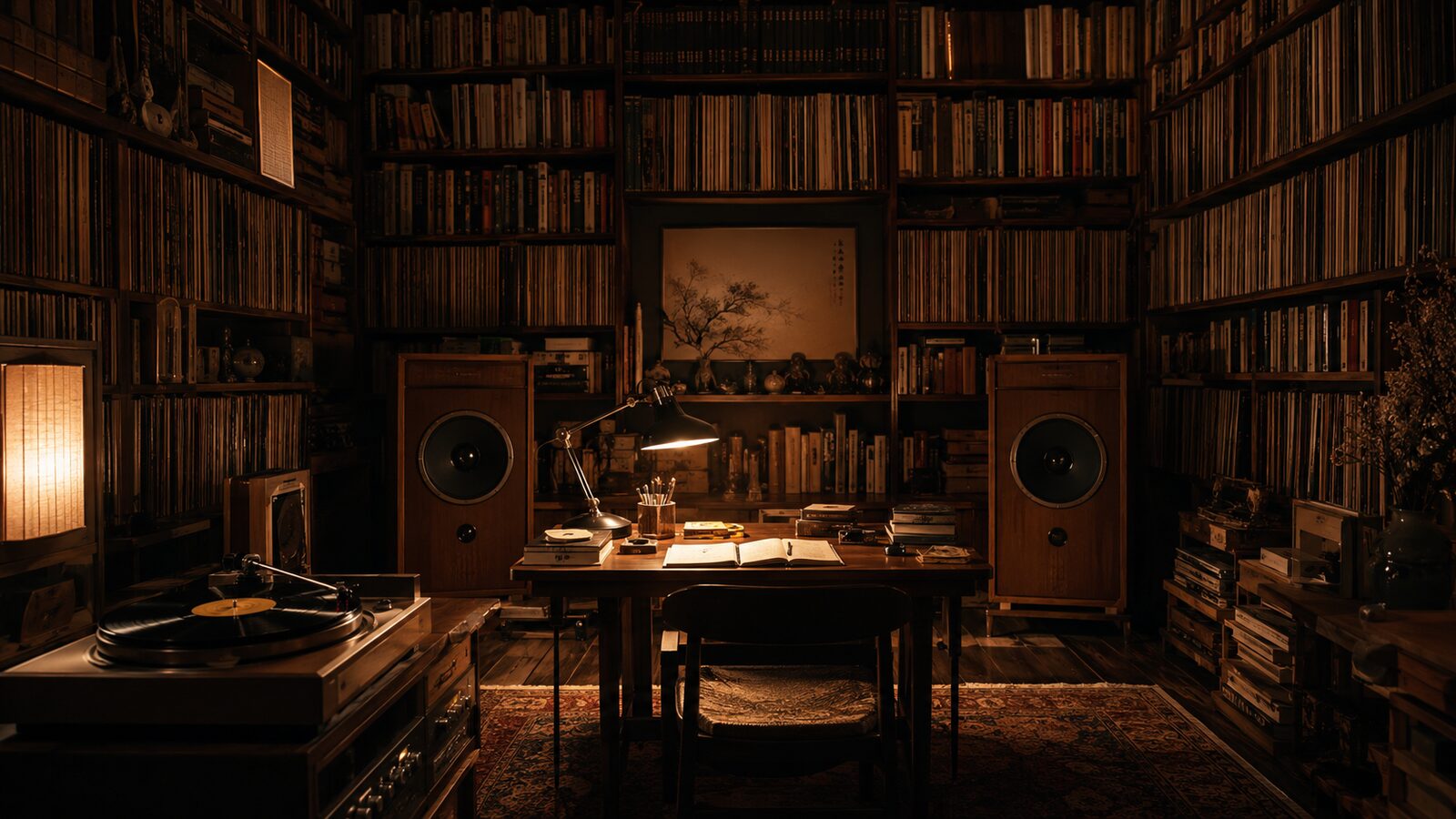
10,000 records, Tannoy speakers, and a writing desk between them — music is the engine of the fiction.
The Story
Haruki Murakami's novels are full of music. Characters listen to jazz in underground bars, play Liszt on battered pianos, and organize their inner lives around specific recordings. This isn't decoration. Music is the architecture of Murakami's fiction — and the architecture of his daily life.
Before he was a novelist, Murakami ran a jazz bar called Peter Cat in Tokyo from 1974 to 1981. The bar's audio system was his first serious investment in sound, and the habit never stopped. His home listening room — documented by In Sheep's Clothing HiFi and various Japanese publications — centers on a pair of Tannoy Berkeley speakers flanking a writing desk, a Thorens TD520 turntable, and an Accuphase E-407 integrated amplifier. The vinyl collection exceeds 10,000 records.
The room is a cathedral of two obsessions: literature and music. Floor-to-ceiling shelves hold books and records in roughly equal proportion. A desk lamp illuminates the writing surface. The speakers deliver jazz at a volume that fuels prose.
The Gear
The Tannoy Berkeley speakers use Tannoy's signature dual-concentric driver — a coaxial design where the tweeter sits inside the woofer's throat, creating a single point source. This produces a coherent, room-filling sound with exceptional imaging. The Berkeleys are large, warm, and forgiving — speakers built for long listening sessions, which is exactly how a novelist uses them.
The Thorens TD520 is a high-end Swiss turntable with a massive platter, precision bearing, and the kind of speed stability that reveals details in well-pressed vinyl. Murakami's collection leans heavily toward jazz — Coltrane, Miles, Monk, Bill Evans — but extends into classical, rock, and the eclectic edges of recorded music.
The Accuphase E-407 integrated amplifier is Japanese high-end at its most refined. Accuphase (a portmanteau of "accurate phase") builds with the precision and attention to detail that defines the best of Japanese manufacturing. The E-407 delivers clean, detailed power that serves both jazz intimacy and orchestral scale.
If you only read the books that everyone else is reading, you can only think what everyone else is thinking.
— Haruki Murakami, Norwegian Wood
Why It Matters
Murakami's system is significant because it's not separate from his art — it's the source of it. He has said in interviews that he writes with music playing, that specific recordings trigger specific narrative ideas, and that the rhythm of jazz influences the rhythm of his prose. The 10,000 records aren't a collection. They're a creative resource.
The Tannoy Berkeleys trade for $2,000 to $5,000 per pair on the vintage market, with the dual-concentric driver being the primary value driver. The Thorens TD520, at $500 to $1,500, is a serious turntable that rewards a quality cartridge. The Accuphase E-407, at $2,000 to $4,000, is one of the more affordable entry points into the Accuphase world.
For readers who recognize the jazz bars, the record stores, and the careful listening sessions in Murakami's fiction — this is where it all comes from. The speakers are real. The turntable is real. The records are real. The fiction is just what happens when you sit between the speakers long enough.
The Original Gear
Affiliate disclosure: We may earn a commission from qualifying purchases made through links on this page, at no extra cost to you.
Tannoy Berkeley Speakers
$2,000–$5,000/pairDual-concentric drivers — tweeter inside the woofer. Point-source coherence, room-filling warmth, built for long sessions.
Thorens TD520 Turntable
$500–$1,500Swiss-made high-end turntable with a massive platter and precision bearing. The turntable a novelist trusts with 10,000 records.
Accuphase E-407
$2,000–$4,000Japanese integrated amplifier built with watchmaker precision. Clean, detailed, and revealing without being clinical.
Modern Alternatives
Tannoy Legacy Arden
~$6,000/pairModern Tannoy with the same dual-concentric driver philosophy. The Berkeley's descendant, built for another generation of long listeners.
View on Amazon →Accuphase E-280
~$5,500Current-production Accuphase integrated. Same philosophy, refined further. The Japanese audiophile standard.
View on Amazon →