Every Piece of Gear in If These Walls Could Sing
Mary McCartney filmed inside Abbey Road Studios. Vintage King time-stamped every piece of gear that appeared on screen. This is the complete list.
The Scene
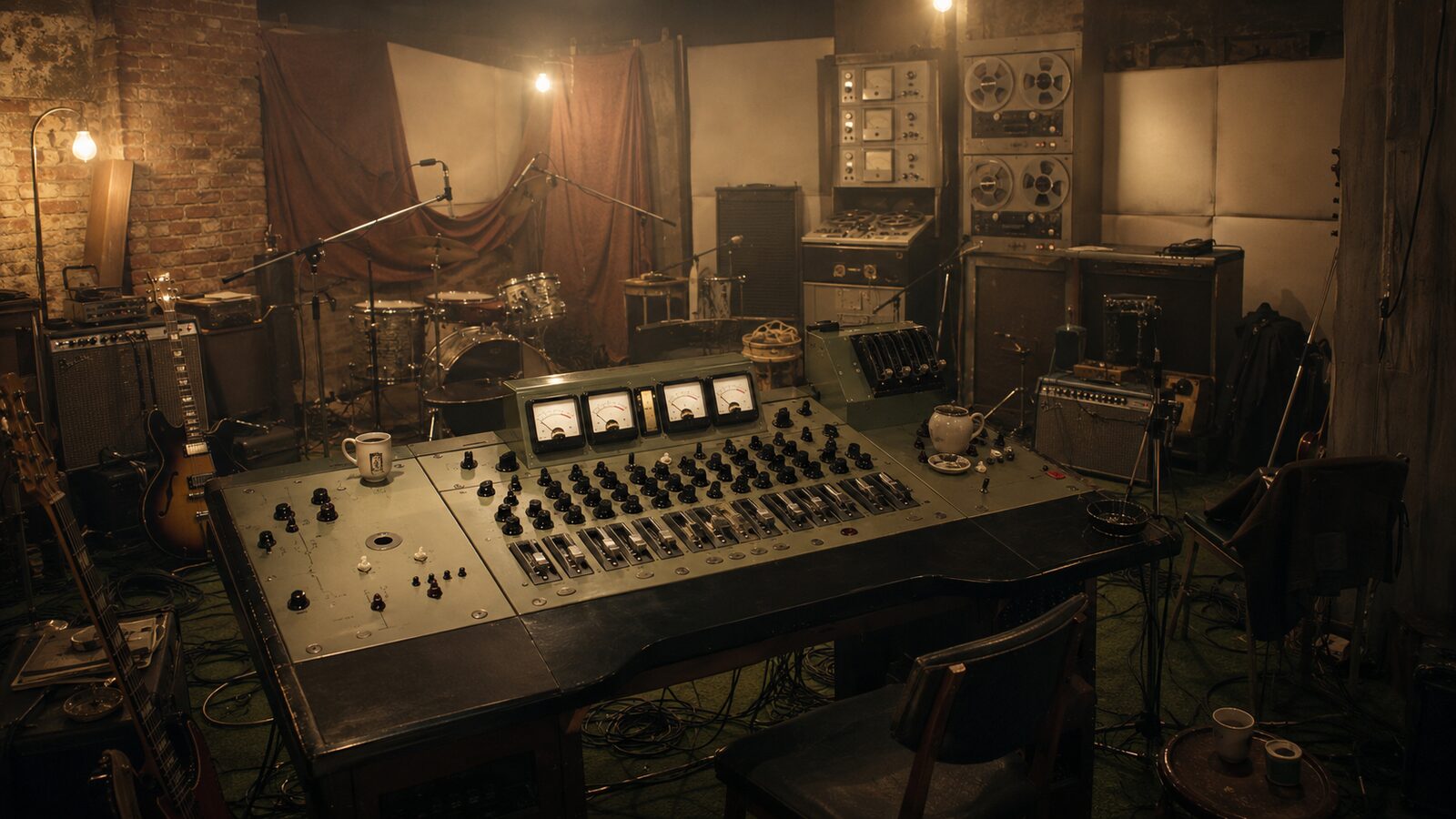
Mary McCartney — daughter of Paul — had access that no other filmmaker could have had. Her documentary If These Walls Could Sing doesn't just tour Abbey Road Studios; it opens every room, pulls back every curtain, and puts the audience face-to-face with equipment that recorded some of the most important music in history.
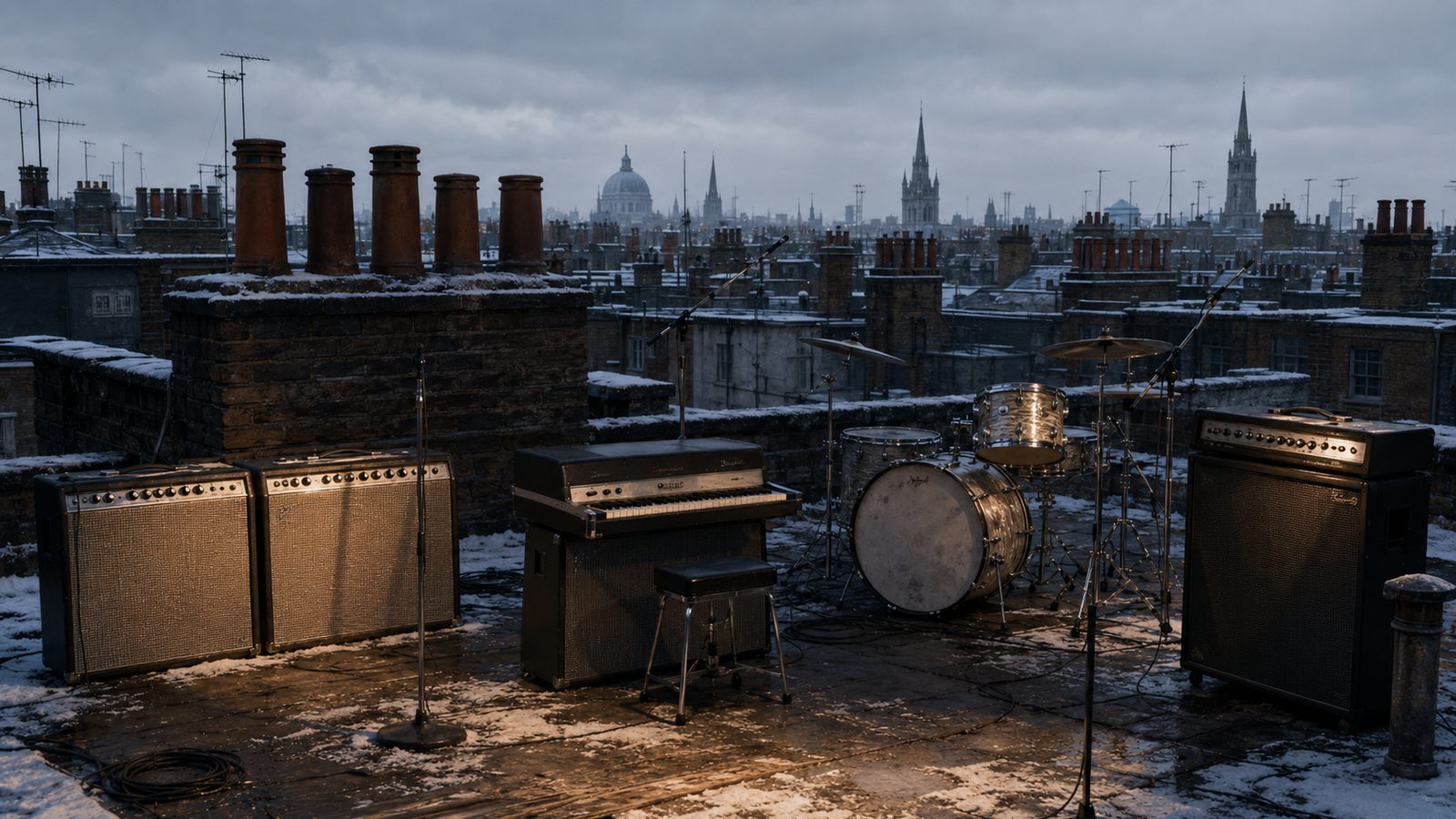
The film moves chronologically through the studio's life: from its construction in the 1930s through The Beatles' residency in the 1960s, Pink Floyd's Dark Side of the Moon in the 1970s, and on to modern sessions with Adele and Kanye West. At each stop, the gear changes — and Vintage King, the professional audio dealer, published a time-stamped gear guide identifying every console and microphone that appears on screen.
At 12:58, Giles Martin pulls up the faders on "Twist and Shout" on the EMI TG12345 Mk II console. At 53:44, a Neumann U67 is positioned in front of David Gilmour while recording Dark Side of the Moon. The documentary is a gear-spotter's paradise, and Vintage King made sure nothing went unidentified.
The Gear
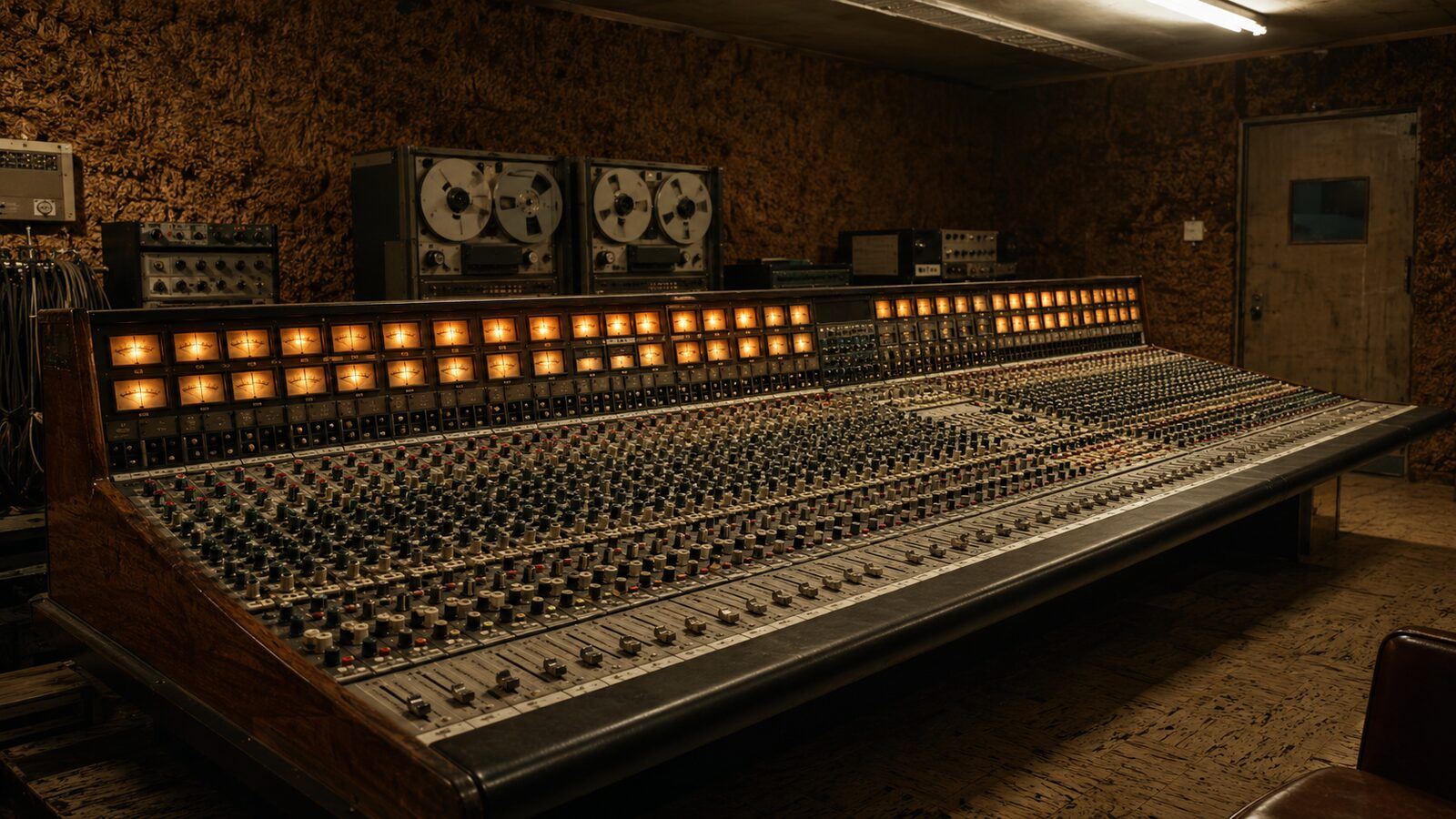
The headline piece is the EMI TG12345, Abbey Road's transistor-based console that replaced the valve REDD series in the late 1960s. The TG12345 recorded Abbey Road (the album), Dark Side of the Moon, and hundreds of other landmark records. The Mk II and Mk III versions appear in the documentary, distinguished by their characteristic green panels and compact fader layout.
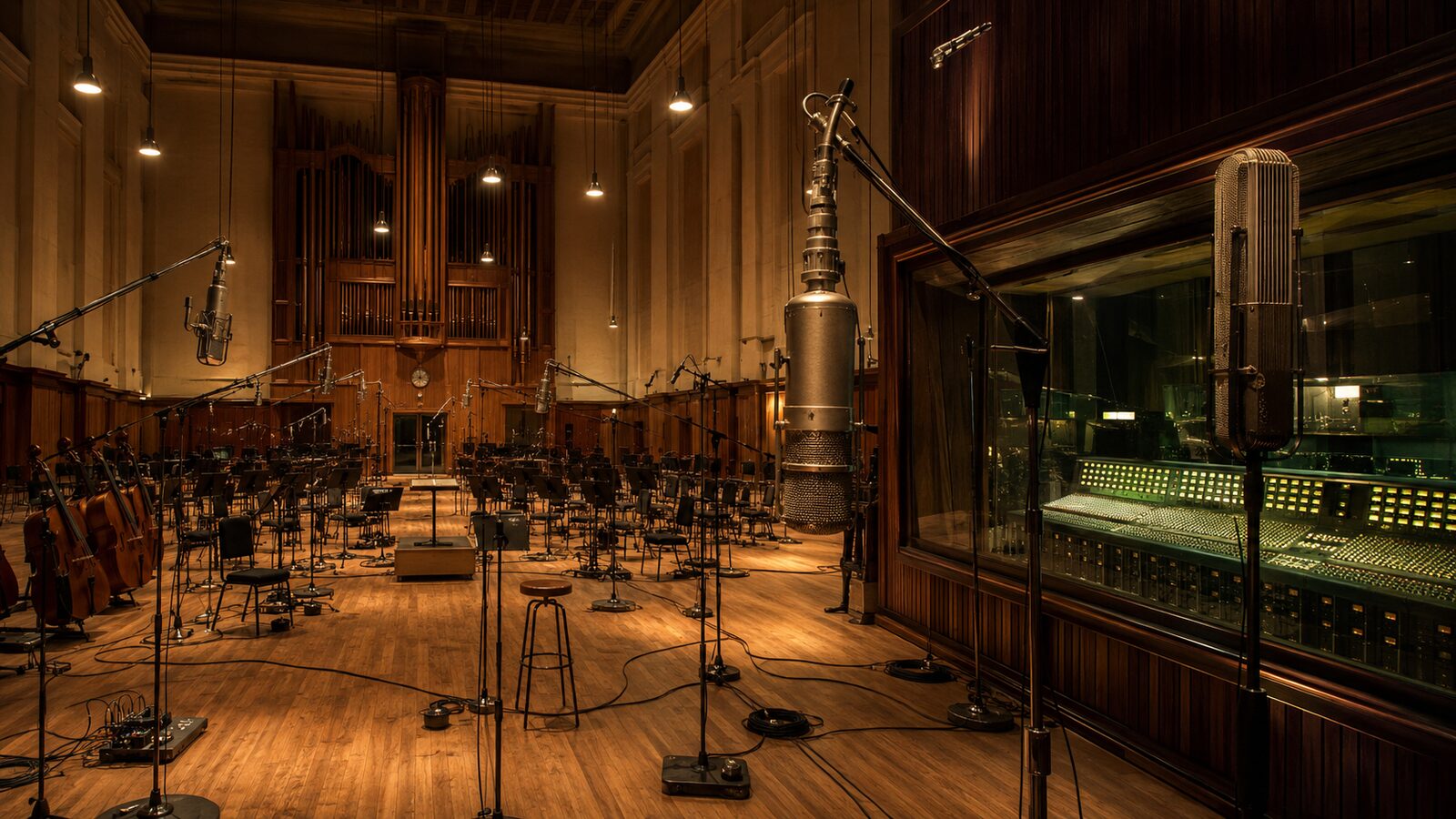
The microphone collection at Abbey Road is arguably the most valuable in the world. The documentary shows Neumann U47 and U48 tube mics (worth $15,000–$25,000 each), Neumann U67 condensers, Neumann M49 and M50 omnis (the Decca Tree standard), Neumann KM56 small-diaphragm condensers, AKG C12 tube condensers ($15,000–$25,000), and Coles 4038 ribbon microphones — a British classic still in production today for about $1,500.
The modern control rooms feature the AMS Neve 88RS — the 60-channel successor to the Neve 88R — alongside B&W 801 studio monitors that have been the Abbey Road standard for decades. The documentary also captures rack upon rack of outboard gear: Fairchild limiters, Pultec EQs, EMT plate reverbs, and custom EMI modules that exist nowhere else.
"12:58: Giles Martin pulls up the faders on 'Twist and Shout' on the EMI TG12345 MK II console... 53:44: Neumann U 67 on David Gilmour while recording Dark Side of the Moon."— Vintage King, "If These Walls Could Sing Gear Guide"
Why It Matters
No documentary has ever provided this level of access to Abbey Road's equipment. The Vintage King time-stamped guide is unprecedented — a minute-by-minute inventory of gear that appears in the most famous recording studio in the world, published by a dealer who knows exactly what they're looking at.
For collectors and affiliate content, the documentary is a goldmine. The microphones alone span a price range from $1,500 (Coles 4038, still in production) to $25,000+ (vintage Neumann U47). The consoles are museum pieces that don't trade hands, but their sonic character can be approximated through modern plugins and hardware recreations from companies like Chandler Limited (who make licensed EMI TG modules).
The film also serves as a masterclass in why certain studios sound the way they do. Abbey Road's rooms were designed by acousticians in the 1930s using principles that modern studio designers still reference. The combination of room acoustics, console character, and microphone selection creates a sonic fingerprint that decades of digital emulation have tried and failed to perfectly reproduce.
The Gear Cards
Affiliate disclosure: We may earn a commission from qualifying purchases made through links on this page, at no extra cost to you.
EMI TG12345 Mk II
Abbey Road's transistor-based console that replaced the valve REDD series. Recorded Abbey Road, Dark Side of the Moon, and hundreds of landmark albums. Green panels, compact faders, unmistakable sonic character. Museum-grade — does not appear on the open market.
Neumann U47
The most famous recording microphone in history. Dual-pattern tube condenser used on virtually every Beatles vocal at Abbey Road. Originals are among the most expensive microphones ever sold at auction.
Coles 4038
British ribbon microphone originally designed for the BBC in the 1950s. Still manufactured today by Coles Electroacoustics in the UK. The affordable entry point to Abbey Road's microphone locker.
Modern Alternatives
Chandler Limited TG2 Preamp
~$2,400Licensed EMI/Abbey Road preamp recreation. Uses the same gain structure and transformer design as the TG12345 console. The closest you can get to the Abbey Road sound in a rack unit.
View on Amazon →Neumann TLM 103
~$1,100Uses the same K103 capsule as the U87. Neumann quality without the vintage U47 price tag. The home-studio standard.
View on Amazon →sE Electronics RN17
~$1,000/pairSmall-diaphragm condenser designed in collaboration with Rupert Neve. Hand-wired transformer. The affordable way into high-end studio recording.
View on Amazon →