J Dilla
The Akai MPC 3000 that changed the sound of hip-hop — now in the Smithsonian.
The Story
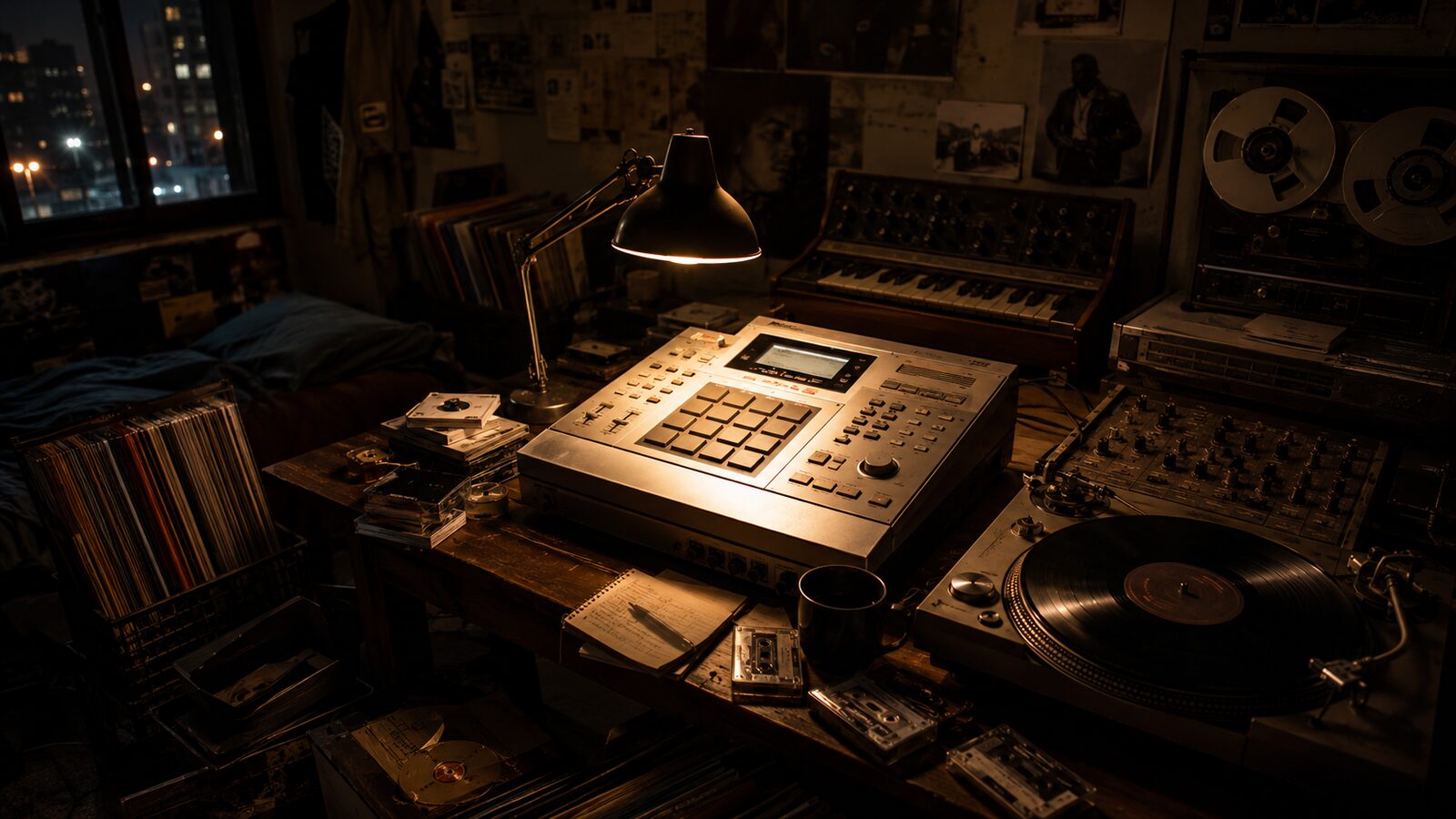
James Dewitt Yancey didn't need a recording studio. He needed a bedroom, a crate of records, and his Akai MPC 3000 LE — the limited-edition silver variant that became as iconic as any instrument in hip-hop history. From a modest house on McDougall Street in Detroit, Dilla crafted beats that would define the sound of a generation.
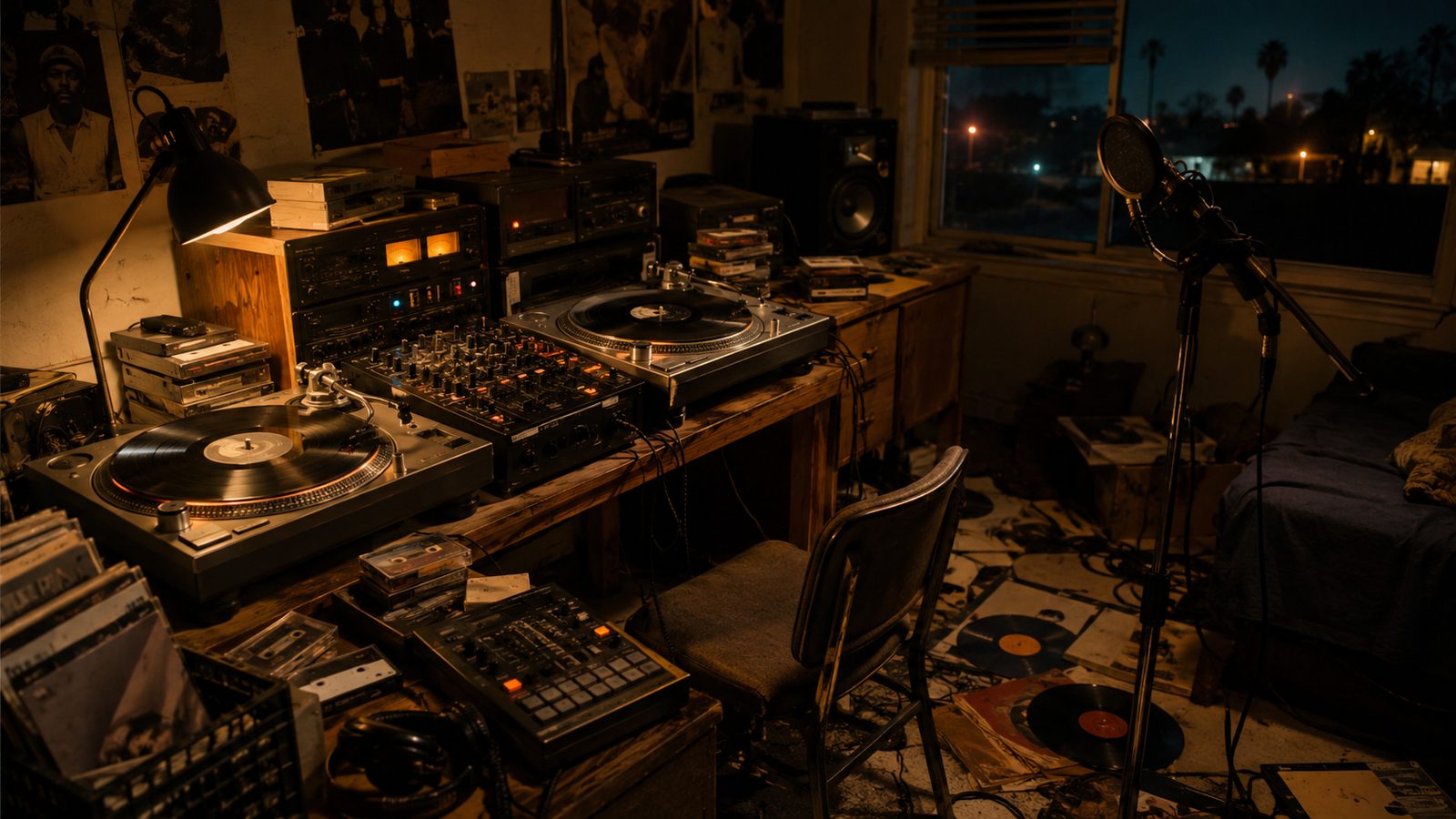
The setup was deceptively simple: the MPC at the center, flanked by turntables for sampling, a Moog synthesizer for basslines, and stacks of vinyl crates that served as both source material and furniture. Reel-to-reel tapes and cassettes piled on every surface. The room was small, cluttered, and genius-dense.
What came out of that room — the off-kilter timing, the chopped soul samples, the feel that no quantize grid could replicate — changed the trajectory of hip-hop production. Common, Erykah Badu, A Tribe Called Quest, The Roots, and D'Angelo all came to Dilla's door. The beats he made in that bedroom became the foundation of what would be called neo-soul.
The Gear
The Akai MPC 3000 LE was Dilla's primary instrument. The limited-edition silver model featured 32 voices of polyphony, 16MB of RAM (expandable), and those 16 rubber pads that Dilla played like a jazz drummer plays a kit. His timing was so distinctive — slightly ahead of and behind the beat simultaneously — that producers still study his MPC sequences to understand how he did it.
Surrounding the MPC: a pair of turntables for digging and sampling, a Moog synthesizer for the deep, warm basslines that became his signature, and a growing archive of vinyl records that stretched into the thousands. Dilla was a fanatical crate-digger, known for buying entire collections and spending hours in record stores across the world.
After Dilla's passing in 2006, his MPC 3000 was donated to the Smithsonian National Museum of African American History and Culture, where it's displayed alongside artifacts from Louis Armstrong and Chuck Berry. A bedroom production tool, elevated to the status of national treasure.
Dilla changed the way I hear music. Period.
— Questlove
Why It Matters
J Dilla's influence on modern music production is almost impossible to overstate. The "Dilla feel" — that slightly drunk, humanized swing — has become a foundational concept in beat-making. Every DAW now has a "humanize" function that's essentially trying to approximate what Dilla did naturally on his MPC pads.
The MPC 3000 itself has become one of the most sought-after pieces of production gear in hip-hop history. While newer Akai models offer more features and processing power, the 3000 — and especially the limited-edition silver variant Dilla used — commands extraordinary prices on the secondary market. Working units in good condition regularly sell for $3,000 to $8,000, with provenance or celebrity connection pushing prices even higher.
For collectors, the appeal is both sonic and spiritual. The 12-bit sampling of earlier MPCs gave recordings a particular warmth and grit that digital perfection can't replicate. Owning an MPC 3000 isn't just buying a drum machine — it's buying a piece of the instrument that shaped the sound of an entire era.
The Original Gear
Affiliate disclosure: We may earn a commission from qualifying purchases made through links on this page, at no extra cost to you.
Akai MPC 3000 LE
$3,000–$8,000The limited-edition silver MPC that Dilla played into the Smithsonian. 32 voices, 16 pads, the feel that launched a thousand imitators.
Moog Synthesizer (various)
$1,500–$5,000+Dilla used various Moog units for those deep, warm basslines. The Minimoog and Moog Voyager are the most commonly cited.
Modern Alternatives
Akai MPC Live II
~$1,200The modern standalone MPC with a 7" touchscreen, 16GB storage, built-in speakers, and battery power. The spiritual successor to Dilla's workflow — no computer needed.
View on Amazon →Akai MPC One+
~$700Compact, affordable MPC with the same engine as the Live II. Those same 16 pads, now with a speaker built in. The most accessible entry point into MPC production.
View on Amazon →Native Instruments Maschine+
~$1,200The modern alternative to the MPC workflow — standalone hardware with deep software integration. Different philosophy, same obsessive beat-making energy.
View on Amazon →