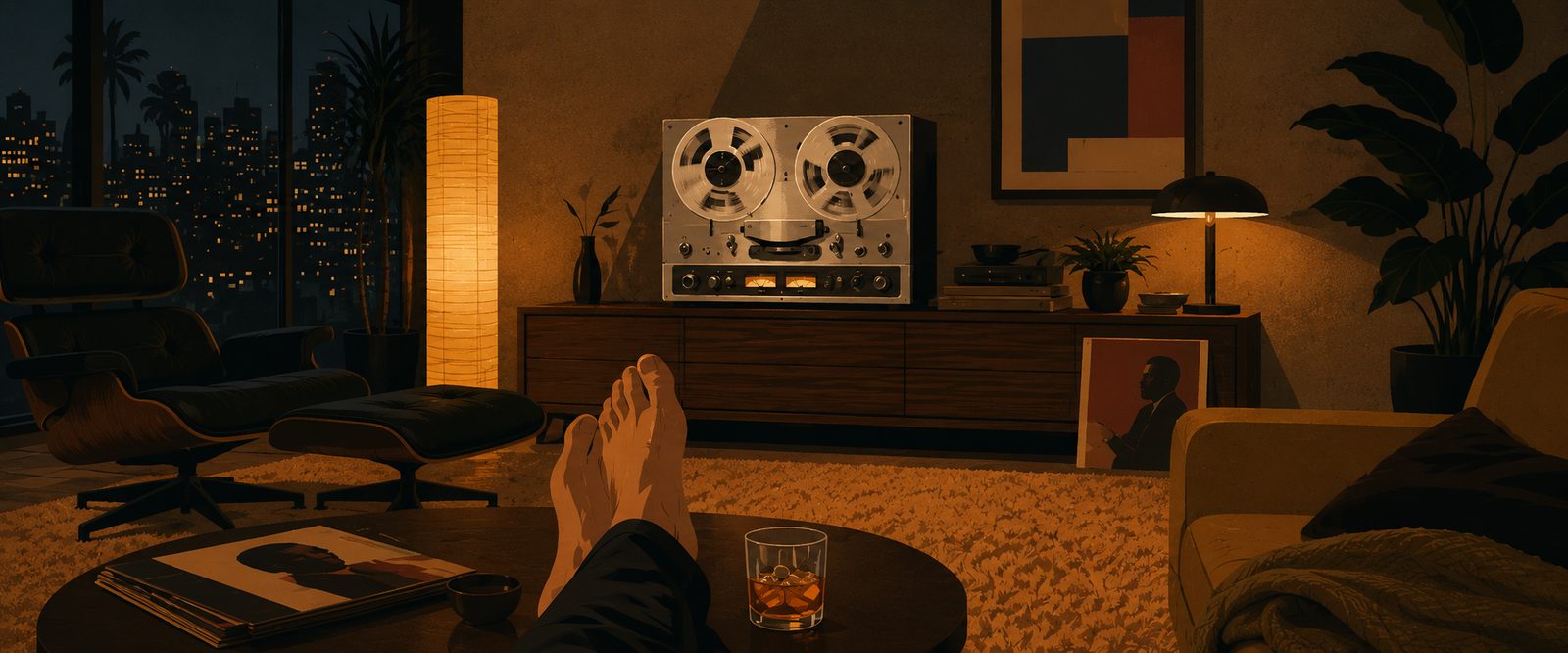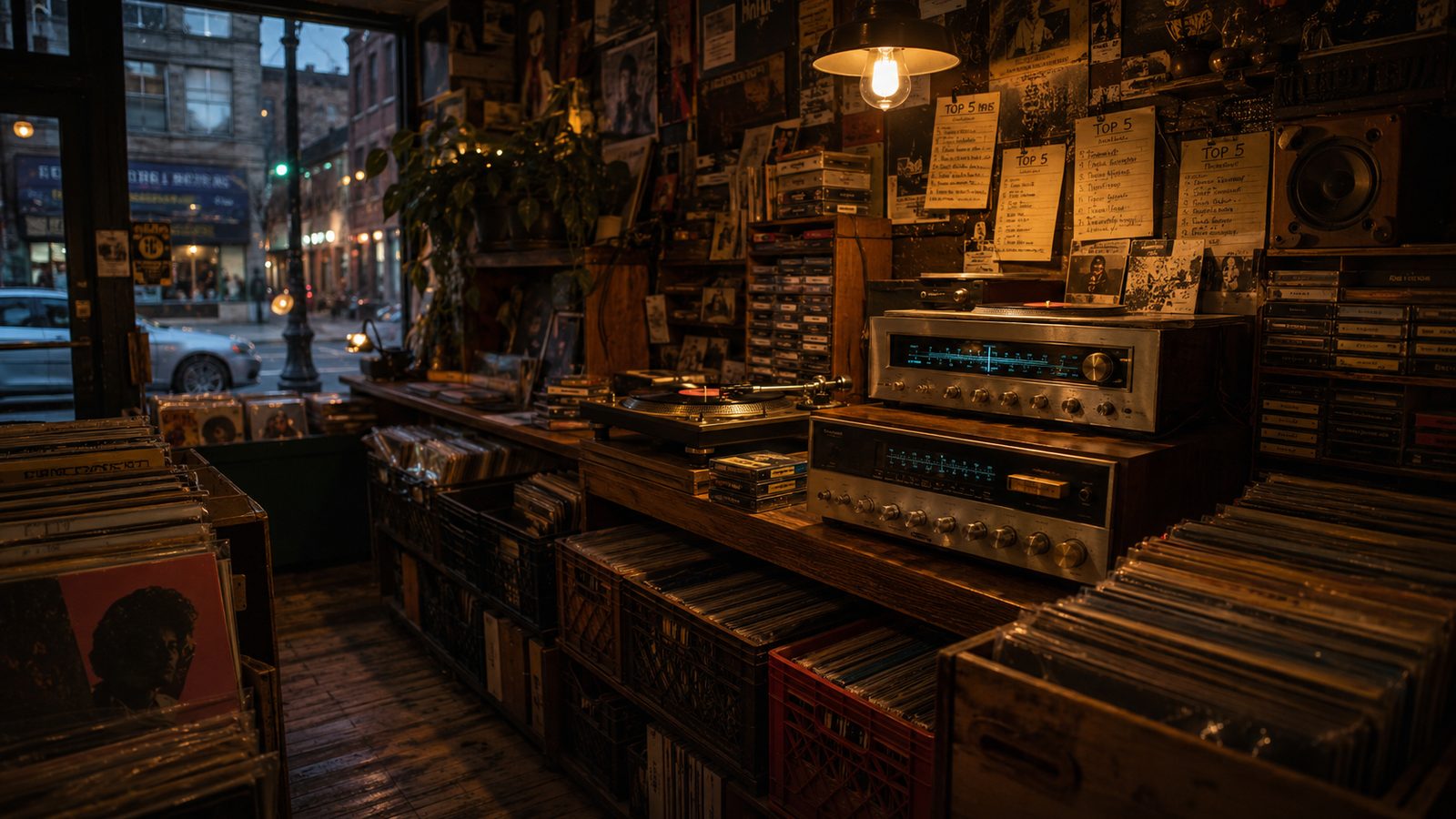
Tarantino's quietest film — where putting on a record means everything.
Max Cherry is a bail bondsman. He's seen everything. Nothing surprises him anymore — until he walks into Jackie Brown's apartment and sees the records.
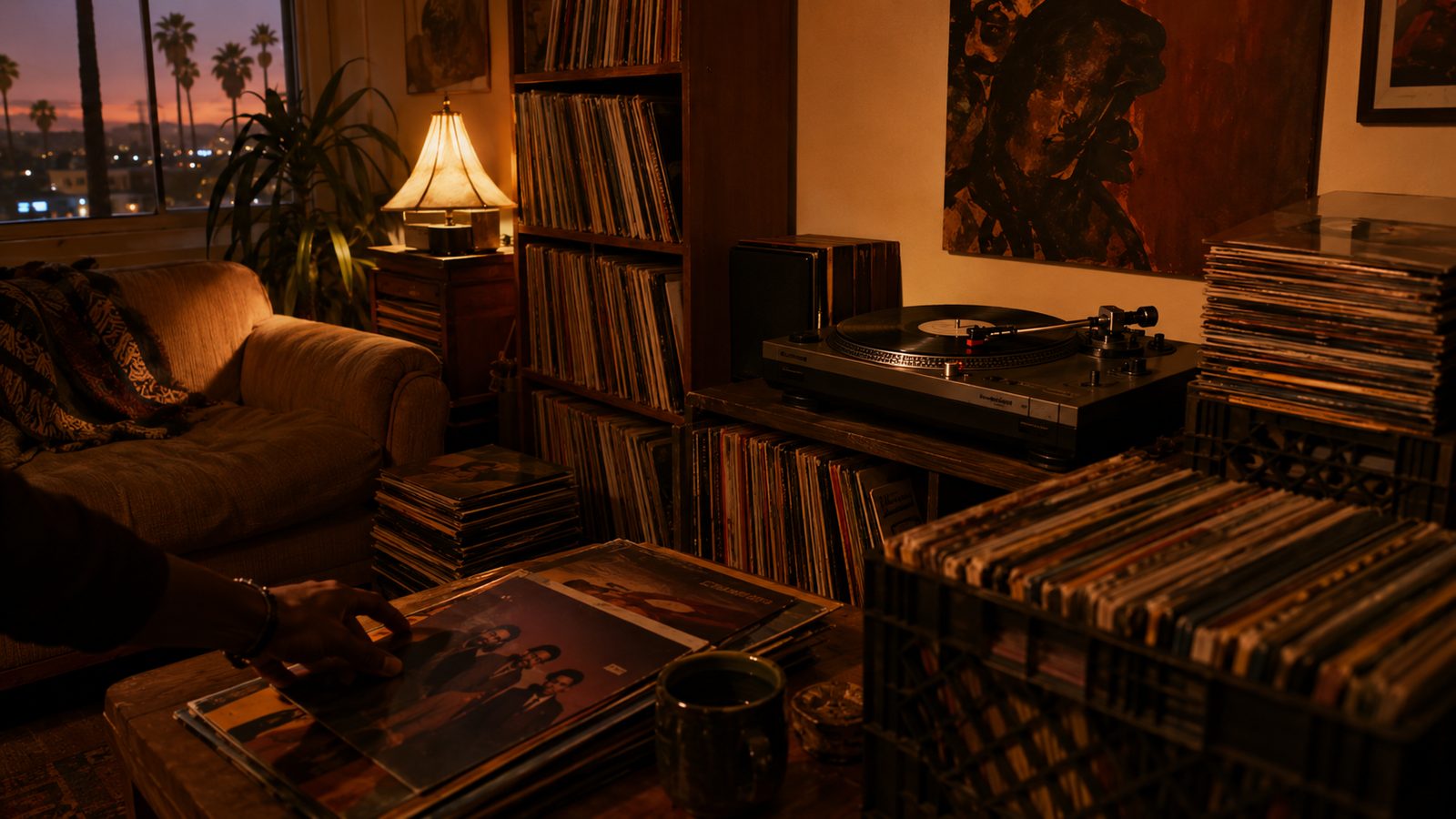
Jackie's living room is full of vinyl. LPs lean against walls, fill shelves, sit in milk crates. A turntable occupies the place of honor. When Max picks up a Delfonics record and puts on "Didn't I (Blow Your Mind This Time)," it's not just a song choice — it's a confession. He's falling in love, and the record is how he admits it to himself.
Later, alone in his car, Max buys the same Delfonics cassette and plays it on repeat. The song has become his private connection to Jackie. Tarantino, who usually scores his films with the subtlety of a sledgehammer, here uses music with devastating restraint.
Jackie's turntable is a standard consumer model — nothing flashy, nothing vintage-collector. The equipment isn't the point; the records are. Her apartment is defined by vinyl — stacks of soul, R&B, and funk LPs that tell you more about her than any dialogue could.
The key record is The Delfonics — "Didn't I (Blow Your Mind This Time)" from their 1970 album The Delfonics. Tarantino uses it as Max Cherry's emotional through-line: the song appears three times in the film, each time deepening Max's attachment to Jackie.
Tapeheads.net forum members have documented the scene in detail, and it pairs naturally with Pulp Fiction's reel-to-reel for a "Tarantino and analog audio" content angle.
My ass may be dumb, but I ain't no dumbass.
Jackie Brown is Tarantino's most mature film, and his most sophisticated use of music. In Pulp Fiction, the reel-to-reel is a prop. In Jackie Brown, the turntable is a portal. The act of choosing a record, placing the needle, and listening together is Tarantino's shorthand for intimacy — the most vulnerable thing two guarded people can do.
For the vinyl community, Jackie Brown is essential because it captures a truth that audiophiles know instinctively: sharing music is an act of trust. When Max plays the Delfonics in his car, alone, he's not just listening to a song. He's carrying a piece of someone else with him.
This page cross-links naturally with Pulp Fiction for a "Tarantino audio universe" narrative that audiophile and film communities will eat up.
Affiliate disclosure: We may earn a commission from qualifying purchases made through links on this page, at no extra cost to you.
Philadelphia soul at its finest. The Delfonics' 1970 hit became Max Cherry's emotional anchor — and one of the most memorable needle-drops in Tarantino's filmography.
The turntable for someone just starting their vinyl journey. Fully automatic, plug-and-play. Jackie would approve of the simplicity.
View on Amazon →Get the exact record that changed Max Cherry's life. Essential Philadelphia soul on vinyl.
View on Amazon →Step-up turntable with excellent cartridge and speed control. For when the AT-LP60X isn't enough anymore.
View on Amazon →As an Amazon Associate we earn from qualifying purchases.