LL Cool J — Radio
The King of Boomboxes on the album cover that defined hip-hop's visual identity.
The scene
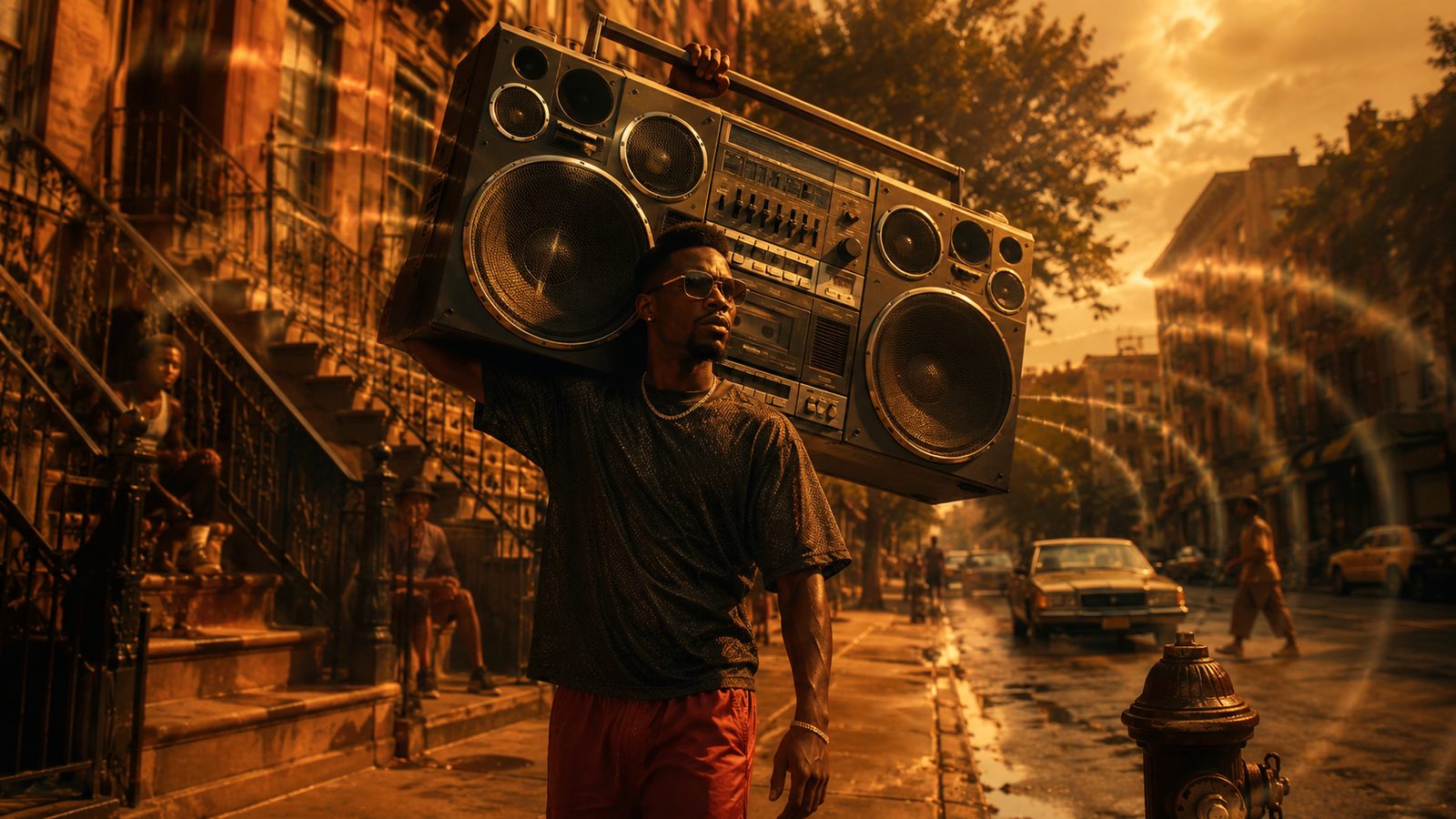
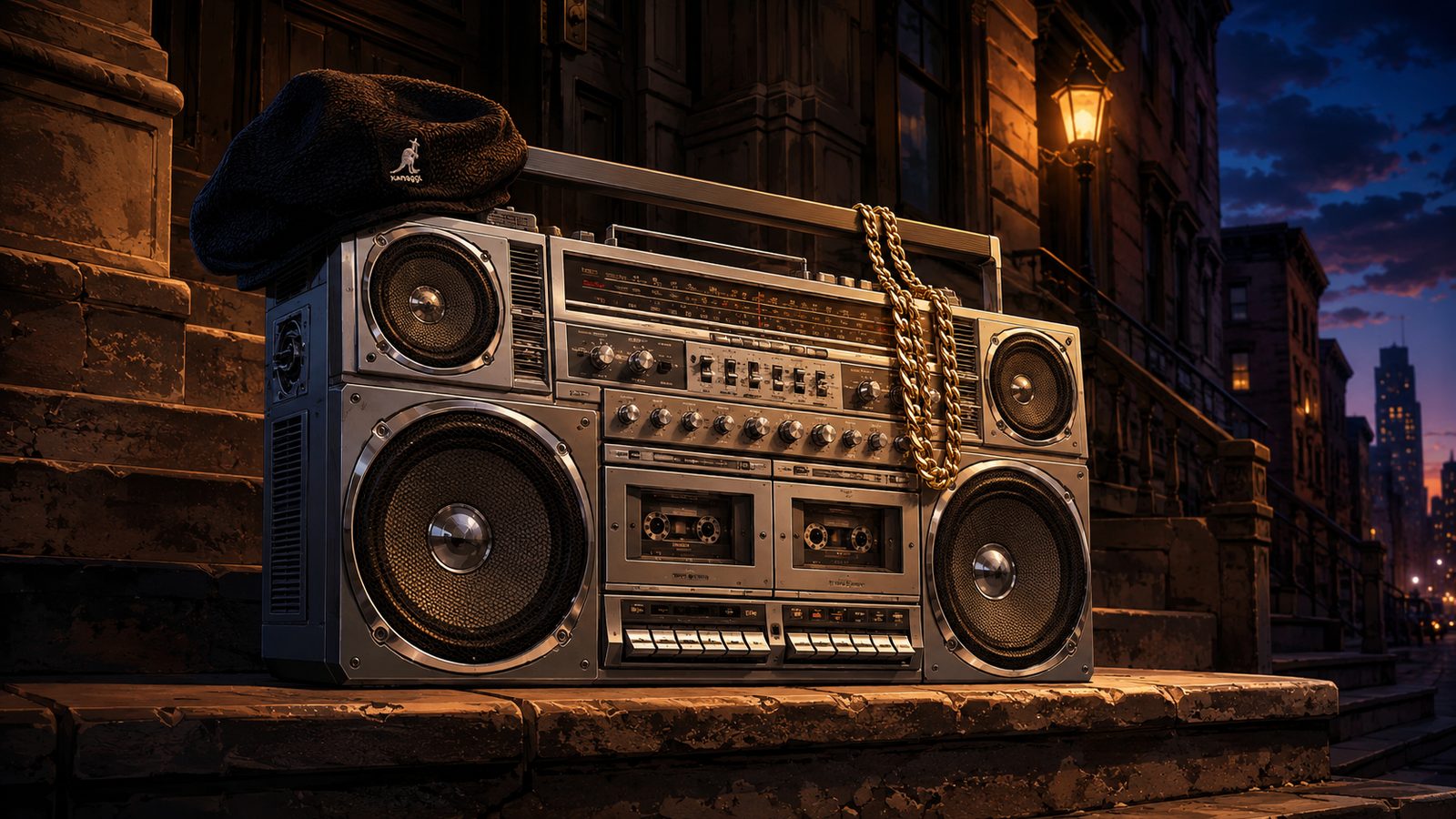
The cover of LL Cool J's debut album Radio is one of the most iconic images in hip-hop history. A 17-year-old from Queens holds a massive boombox to his ear, Kangol hat tilted, gold chain visible. The boombox is the co-star — huge, chrome, unmistakably the JVC RC-M90. The message is clear: the radio IS the music. The music IS the radio. They're inseparable.
Released in 1985, Radio was one of Def Jam's first albums and one of the first hip-hop records to cross over to mainstream success. The boombox on the cover wasn't just an accessory — it was a visual manifesto. Hip-hop's relationship with portable sound was literal: you carried your music with you, loud, in public, as a declaration of taste and identity.
The gear
The boombox is a JVC RC-M90, widely known as the "King of Boomboxes." Manufactured in the early 1980s, the RC-M90 is one of the largest and most powerful portable stereos ever made. It features four speakers (two large woofers and two tweeters), dual cassette decks, a shortwave radio band, and a sound quality that put most home stereos to shame.
The RC-M90 weighs about 24 pounds with batteries — ten D-cells that would drain in a few hours at full volume. Its chrome-and-black body measures over two feet wide. In an era of big boomboxes, the JVC was the biggest and the baddest. It wasn't subtle. That was the point.
JVC positioned the RC-M90 as a premium product, and it was priced accordingly. In 1982 dollars, it cost around $500 — roughly $1,500 adjusted for inflation. This was a serious investment in portable sound, and the people who owned them treated them accordingly. The RC-M90 wasn't background music. It was the main event.
"My radio, believe me, I like it loud. I'm the man with a box that can rock the crowd."
Why it matters
The LL Cool J Radio cover did for the JVC RC-M90 what Star Wars did for lightsabers: it turned a product into a myth. Before the album, the RC-M90 was an expensive boombox. After the album, it was THE boombox — the platonic ideal of portable hip-hop sound. Every boombox that followed was measured against it.
For collectors, the JVC RC-M90 is the single most sought-after boombox on the vintage market. Clean, working examples command $500–$2,000+, with museum-quality units pushing even higher. The key factors are condition (chrome pitting, speaker foam, cassette mechanism) and completeness (original manual, box, and the elusive dust cover).
The boombox collector community — which overlaps significantly with vintage hip-hop culture — considers the RC-M90 the crown jewel. It sits alongside the Sharp GF-777, the Conion C-100F, and the Lasonic TRC-975 as one of the "Big Four" collector boomboxes, but the Radio connection gives the JVC an edge in cultural significance that no other model can match.
Affiliate disclosure: We may earn a commission from qualifying purchases made through links on this page, at no extra cost to you.
JVC RC-M90
Four speakers, dual cassette, shortwave radio, 24 pounds of chrome and power. The most collected boombox in the world, and the one that defined hip-hop's visual language.
- Era
- Early 1980s
- Type
- Portable stereo
- eBay market
- $500–$2,000+
- Condition note
- Speaker foam and cassette decks often need service
JBL Boombox 3
The modern interpretation of carrying massive sound. Waterproof, Bluetooth, 24-hour battery. It won't turn heads like a chrome RC-M90, but it sounds better and won't drain ten D-cells.
View on Amazon →Marshall Tufton
Portable speaker with guitar-amp DNA. The tolex covering and brass knobs make a visual statement. Different aesthetic than the JVC, but the same energy of carrying your sound with pride.
View on Amazon →Toshiba TY-CWU500
Budget boombox with CD, cassette, and Bluetooth. Won't win collector points, but it's a functional boombox at a price that lets you actually use it outside without anxiety.
View on Amazon →