Mad Men
Period-perfect 1960s stereo consoles and hi-fi components — seven seasons of meticulously sourced vintage audio equipment in the most obsessively accurate show on television.
The scene
Mad Men's production design is legendary for a reason: every object in every frame was researched, sourced, and placed with documentary precision. The stereo equipment is no exception. Across seven seasons, characters play vinyl records on period-accurate turntables and console stereos — not as background noise, but as deliberate character moments.
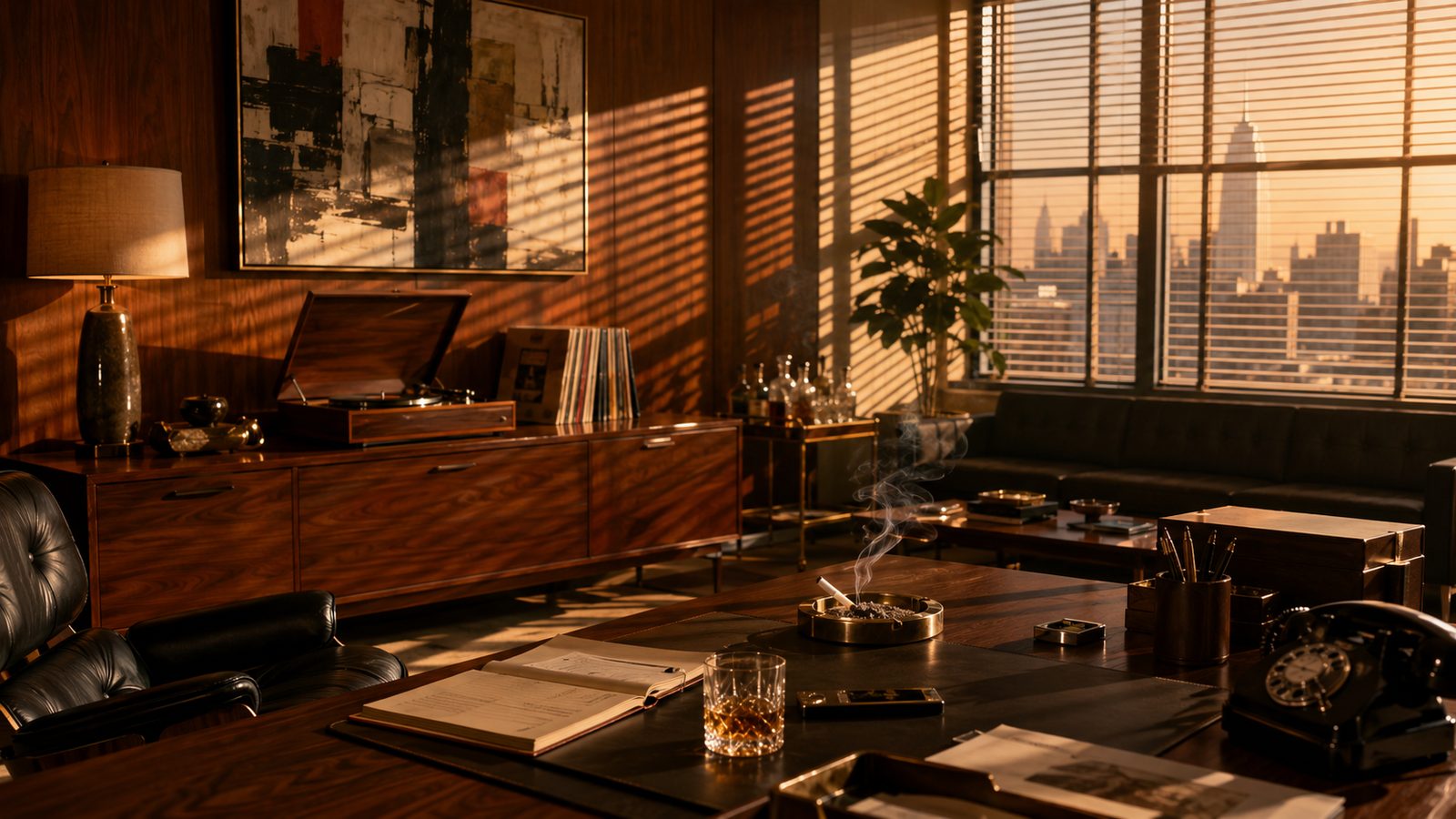
Don Draper's office features a mid-century stereo console — warm walnut veneer, a turntable hidden under a lift-top lid, integrated speakers. He puts on records during late nights at the office, whiskey in hand. The act of lifting the lid, selecting a record, and dropping the needle is Anderson-level diegetic music: the characters hear what we hear.
The show's prop department sourced era-appropriate equipment for every scene — confirmed by Vinyl Engine and Tapeheads forum members who spent years identifying every component that appeared on screen.
The gear
Console stereos — large, furniture-grade units that combine turntable, amplifier, and speakers in a single walnut or mahogany cabinet — were the dominant form of home audio in the 1960s. Major manufacturers included Magnavox, Zenith, Fisher, Motorola, and RCA. The consoles visible in Mad Men are consistent with high-end models from these brands.
These weren't just audio equipment — they were furniture. A console stereo was often the most expensive single piece of furniture in a 1960s living room. The design philosophy was integration: the stereo should look like it belongs in the room, not dominate it. Walnut veneer, tapered legs, and discreet speaker grilles were standard.
By the late 1960s — as Mad Men's timeline progresses — component stereos began replacing consoles. Separate turntables, amplifiers, and speakers offered better sound quality and greater flexibility. The console-to-component transition mirrors the cultural shift the show documents: from conformity to individualism.
"People tell you who they are, but we ignore it — because we want them to be who we want them to be."
— Don Draper (Jon Hamm)
Why it matters
Mad Men won 16 Emmy Awards and is widely considered one of the greatest television dramas ever made. Its production design set a new standard for period accuracy — and the audio equipment is part of that legacy. Forum threads on Vinyl Engine and Tapeheads are full of frame-by-frame gear identifications.
The show also captures the 1960s hi-fi boom — the era when American consumers first began caring about audio quality as a lifestyle choice. Stereo equipment advertisements were a staple of the magazines that Sterling Cooper's clients would have been buying space in. The irony of an ad man surrounded by the products of his industry is never lost on the show.
Vintage 1960s console stereos sell on eBay for $200–$1,500 depending on brand, condition, and whether the electronics still work. Many buyers purchase them as furniture and install modern components inside the classic cabinets — a very Mad Men approach to honoring the past while living in the present.
Affiliate disclosure: We may earn a commission from qualifying purchases made through links on this page, at no extra cost to you.
Victrola Liberty
~$300Modern console-style turntable with mid-century design. Walnut finish, built-in speakers, Bluetooth. The Mad Men aesthetic without the estate-sale hunt.
View on AmazonMarantz PM6007
~$550Integrated amplifier with the warm, musical character that defined 1960s hi-fi. Pair with any speakers for a modern take on the Sterling Cooper listening experience.
View on AmazonWrensilva Standard One
~$3,500The ultimate modern console stereo — handmade in San Diego with Sonos integration. Don Draper would absolutely have one of these in 2026.
View on Amazon