Orphan Black
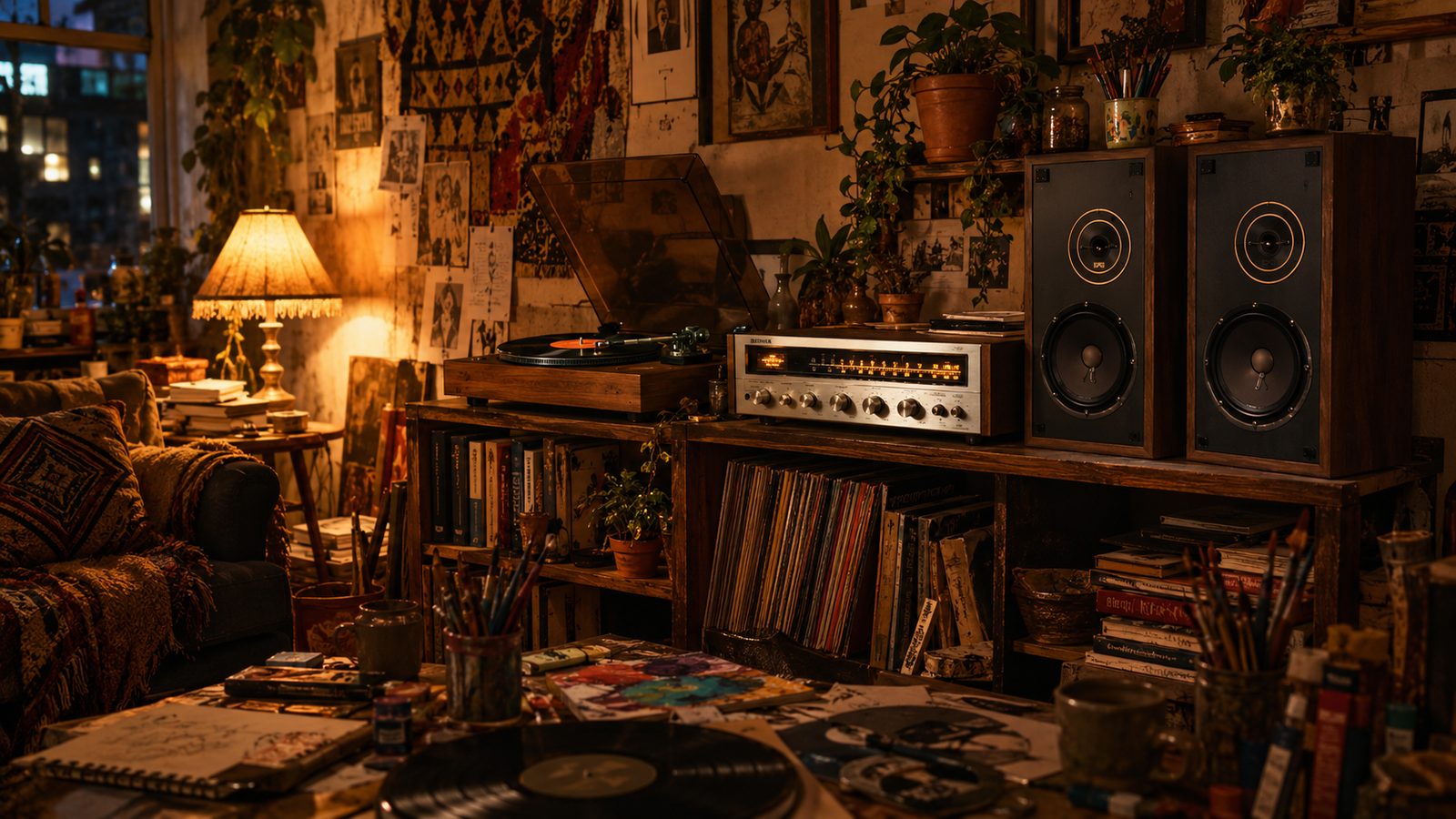
EPI 100 speakers and a Fisher receiver in a bohemian apartment — vintage audio for a character who contains multitudes. Literally.
The scene
Orphan Black follows Sarah Manning — and her clones — navigating a conspiracy involving illegal human cloning. The show earned Tatiana Maslany an Emmy for playing multiple characters, each with distinct personalities, wardrobes, and living spaces.
The bohemian apartment that serves as a central location features a lived-in audio setup: EPI 100 speakers on a bookshelf and a Fisher receiver with its amber dial glowing. The equipment was identified by AudioKarma forum members who spotted the distinctive EPI driver configuration and Fisher's classic 1970s receiver design.
The audio setup matches the character perfectly — vintage, eclectic, assembled from thrift stores and hand-me-downs. This isn't a curated audiophile system; it's a real person's stereo, built over time from whatever sounded good and was affordable.
The gear
The EPI 100 (Epicure Products Inc.) is a bookshelf speaker from the 1970s, designed in Newburyport, Massachusetts. EPI speakers were known for their wide dispersion and neutral sound — they threw sound into the room rather than beaming it at a sweet spot. The EPI 100 was the brand's most popular model, often recommended as a budget alternative to the dominant Advent and AR speakers of the era.
The Fisher receiver visible in the apartment is consistent with Fisher's 1970s consumer line — likely a Fisher 500-series or similar integrated receiver with AM/FM tuning and a warm analog sound. Fisher, originally a premium brand, became a mass-market name in the 1970s, producing millions of receivers that ended up in American living rooms.
Together, the EPI 100 and Fisher represent the kind of vintage audio system you build by accident — you inherit a receiver, find speakers at a thrift store, and suddenly you have a stereo that sounds better than anything you could buy new for twice the price.
"Just one. I'm a few. No family, too. Who am I?"
— Opening sequence
Why it matters
Orphan Black won Tatiana Maslany an Emmy and built a devoted cult following over five seasons. The production design for each clone's living space was carefully differentiated — and the bohemian apartment's vintage audio setup is a deliberate character choice. The EPI speakers and Fisher receiver say: this person values warmth, character, and authenticity over polish.
The EPI 100 is also a genuinely great speaker that deserves wider recognition. In the 1970s, EPI competed directly with Advent, AR, and KLH — the "Boston sound" speakers that defined affordable American hi-fi. The EPI 100's air-spring tweeter design remains impressive today.
EPI 100 speakers sell on eBay for $100–$300/pair. Fisher receivers from the 1970s range from $50–$300 depending on model and condition. This is one of the most affordable complete vintage systems you can assemble — and one of the best-sounding for the money.
Affiliate disclosure: We may earn a commission from qualifying purchases made through links on this page, at no extra cost to you.
ELAC Debut 2.0 B6.2
~$250/pairModern bookshelf speakers in the EPI tradition — wide dispersion, neutral sound, exceptional value. Andrew Jones engineering at a thrift-store price.
View on AmazonYamaha R-N600A
~$500Modern network receiver with a warm, analog-inspired sound. The Fisher receiver for the 2020s — streaming, vinyl, and FM all in one.
View on AmazonAudio-Technica AT-LP60X
~$150Add this to the EPI + Fisher combo and you've got a complete vintage-inspired system for under $500.
View on Amazon