Nine Inch Nails — Pretty Hate Machine
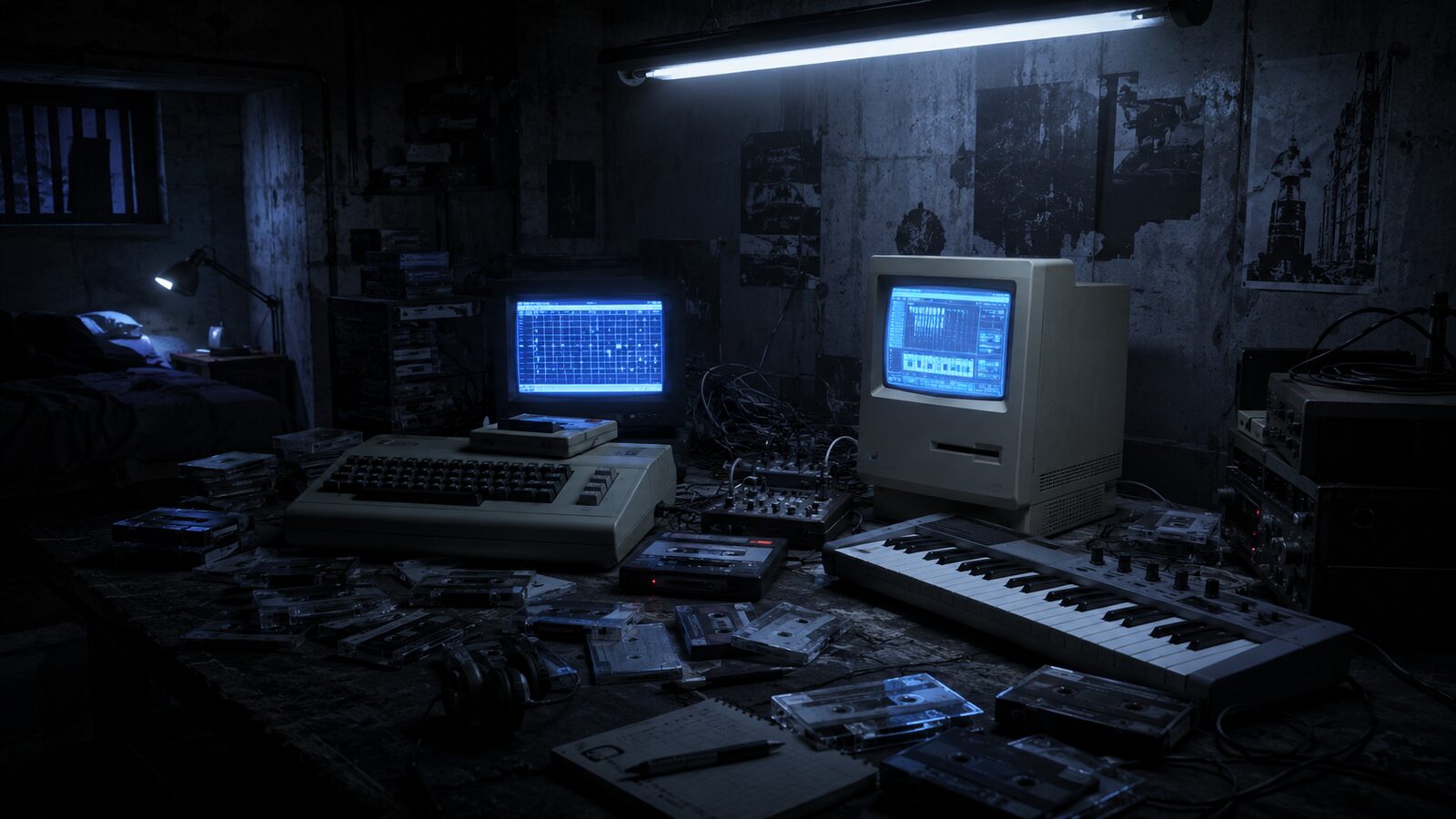
Cleveland, Ohio, 1988. Trent Reznor is working as a janitor and handyman at Right Track Studios, using his after-hours access to build demos on whatever equipment he can get his hands on. His primary instruments: a Commodore 64 home computer with a Sequential Circuits Model 64 Sequencer cartridge, and a Macintosh Plus running Opcode's Performer software.
Pretty Hate Machine was one of the first major-label albums created almost entirely on personal computers. Reznor sequenced the drum machines, triggered the samples, and arranged the songs using hardware that most people used for playing games and writing book reports. The budget was essentially zero.
The album would go on to sell over 3 million copies, launch one of the most influential careers in alternative music, and prove that world-class music production didn't require a world-class studio. All it required was obsession, access to a tape machine after midnight, and a $300 computer.
The Commodore 64 with its Sequential Circuits Model 64 Sequencer cartridge was Reznor's primary composition tool. The Model 64 turned the C64 into a MIDI sequencer — a crude but functional tool for programming drum patterns and synth sequences. Reznor himself confirmed on Equipboard: 'Pretty Hate Machine was done with this.'
The Macintosh Plus running Opcode Performer (later Digital Performer) handled more complex arrangements. The Mac Plus, released in 1986, was Apple's first computer with 1MB of RAM — barely enough to run a MIDI sequencer, but Reznor made it work.
The combination of a $300 home computer and a $2,600 Macintosh Plus represented the absolute frontier of affordable music production in the late 1980s. Professional studios were using $100K+ Fairlight CMIs and Synclavier systems. Reznor was using the machines on a janitor's salary.
Pretty Hate Machine was done with this.
— Trent Reznor, on the Commodore 64 (via Equipboard)
Pretty Hate Machine has sold over 3 million copies and launched Nine Inch Nails as one of the defining acts of 1990s alternative music. The album's lo-fi origins — built on consumer-grade computers in borrowed studio time — became a foundational myth of DIY music production.
Commodore 64s are thriving collectibles, selling for $150–$400 on eBay depending on condition and included peripherals. The Sequential Circuits Model 64 Sequencer cartridge is significantly rarer, with working examples commanding $200–$500. The combination is a piece of music production history.
The Macintosh Plus occupies a similar space in the Apple collector market, selling for $200–$600. Its role in Pretty Hate Machine connects it to a music production lineage that runs from Reznor's Cleveland basement to every bedroom producer using a laptop today.
Affiliate disclosure: We may earn a commission from qualifying purchases made through links on this page, at no extra cost to you.
Commodore 64 + Sequential Circuits Model 64
The $300 home computer that sequenced a platinum album. The Model 64 cartridge turned it into a MIDI sequencer.
Apple Macintosh Plus
Apple's first 1MB Mac — running Opcode Performer, it handled the complex arrangements that the C64 couldn't.
Ableton Live Suite
The modern bedroom producer's weapon — from demo to master in one application. Reznor would have killed for this.
Akai MPC One
Standalone sampler/sequencer — the spiritual heir to the C64 sequencer, infinitely more powerful.
Teenage Engineering OP-1 Field
Portable synth/sampler/sequencer with retro charm — the modern C64 ethos in a premium package.