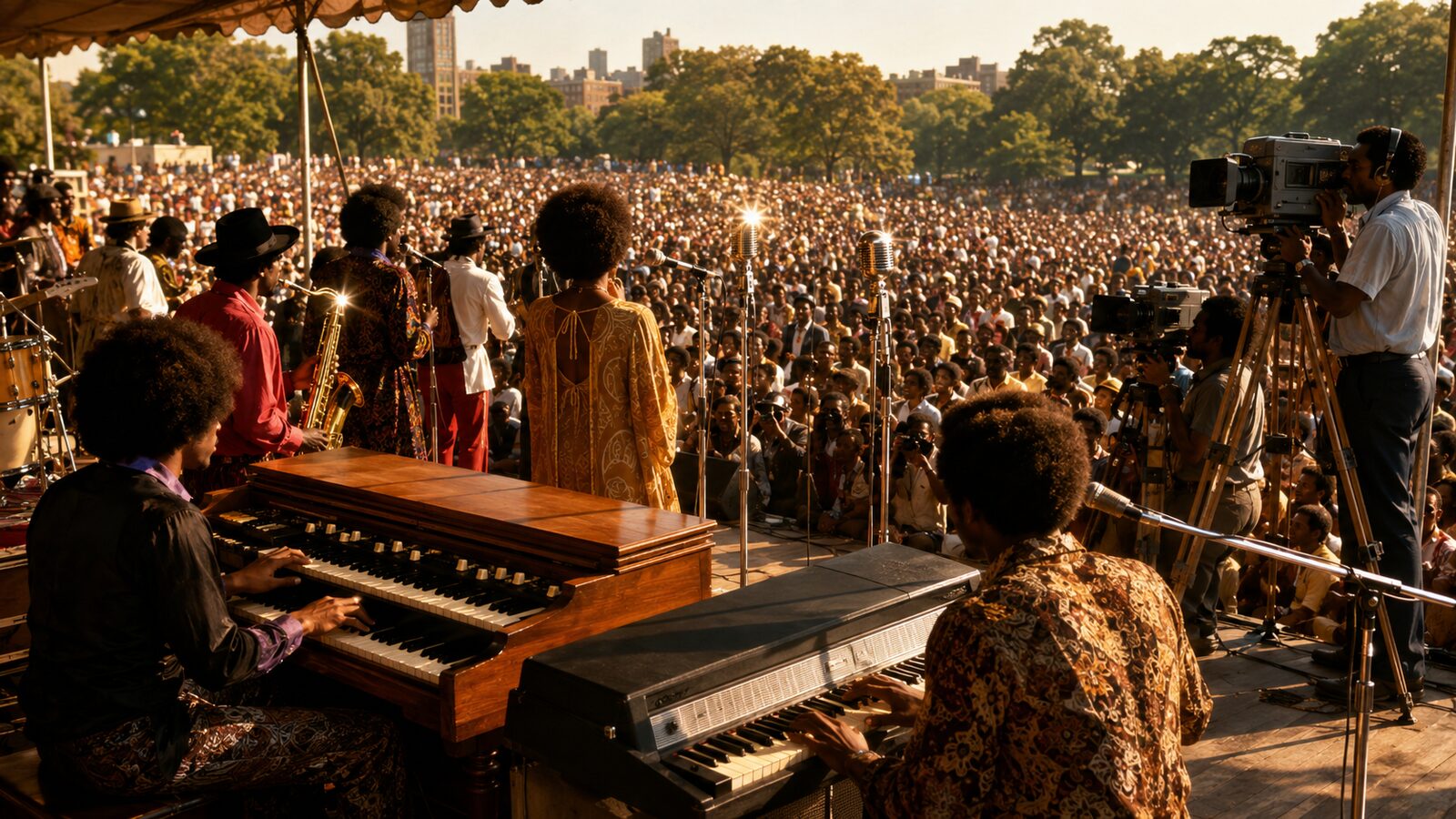
Mount Morris Park, Harlem, summer 1969. An outdoor concert stage under a canvas canopy. A Hammond B3 organ — heavy, wooden, unmistakable — sits center stage alongside a Fender Rhodes electric piano. Shure microphones on chrome stands catch the afternoon sunlight. From the wings, a professional camera crew films on broadcast-quality equipment. The crowd stretches to the horizon — thousands of people in summer clothes, dancing, clapping, alive. The energy is joyful, political, and historic.
Summer of Soul — Questlove's directorial debut — presents footage from the 1969 Harlem Cultural Festival that was professionally filmed and recorded but sat unwatched in a basement for over fifty years. Stevie Wonder, Nina Simone, Sly and the Family Stone, Mahalia Jackson, Gladys Knight, B.B. King — all performed at the festival, and all were captured on professional broadcast equipment that preserved their performances with remarkable fidelity.
The film won the Academy Award for Best Documentary. But beyond its artistic and cultural significance, it's a testament to the durability of well-recorded analog media. Fifty years in a basement, and the footage — both audio and video — was restorable to broadcast quality. The equipment used in 1969 captured something that survived neglect, time, and the near-total erasure of a historic event.
The Hammond B3 organ is one of the most distinctive instruments in American music. Its electromechanical tone generation — spinning tonewheels creating sound through electromagnetic pickups — produces a warm, complex tone that has defined gospel, jazz, soul, and rock since the 1950s. The B3 weighs over 400 pounds and requires a Leslie speaker cabinet (another 150+ pounds) for its characteristic rotating-speaker effect. The logistics of getting a B3 onto an outdoor stage in a New York City park speak to the professionalism of the festival's production.
The Fender Rhodes electric piano — visible alongside the Hammond on stage — produces its bell-like tone through metal tines struck by hammers, similar to a music box mechanism. The Rhodes became the defining keyboard sound of the 1970s, heard on recordings from Miles Davis to Stevie Wonder. Its warm, glassy tone cuts through even a large outdoor PA system.
The Shure microphones on chrome stands — likely Shure 545 or SM57 models — handled the vocal and instrument duties. These professional dynamic microphones were (and remain) the standard for live sound. The chrome finish visible in the footage catches the sunlight, creating some of the most visually striking images in concert film history.
It was like being in a dream. You're in this park, and everybody's together, and the music is... everything.— Audience member, Summer of Soul
The Harlem Cultural Festival drew over 300,000 attendees across six weekends in the summer of 1969 — the same summer as Woodstock. But while Woodstock became a cultural touchstone, the Harlem Cultural Festival was forgotten. The professionally filmed footage sat in a basement for fifty years until Questlove retrieved, restored, and assembled it into Summer of Soul.
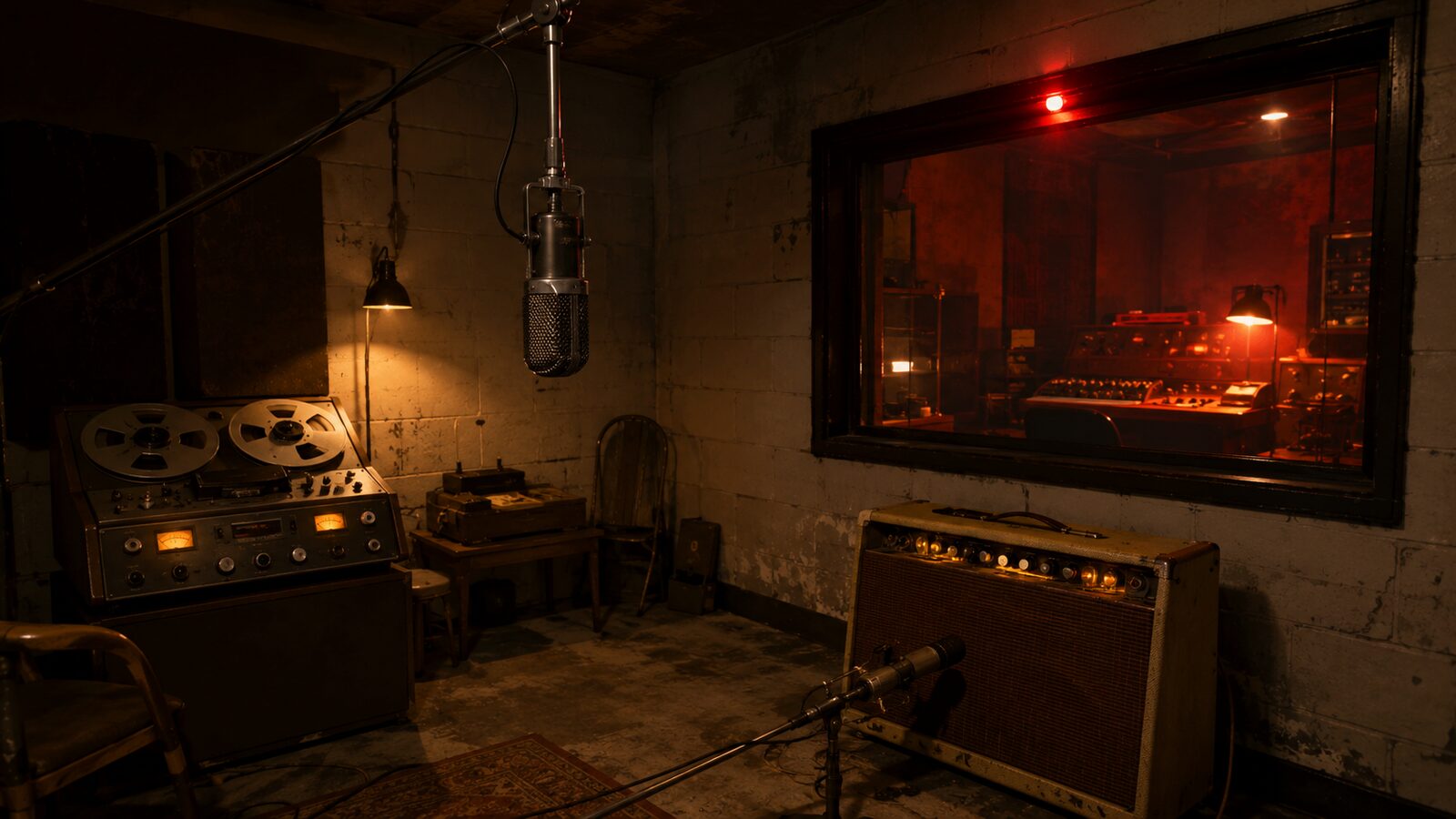
The Hammond B3 organ, featured prominently in the festival performances, sells for $3,000 to $8,000 on the vintage market. Fender Rhodes electric pianos range from $1,500 to $4,000. Vintage Shure microphones from the era — 545 and SM57 models — go for $100 to $300. Ampex tape machines like those used for the festival recording sell for $500 to $3,000.
The most remarkable aspect of this entry is the survival of the recordings. Analog tape and film, stored in a basement for half a century, proved resilient enough to be restored and presented in a format that won an Academy Award. The equipment used in 1969 didn't just capture the performances — it preserved them through decades of neglect, proving that physical media, when recorded well, has a permanence that digital files may never match.
Affiliate disclosure: We may earn a commission from qualifying purchases made through links on this page, at no extra cost to you.
Electromechanical tonewheel organ — the sound of gospel, soul, and jazz. Over 400 pounds of spinning tonewheels, drawbars, and Leslie speaker glory.
The bell-like electric piano that defined 1970s music. Metal tines, warm sustain, and a glassy tone that cuts through any mix.
Digital recreation of Hammond organ and Fender Rhodes sounds. Weighs 18 pounds instead of 425. The modern gigging keyboardist's solution.
View on Amazon →Dedicated tonewheel organ emulator with physical drawbars. The closest digital equivalent to a Hammond B3 in a portable package.
View on Amazon →Stage piano with premium electric piano and organ sounds. Weighted keys, lightweight design, professional quality.
View on Amazon →As an Amazon Associate we earn from qualifying purchases.