The entire film is about the act of listening — and the gear that enables it.
Harry Caul is the best surveillance man on the West Coast. He can bug any conversation, anywhere. He's also profoundly alone.
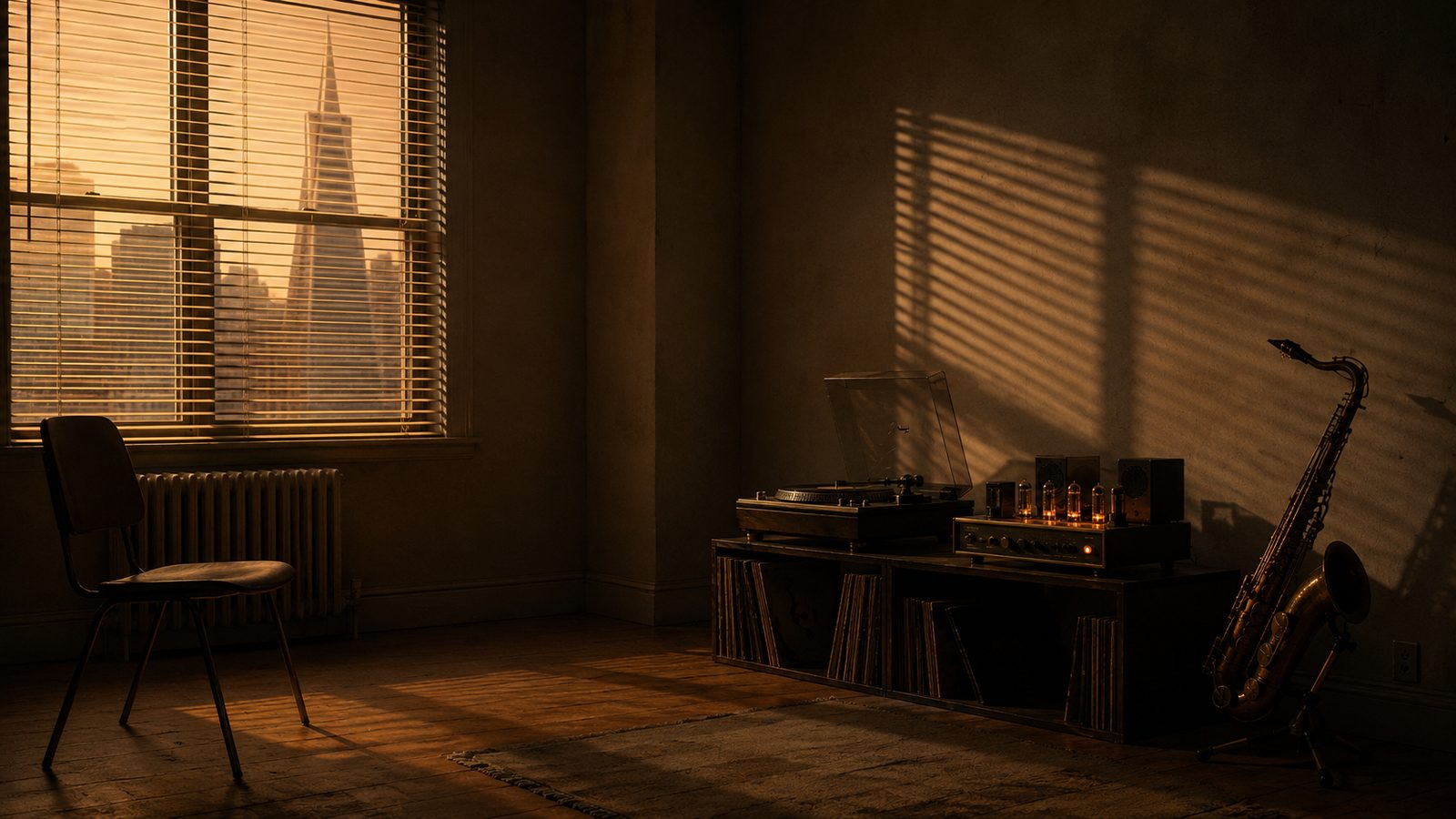
His San Francisco apartment is nearly empty — bare floors, venetian blinds, a single chair. The only personal possessions he allows himself are a saxophone and a small audio system: a turntable and a tube amplifier. When Harry plays music, it's the only time the paranoia recedes. The rest of his life is spent listening to other people. The turntable is where he listens to himself.
Coppola's 1974 film won the Palme d'Or at Cannes and remains the definitive cinematic exploration of what it means to listen — professionally, obsessively, and at the cost of everything else.
Harry's audio equipment is deliberately modest: a turntable and a small tube amplifier, likely a consumer-grade integrated unit from the late 1960s or early 1970s. The specific models haven't been conclusively identified — and that's thematically appropriate. Harry doesn't care about brands. He cares about fidelity.
The reel-to-reel surveillance equipment that dominates his workspace is far more prominent: professional-grade recording decks, mixers, and monitoring headphones. The contrast between his professional listening tools (cold, precise, invasive) and his personal ones (warm, private, human) is the film's central visual metaphor.
A saxophone rests nearby — Harry plays it alone at night, the most private form of music-making possible.
I'm not afraid of death, but I am afraid of murder.
The Conversation is regularly cited on audiophile forums as "the ultimate audiophile movie" — not because of the equipment, but because of what it says about listening itself. Harry Caul's tragedy is that his greatest skill — the ability to hear everything — is also his curse. He can't stop listening, even when what he hears destroys him.
For the site, The Conversation represents the philosophical end of the audio spectrum. It's not about gear envy or collector markets. It's about why we listen, what listening costs us, and whether perfect fidelity is worth the isolation it demands.
Coppola made this film between The Godfather and The Godfather Part II. It won the Palme d'Or over both. That tells you everything about its quality.
A modest consumer audio setup — turntable and integrated tube amp. The only personal possession in an otherwise empty apartment. The gear isn't the point; the listening is.
A turntable that embodies Harry Caul's philosophy: simple, honest, exceptional at its one job.
View on Amazon →Hybrid tube headphone amp. Warm tube glow, minimal design. Harry would listen through headphones.
View on Amazon →Professional monitoring headphones. The kind a surveillance expert would actually use.
View on Amazon →