The Shawshank Redemption
The most powerful headphone moment in cinema — and the legendary Grados that made it.
The scene
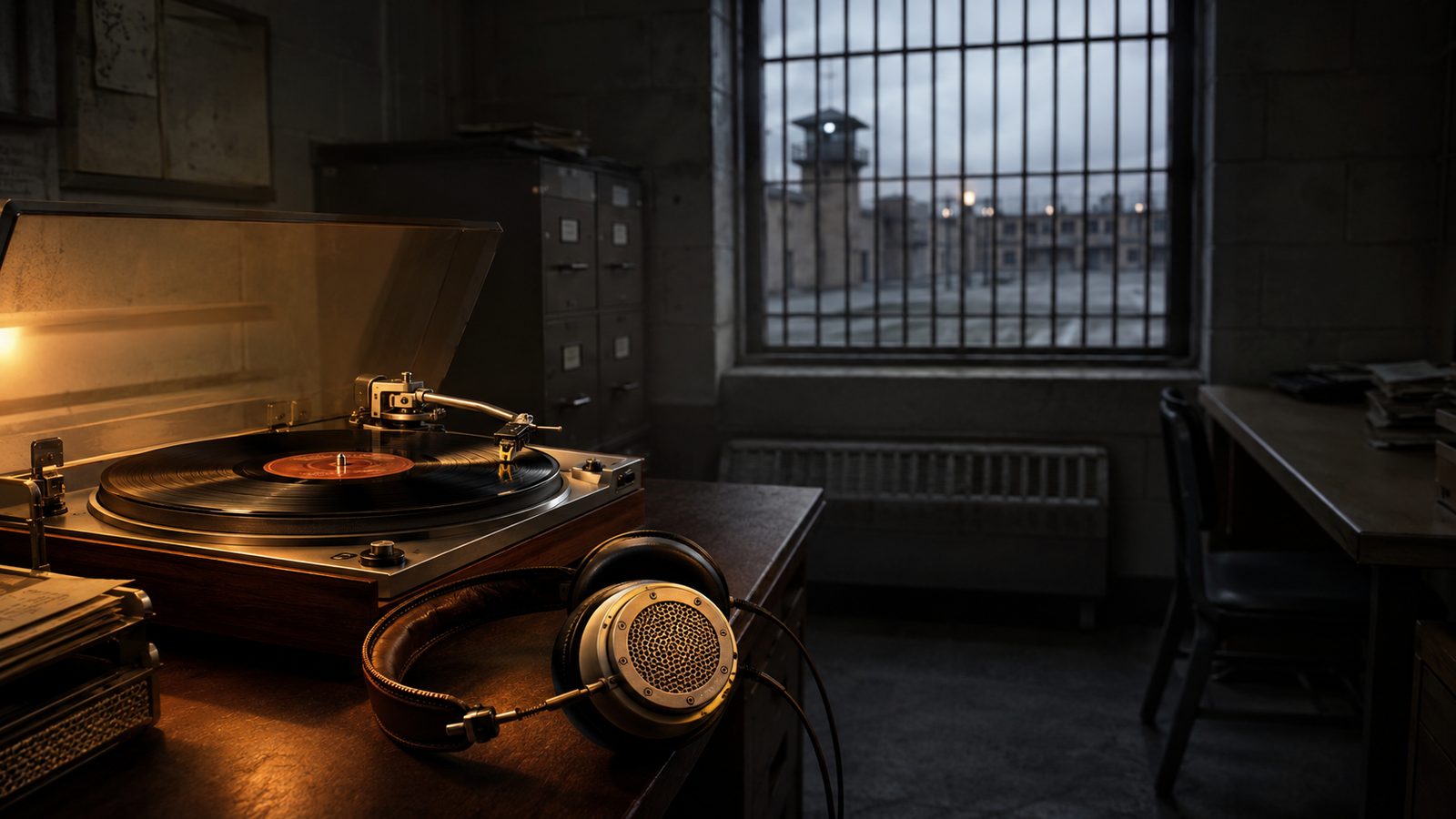
Andy Dufresne locks himself in the warden's office. He puts on a record — Mozart's "Le Nozze di Figaro," the "Sull'aria" duet — and routes it through the prison's PA system. Then he sits back, puts on a pair of headphones, and closes his eyes.
For a few minutes, every man in Shawshank prison stops what he's doing. The music floats over the yard, over the walls, over everything. Red's narration captures it: those voices soared higher and farther than anybody in a gray place dares to dream.
It's arguably the most emotionally devastating audio scene in film history. And the headphones Andy wears are real — and legendary.
The gear
The headphones visible on Andy Dufresne's head are Grado HP 1000s (also known as the Grado HPA-1 in some markets). These are handmade, open-back headphones from Grado Labs in Brooklyn — a small family-run company that's been building headphones and phono cartridges since 1953.
The HP 1000 was Grado's flagship, produced in very limited quantities from the early 1990s. They featured hand-selected drivers, a distinctive mahogany and leather design, and a sound signature that audiophiles describe as warm, intimate, and revelatory — exactly the kind of headphones that would make Mozart feel like a religious experience.
The turntable in the scene is less precisely identified — it's a period-appropriate institutional model consistent with what a 1960s prison warden might have in his office. The record player is a prop, but the headphones are the real thing.
"I have no idea to this day what those two Italian ladies were singing about… I like to think they were singing about something so beautiful it can't be expressed in words, and makes your heart ache because of it."
Why it matters
The Shawshank scene did something no headphone ad ever could: it made the experience of listening — truly listening — feel like an act of rebellion. Andy doesn't just hear the music. He disappears into it. The headphones are the portal.
For the collector market, the Grado HP 1000 was already a grail item before its movie fame. Grado produced them in tiny numbers, each pair hand-tuned by Joseph Grado himself. Finding a working pair today is genuinely difficult. When they surface on the secondhand market, prices reflect both their audiophile reputation and their Hollywood provenance.
The scene also cemented Grado's reputation in popular culture. Before Shawshank, Grado was an insider's brand — beloved by audiophiles, unknown to everyone else. After it, the name carried emotional weight. You weren't just buying headphones; you were buying a tiny piece of that moment when music meant freedom.
Grado HP 1000
Grado's legendary flagship. Hand-built in Brooklyn, open-back design, mahogany ear cups, leather headband. The headphones that made Mozart sound like freedom in a prison warden's office.
- Era
- Early 1990s
- Type
- Open-back over-ear
- eBay market
- $1,500–$4,000+
- Condition note
- Extremely rare
Grado SR325x
Modern Grado with the family sound signature — warm, intimate, revealing. Still handmade in Brooklyn. The closest you can get to the HP 1000 experience without the four-figure price tag.
View on Amazon →Grado RS2x
Grado's Reference Series. Hand-selected and matched drivers, cocobolo mahogany housings. A direct descendant of the HP 1000 lineage.
View on Amazon →Sennheiser HD 650
If you want open-back warmth that makes orchestral music feel transcendent, the HD 650 is the other classic choice. Different house sound than Grado, but the same ability to make you close your eyes and disappear.
View on Amazon →