The Grateful Dead's Wall of Sound
48 McIntosh MC2300 amplifiers. 586 JBL speakers. 54 Electro-Voice tweeters. 28,800 watts RMS. The largest, most insane PA system ever built for a single act. It debuted in 1974 and was retired within a year — because it was too expensive to move.
The Scene
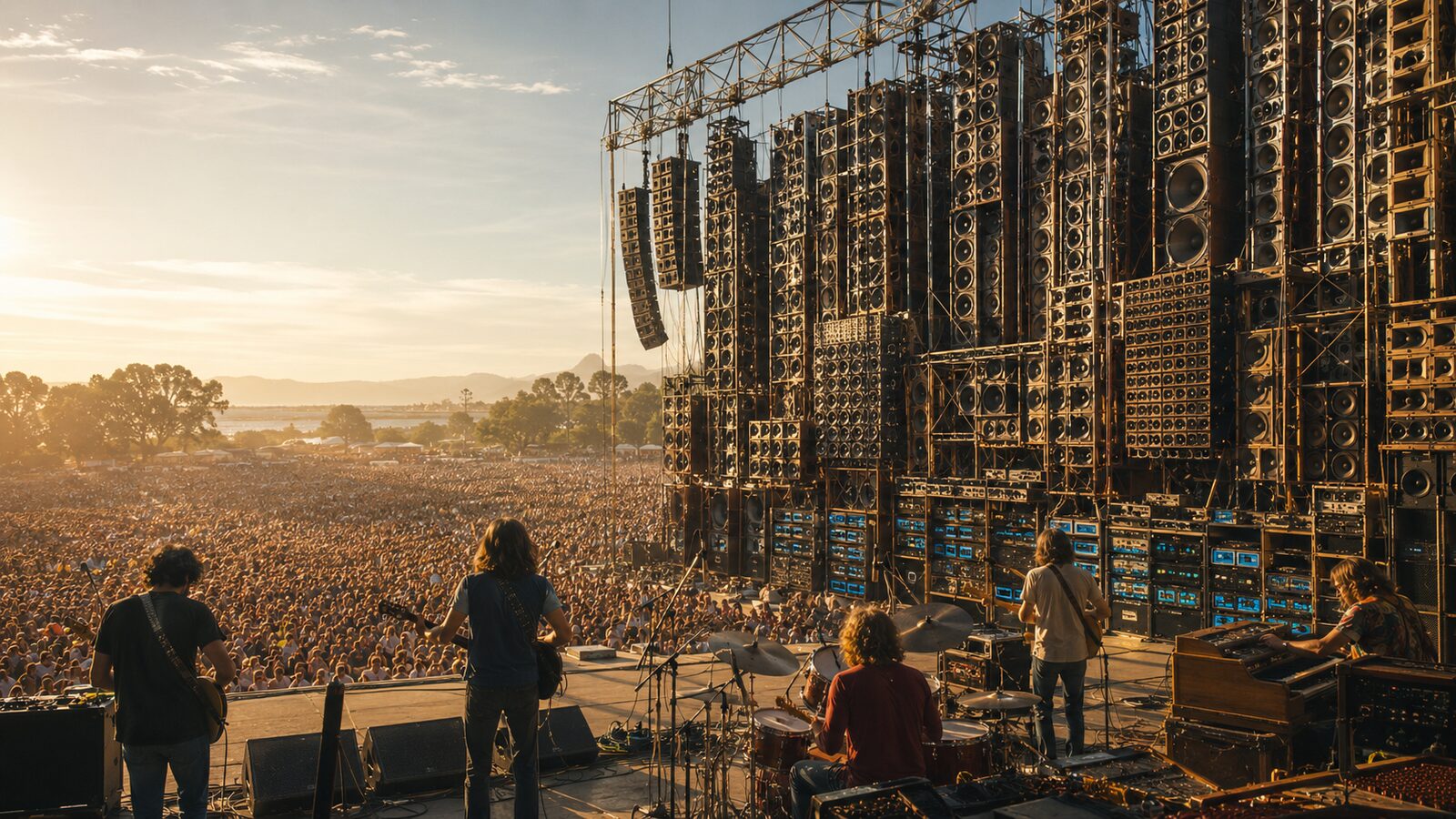
On March 23, 1974, the Grateful Dead debuted the Wall of Sound at the Cow Palace in Daly City, California. Behind the band, rising nearly four stories high, stood a structure that looked less like a sound system and more like a brutalist apartment building made entirely of loudspeakers. It was the brainchild of audio engineer Owsley "Bear" Stanley and sound designer Dan Healy, and it was designed to solve a problem that no one else had even attempted: delivering concert-quality, audiophile-grade sound to an outdoor audience of tens of thousands.
The concept was radical. Instead of pointing speakers at the audience from the sides of the stage, the Wall placed every speaker behind the musicians, organized by instrument. Each voice and instrument had its own dedicated speaker column — vocals, lead guitar, rhythm guitar, bass, and drums each received their own amplification chain and their own section of the wall. The result was a system with no feedback, pinpoint imaging, and a clarity that audiences had never experienced at scale.
It was also completely impractical. The Wall required four semi-trucks to transport, a full day to set up, a crew of 21 to operate, and cost roughly $350,000 to build in 1974 dollars — over $2 million today. The Dead retired it after one season.
The Gear
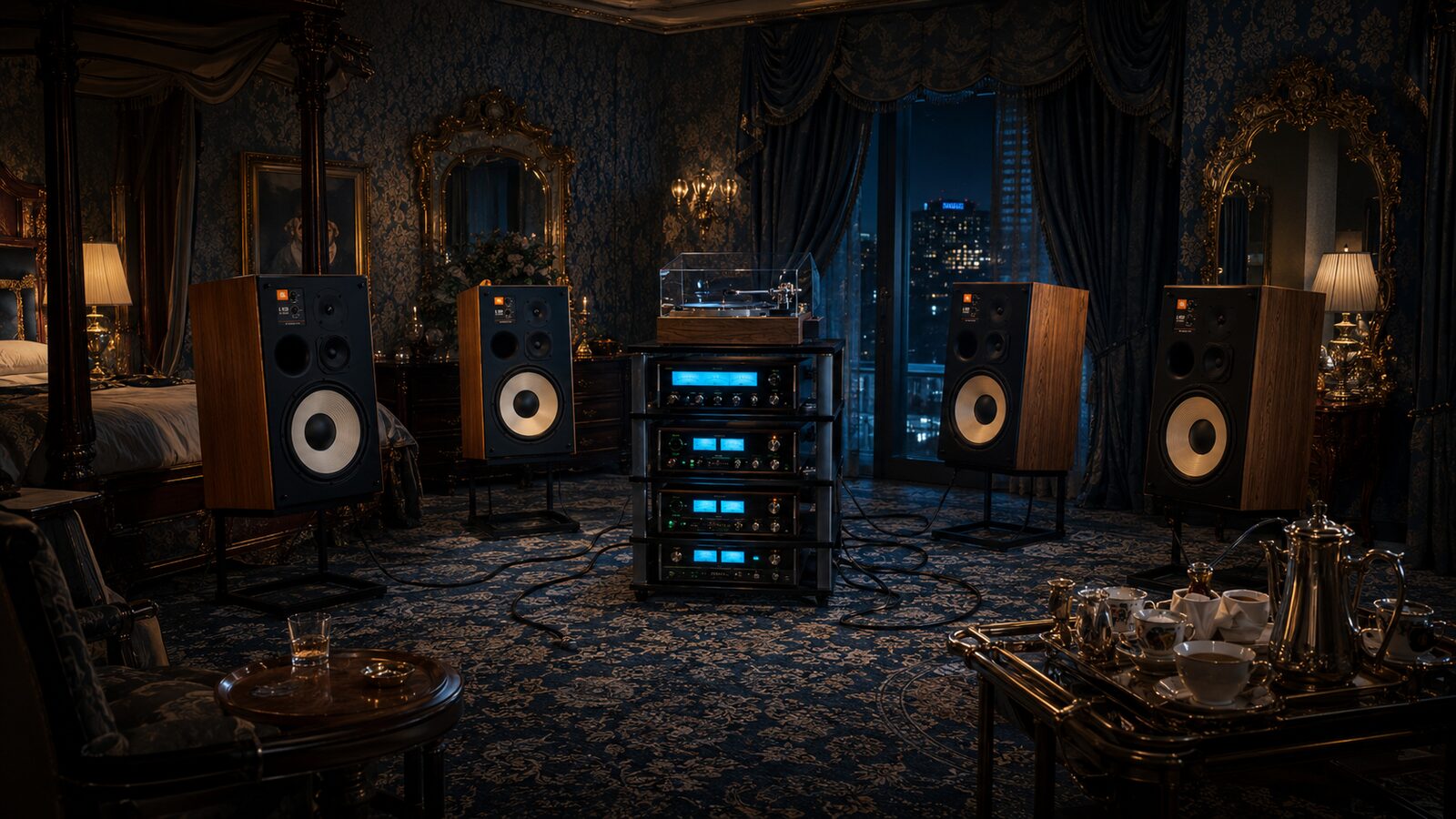
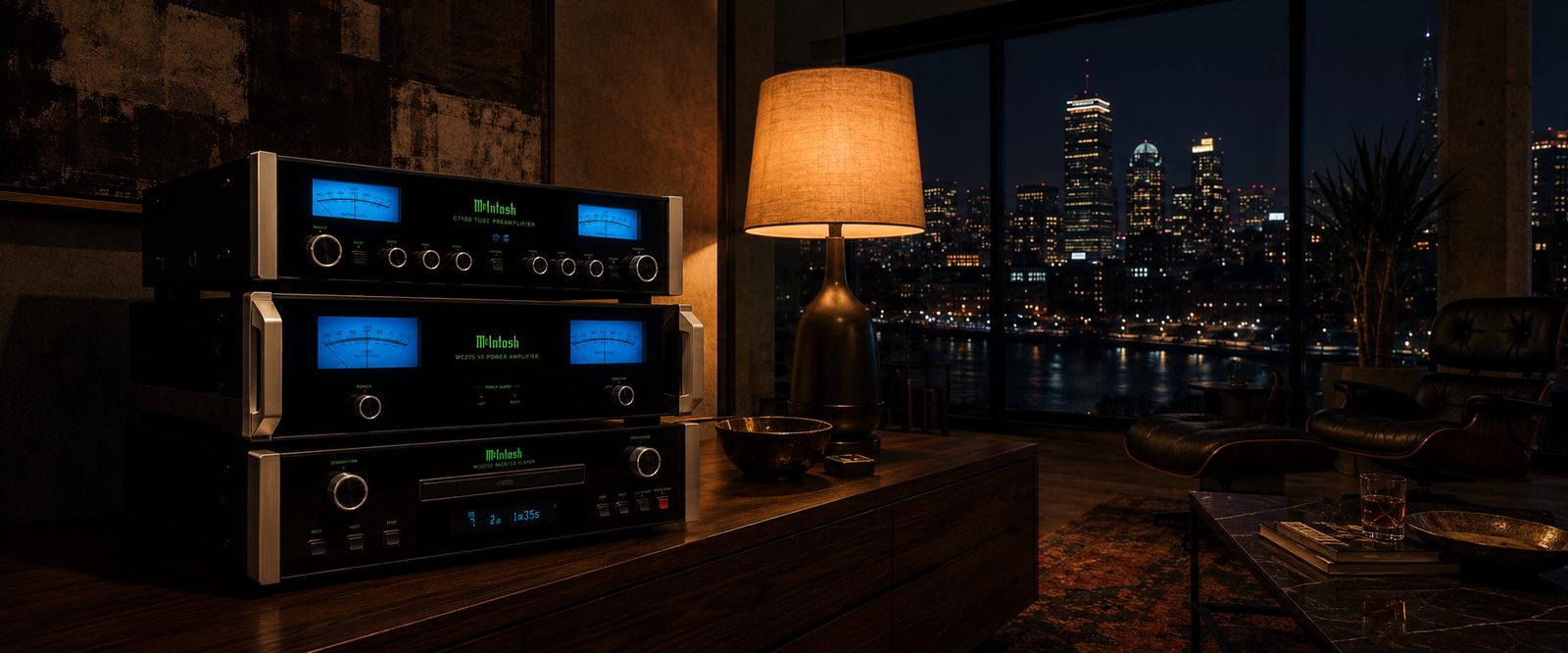
The amplification backbone was 48 McIntosh MC2300 power amplifiers, each delivering 600 watts per channel when bridged, for a combined total of 28,800 watts RMS. The MC2300 was McIntosh's flagship solid-state amplifier — a 130-pound monster designed for audiophile home systems that Stanley repurposed for concert use. No one had ever used McIntosh amplifiers in a live setting at this scale before.
The speaker complement was equally staggering: 586 JBL loudspeakers and 54 Electro-Voice tweeters, for a total of 640 individual drivers. The JBL speakers included 15-inch woofers, 12-inch mid-bass drivers, and horn-loaded compression drivers, all organized into frequency-specific columns. The bass columns alone used dozens of JBL D140 and E140 speakers.
The system also pioneered what engineers now call "line array" thinking — by stacking speakers vertically in frequency-matched columns, the Wall achieved coherent, even coverage across vast distances without the phase cancellation and comb filtering that plagued conventional PA systems of the era.
"The Wall of Sound was the greatest single advance in sound reinforcement history. Nothing has matched its purity of concept — every instrument through its own speakers, no mixing, no feedback, just pure sound."— Dan Healy, Grateful Dead sound engineer
Why It Matters
The Wall of Sound is the most ambitious audio engineering project in concert history. Nothing before or since has attempted to deliver audiophile-quality sound to a festival-sized audience using exclusively hi-fi amplification. Modern concert PA systems use powered line arrays that are smaller, lighter, and more efficient — but none of them use McIntosh amplifiers, and none of them were designed by a rogue chemist who believed concert audiences deserved the same sound quality as a home listening room.
McIntosh MC2300 amplifiers are now blue-chip collector's items, driven partly by the Wall of Sound legend. Working units sell for $3,500–$6,500, with pristine examples commanding even more. The JBL D140 and E140 speakers that formed the wall's backbone are also actively traded, typically for $200–$500 per driver.
The Wall's legacy extends beyond collecting. Every modern festival sound system descends conceptually from the Wall of Sound's innovations — dedicated amplification chains per instrument, vertical line arrays, and the fundamental belief that live music should sound as good as recorded music.
The Gear Cards
McIntosh MC2300
600 watts per channel (bridged). 130 lbs each. 48 units delivered 28,800W total RMS. McIntosh's flagship solid-state amp, repurposed from audiophile living rooms to the largest PA system ever built.
JBL D140 / E140
15-inch loudspeakers that formed the bass columns of the Wall. Hundreds were used across multiple frequency bands. JBL's professional workhorse of the 1970s.
Modern Alternatives
McIntosh MC611 Monoblock
~$7,500 eachMcIntosh's current flagship monoblock. 600W into any load. The modern equivalent of what powered the Wall — now in a single chassis.
View on Amazon →JBL L100 Classic
~$4,500/pairReissue of the iconic JBL L100 — same 12" woofer heritage, same orange foam grille. The Wall's DNA in a bookshelf-friendly format.
View on Amazon →Crown XLS 2502 Power Amp
~$600775W/channel professional amplifier. The practical way to move serious air without 48 McIntosh amps and four semi-trucks.
View on Amazon →