Wipeout
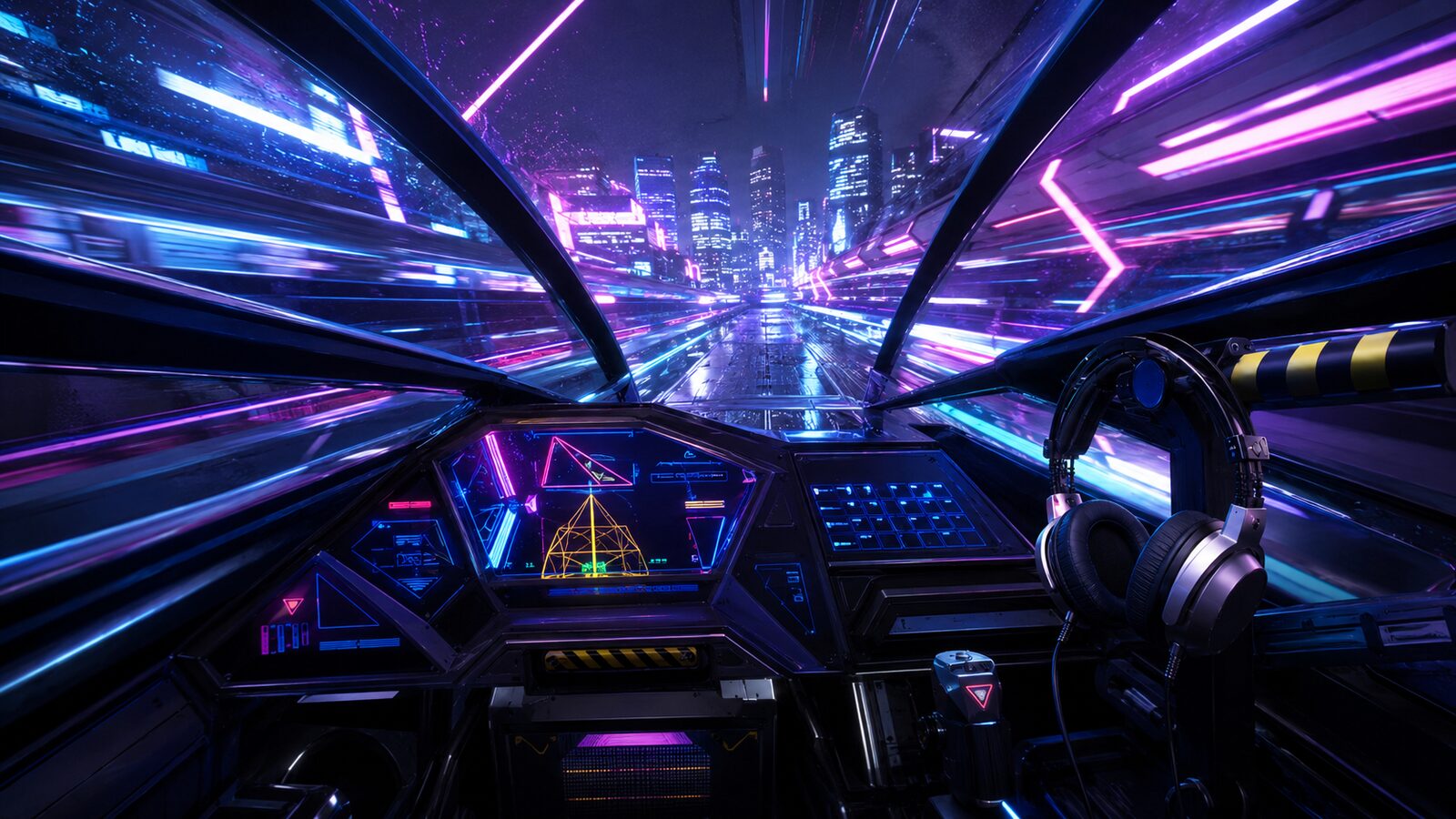
2052. Anti-gravity racing has replaced Formula One as the world's premier motorsport. Pilots strap into needle-shaped craft that hover inches above neon-lit tracks at speeds that blur the line between racing and flight. The soundtrack — curated from the cutting edge of electronic music — isn't background; it's the propulsion system.
Psygnosis's Wipeout didn't just launch a franchise — it launched an entire cultural aesthetic. The game's visual identity was created by The Designers Republic (TDR), a real Sheffield design studio that had already defined the look of electronic music through their work for Warp Records and R&S Records. For the first time, a video game had genuine street credibility.
The soundtrack sealed it. Licensed tracks from The Chemical Brothers, Orbital, Leftfield, and CoLD SToRAGE turned the game into a playable rave. Wipeout XL (2097) doubled down with The Prodigy, Underworld, and Fluke. The game didn't feature audio gear — it WAS audio gear, a delivery system for electronic music that reached millions who would never set foot in a club.
The Designers Republic visual identity is the 'gear' in this entry — a real design studio whose angular, futuristic typography and graphic language became inseparable from both electronic music and PlayStation gaming. Founded by Ian Anderson in Sheffield in 1986, TDR created iconic artwork for Warp Records (Aphex Twin, Autechre, LFO), R&S Records, and Pop Will Eat Itself before Psygnosis recruited them for Wipeout.
The game's soundtrack albums became collectible physical objects in their own right. The Wipeout 2097 / XL soundtrack on vinyl is a sought-after collector's item, featuring tracks from The Prodigy, The Chemical Brothers, Underworld, and Photek — a who's-who of mid-90s electronic music.
Creative Bloq documented TDR's role: 'They were defining what electronic music looked like through their work for Warp and R&S Records, so it was a natural fit for WipEout.' The studio's contribution elevated the game from a racing title to a cultural object.
Wipeout is what happens when gaming stops being a hobby and starts being a lifestyle.
— Edge Magazine, 1995
Wipeout's cultural impact extends far beyond gaming. It was the game that PlayStation used to market itself to adults, placing demo units in nightclubs and bars across Europe. The strategy worked — Wipeout convinced an entire generation that gaming could be as cool as the music they were already listening to.
The Designers Republic's work on the franchise has been exhibited in museums and design galleries worldwide. Their influence on UI design, motion graphics, and digital typography is incalculable — every futuristic HUD in every sci-fi game since 1995 owes something to TDR's Wipeout aesthetic.
For collectors, the Wipeout XL/2097 soundtrack vinyl sells for $30–$80 on eBay, while Warp Records releases featuring TDR artwork (particularly Aphex Twin's Selected Ambient Works) command premium prices. The TDR aesthetic is inseparable from the vinyl collecting and electronic music communities.
Affiliate disclosure: We may earn a commission from qualifying purchases made through links on this page, at no extra cost to you.
Wipeout 2097 / XL Soundtrack (Vinyl)
The soundtrack that proved games could curate music as well as any DJ. The Chemical Brothers, The Prodigy, Underworld — on wax.
Audio-Technica AT-LP120XUSB
Direct-drive turntable for spinning your Wipeout vinyl — the gateway to serious record collecting.
KEF LSX II Wireless Speakers
Compact powered speakers with a design aesthetic that TDR would approve of — clean, angular, futuristic.
Sony WH-1000XM5
Noise-canceling headphones for immersive listening — close your eyes and you're in the cockpit.