Home / As Seen In / Albums
The Gear Behind Aphex Twin’s Selected Ambient Works Volume II
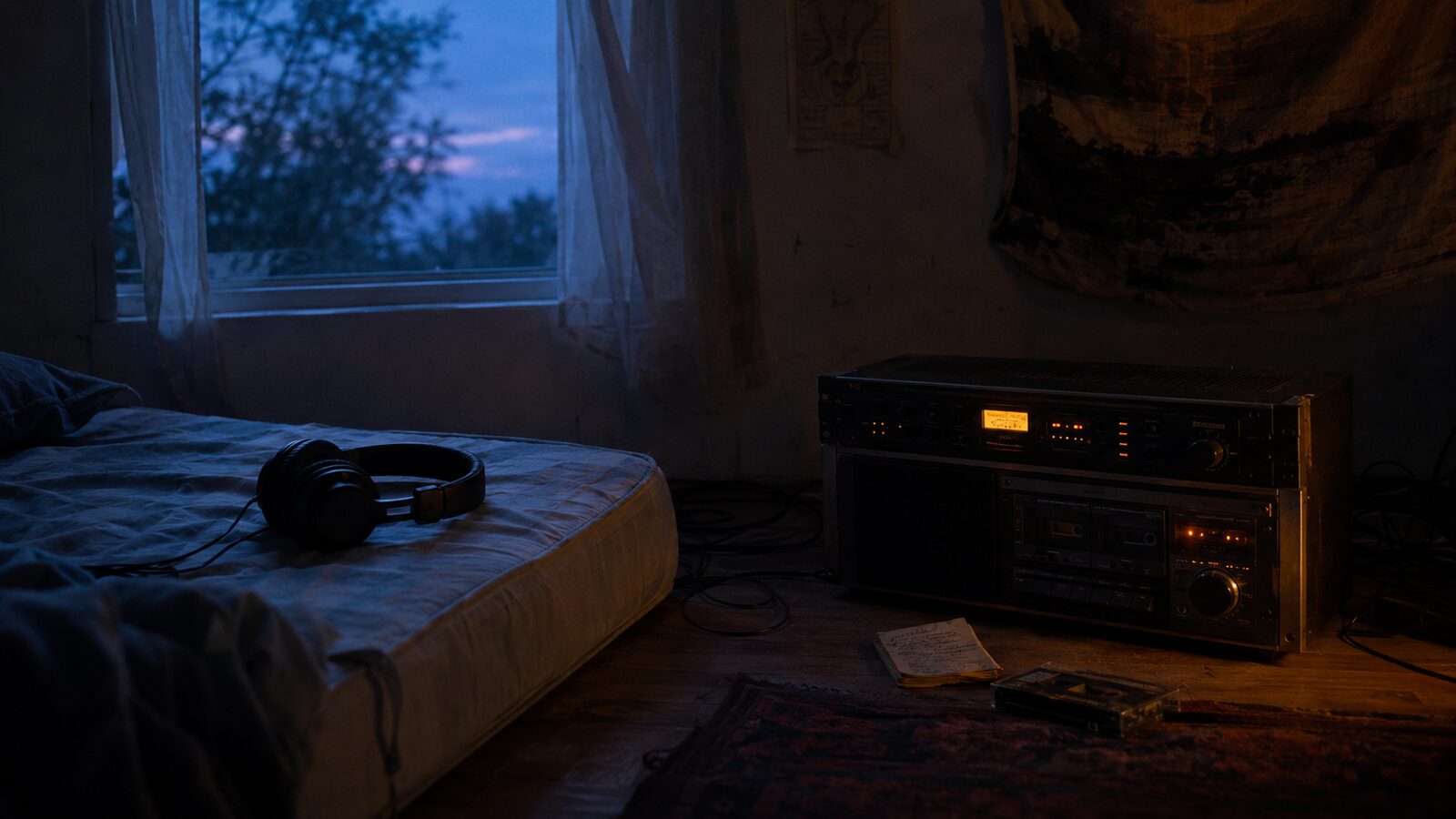
A bedroom floor, a rack-mount polysynth, a four-track cassette recorder, and the boundary between sleep and waking. Richard D. James made the most revered ambient album of the 1990s on gear most producers would overlook.
📺 Album / Production 📅 1994 ⏱ 7 min read
The Scene
By 1994, Richard D. James had already released Selected Ambient Works 85–92 to critical acclaim, but the sequel was something else entirely. Where the first album was built on drum machines and samplers, Volume II was made in near-total darkness — James claimed many of the tracks came from lucid dreams, recorded immediately upon waking on a four-track cassette deck beside his bed.
The setup was deliberately minimal. An Oberheim Matrix-1000 rack-mount polysynth — a one-rack-unit module that stored 1,000 factory patches — provided the lush, evolving pads that define the album. James ran it through a four-track cassette recorder with the speed dial adjusted between takes, creating the pitch-shifted, warped textures that give the album its dreamlike quality.
There was no mixing desk, no outboard processing chain, no studio. Just a bedroom floor in Cornwall, headphones on a bare mattress, and the hiss of cheap tape saturating at the edges. The most important ambient record since Brian Eno’s Music for Airports was made on gear worth less than a month’s rent.
The Gear
The Oberheim Matrix-1000 is the overlooked workhorse of late-1980s synthesis. Released in 1988 as a preset-only rackmount version of the Matrix-6, it packed 1,000 patches into a single rack unit. While serious programmers gravitated toward the fully editable Matrix-6 and Matrix-12, the Matrix-1000’s strength was its sheer density of usable sounds — warm analog pads, evolving textures, and the kind of thick polysynth tones that sat perfectly in ambient music.
James exploited the Matrix-1000’s character by routing it through varispeed cassette recording — playing back four-track tapes at altered speeds to shift pitch and timbre in ways that digital processing couldn’t replicate. The tape saturation added harmonic warmth; the speed manipulation added uncanny drift. The result was sound that felt genuinely alien, despite coming from a rack unit that cost a few hundred dollars used.
The album’s 2024 Warp Records 30th-anniversary reissue sparked renewed interest in the Matrix-1000, pushing used prices from the $400–$600 range into $700–$1,200 territory. It remains one of the most affordable ways into genuine Oberheim analog sound.
“The Matrix-1000 was a staple of Aphex Twin’s early-’90s rig, providing the lush analog pads that define the album’s dreamlike atmosphere.”
— Gearnews, “Aphex Twin Synthesizers” deep-dive (2024)
Why It Matters
Selected Ambient Works Volume II is routinely cited as one of the greatest electronic albums ever made. Pitchfork gave it a rare 9.0+ retrospective score. It influenced everything from Boards of Canada to Tim Hecker to the entire drone and ambient scene of the 2000s.
For gear collectors, the album represents the ultimate argument for the Oberheim Matrix-1000 as a serious creative instrument rather than a preset box. The 2024 Warp reissue — a deluxe vinyl pressing with restored artwork — created a wave of new listeners discovering the record, and eBay searches for “Oberheim Matrix-1000” spiked accordingly.
The varispeed cassette technique is equally collectible in spirit. Four-track cassette recorders like the Tascam 424 and Fostex X-series have surged in value as lo-fi and ambient producers rediscover the creative possibilities of tape manipulation. James proved that limitations aren’t obstacles — they’re the point.
The Gear Cards
The Polysynth
Oberheim Matrix-1000
The rack-mount analog polysynth behind SAW II’s lush, evolving pads. 1,000 factory patches in a single rack unit. Prices have climbed since the 2024 Warp reissue brought new attention to the album.
| Type | Rack-mount analog polysynth |
| Year | 1988 |
| Voices | 6-voice polyphonic |
| Patches | 1,000 factory presets |
| Oscillators | 2 DCOs per voice |
| Filter | 4-pole lowpass (Curtis CEM3374) |
The Tape Machine
Tascam 424 Portastudio
The four-track cassette recorder James used for varispeed tape manipulation. Recording at altered speeds created the pitch-shifted, warped textures that define the album. Any quality four-track will get you there.
| Type | 4-track cassette recorder |
| Year | 1992 |
| Tracks | 4 simultaneous |
| Speed | 1⅞ / 3¾ ips |
| Inputs | 4 (XLR/¼″) |
| Status | Discontinued (cult following) |
Modern Alternatives
Behringer Deepmind 12
~$700
Modern 12-voice analog polysynth with lush pads reminiscent of classic Oberheim sound. The budget entry into thick analog textures.
View on Amazon →Tascam Model 12 Mixer/Recorder
~$500
Modern multitrack recorder with analog mixer. Captures the hands-on tape workflow in a current production context.
View on Amazon →Aphex Twin — SAW II (Vinyl)
~$45
The 2024 Warp Records 30th-anniversary reissue on vinyl. Restored artwork, remastered audio. The definitive pressing.
View on Amazon →Affiliate Disclosure: Stereos For Sale earns commissions from purchases made through our Amazon and eBay links. This helps keep the site running. Every product we recommend is something we’d genuinely want to own. Learn more.


