Back to the Future
The amp that blew Marty McFly across the room — and the real guitar he played through it.
The scene
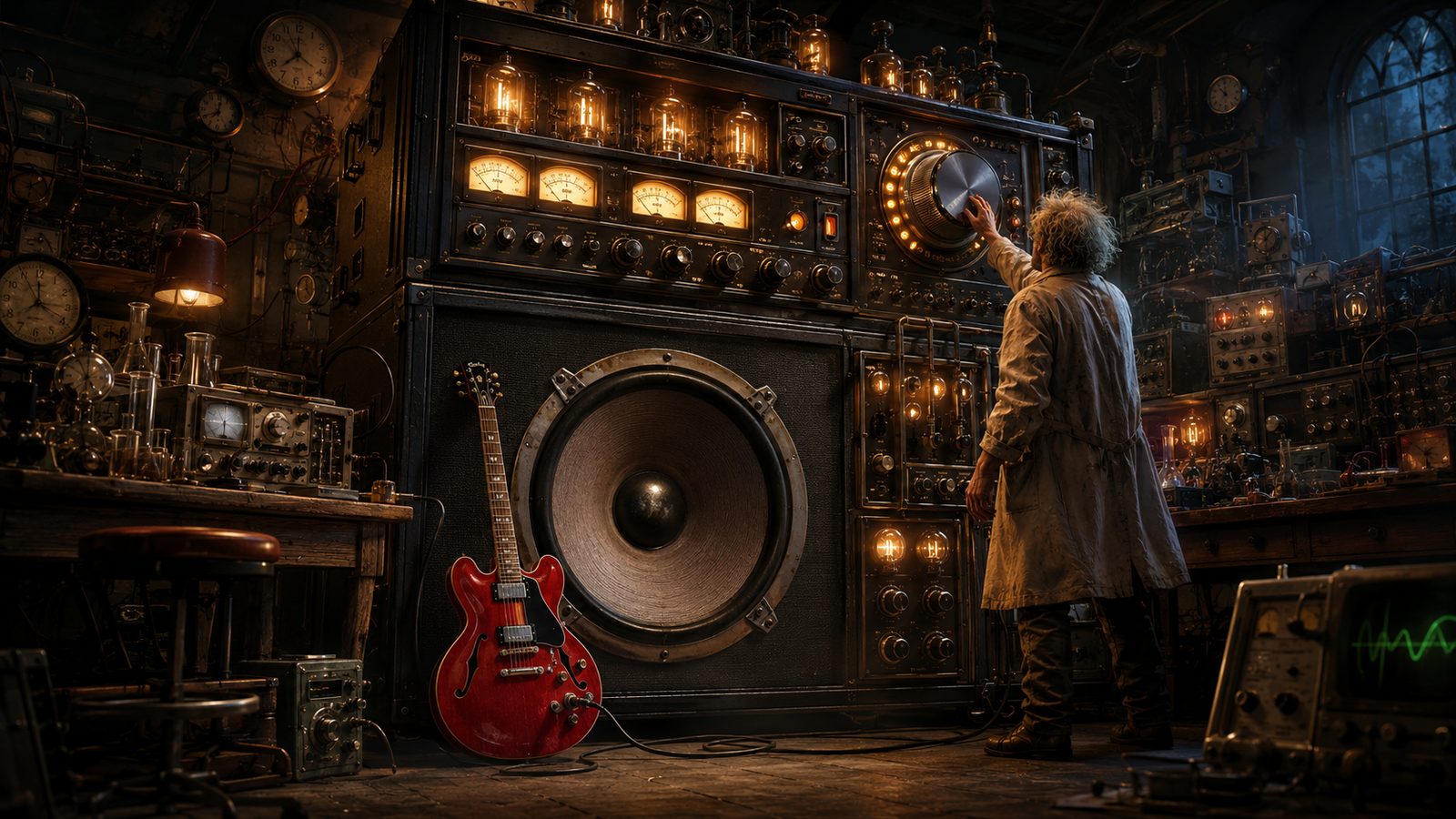
It's the opening scene. Marty McFly walks into Doc Brown's garage lab, picks up a guitar, plugs it into an enormous amplifier stack, and turns the volume to maximum. One power chord. The speaker explodes. Marty flies backward across the room into a bookshelf. He looks up at the smoking wreckage and says: "Rock and roll."
Robert Zemeckis's 1985 film gives us the most famous amplifier scene in movie history within its first two minutes. The amp is absurdly oversized — a wall of speakers and electronics that no real person would own. But Doc Brown isn't a real person. He's the kind of inventor who would build a guitar amp the size of a refrigerator just to see what happens.
The amp is fictional. The guitar isn't.
The gear
The amplifier is labeled the CRM-114 — a fictional creation built as a prop for the film. The name is a reference to Stanley Kubrick's Dr. Strangelove, where the CRM-114 is a military radio discriminator. The prop department built it from real amplifier components, rack hardware, and custom cabinets to create something that looks plausible but impossibly powerful.
The guitar, however, is very real: Marty plays a Gibson ES-345, a semi-hollow body electric guitar first produced in 1959. The ES-345 is the middle sibling of Gibson's ES-3xx line — above the ES-335 and below the ES-355. It features stereo output, a Varitone switch for tonal variety, and the warm, fat tone that made semi-hollows the weapon of choice for blues, jazz, and rock players.
The guitar Marty plays in the audition scene (and later at the Enchantment Under the Sea dance) appears to be the same ES-345. It's the throughline of Marty's character: a kid who plays guitar, rides a skateboard, and accidentally invents rock and roll at a high school dance.
"Rock and roll."
Why it matters
The opening scene of Back to the Future accomplished something brilliant: it established Marty McFly's entire character in thirty seconds. He walks into a room full of scientific chaos, plugs into the biggest amp he can find, and cranks it. That's who he is — brave, impulsive, drawn to loud things.
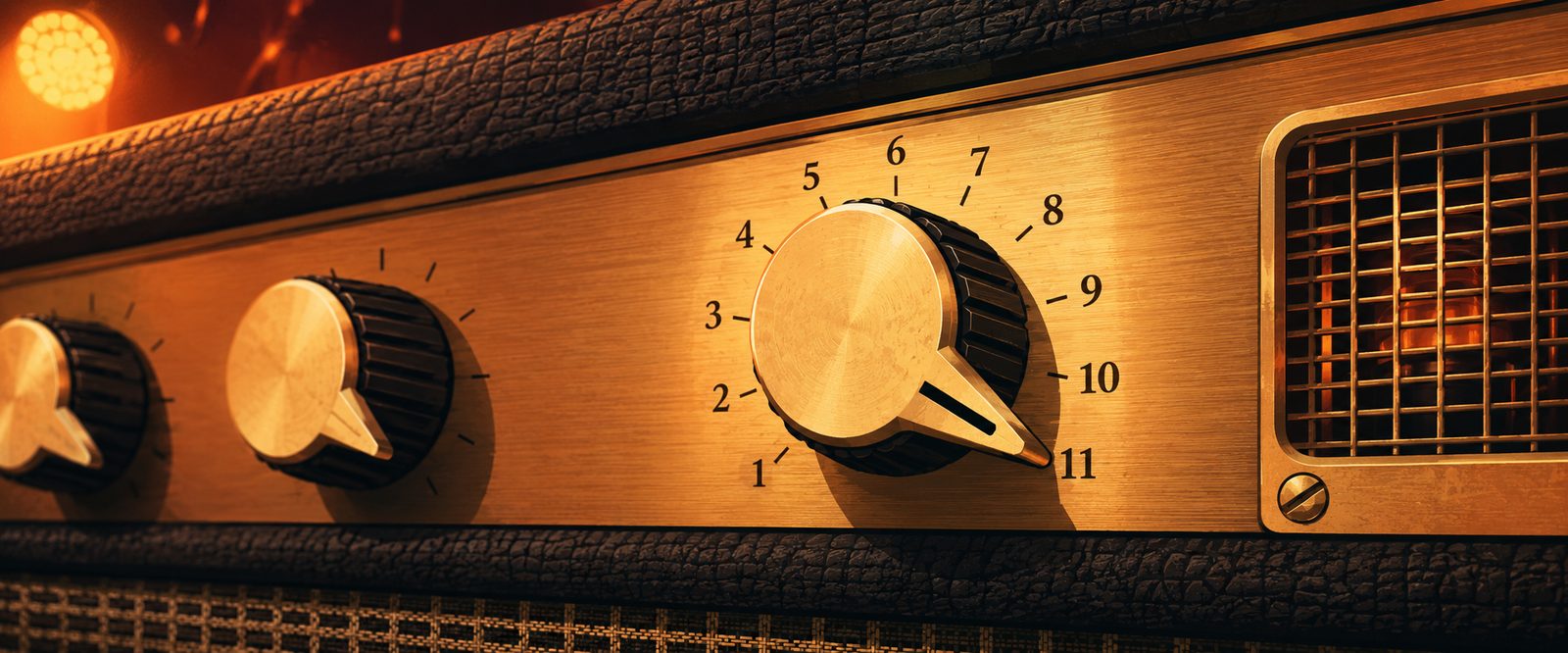
The CRM-114 became a cultural touchstone for the fantasy of impossible amplification. Every guitarist who's dreamed of turning it up past 10 owes a debt to that scene. (Spinal Tap's "goes to 11" is the comedy version; Back to the Future is the action version.)
For the real gear market, the Gibson ES-345 has always been a collector's guitar. Vintage models from the 1959–1969 era command astronomical prices. The Back to the Future connection adds a layer of pop culture cachet, especially for cherry red or sunburst finishes similar to what appears on screen. Modern ES-345 reissues give players access to the same semi-hollow magic at a fraction of the vintage cost.
Affiliate disclosure: We may earn a commission from qualifying purchases made through links on this page, at no extra cost to you.
Gibson ES-345
Semi-hollow body electric guitar with stereo output and Varitone switch. First produced in 1959. The guitar Marty plugs into Doc's amp — and later plays at the Enchantment Under the Sea dance.
- Era
- 1959–present
- Type
- Semi-hollow electric guitar
- eBay market
- $3,000–$15,000+ (vintage)
- Modern reissue
- $2,500–$4,000
CRM-114 Amplifier (Prop)
A fictional creation built by the prop department. Not a real product — but assembled from real rack components, speaker cabinets, and amplifier hardware. The name references Dr. Strangelove.
- Era
- 1985 (film prop)
- Type
- Fictional guitar amplifier
- eBay market
- N/A — prop only
- Real-world equivalent
- High-wattage tube stacks
Epiphone ES-345
Gibson's more affordable sibling brand. Same semi-hollow body design, Varitone switch, and that fat warm tone — without the vintage price tag. The Marty McFly starter kit.
View on Amazon →Gibson ES-335
The ES-345's plainer sibling — no Varitone, no stereo output, but the same legendary semi-hollow body and the same warm, singing sustain. The most popular semi-hollow ever made.
View on Amazon →Fender Mustang GTX100
100-watt modeling amp that won't blow you across the room — but can simulate amps that would. Doc Brown would appreciate the engineering, if not the volume.
View on Amazon →