The Gear Behind Daft Punk's Random Access Memories
The most expensive electronic album ever recorded was made entirely on analog equipment. A Neve 88R, a Studer A827, 18 custom Sennheiser vocoders, and a synth collection worth more than most houses.
The Scene
After reinventing French house with Homework and sampling their way through Discovery, Thomas Bangalter and Guy-Manuel de Homem-Christo decided to do something nobody expected: they went completely analog. Random Access Memories was recorded at Conway Studios in Los Angeles on a Neve 88R console — one of the most expensive mixing desks ever built — with every instrument performed live by session musicians, committed directly to a Studer A827 24-track tape machine running at 15 IPS with Dolby SR noise reduction.
There were no samples. No drum loops. No software instruments. The duo hired Nile Rodgers, Giorgio Moroder, Pharrell Williams, and Paul Williams to perform on a record that sounded like the future but was built with the tools of the past. The sessions sprawled across four years and multiple studios, with Conway's Studio C serving as the primary room.
The result won Album of the Year at the 56th Grammy Awards in January 2014 — one of five Grammys it collected that night — and became the best-selling electronic album of the decade.
The Gear
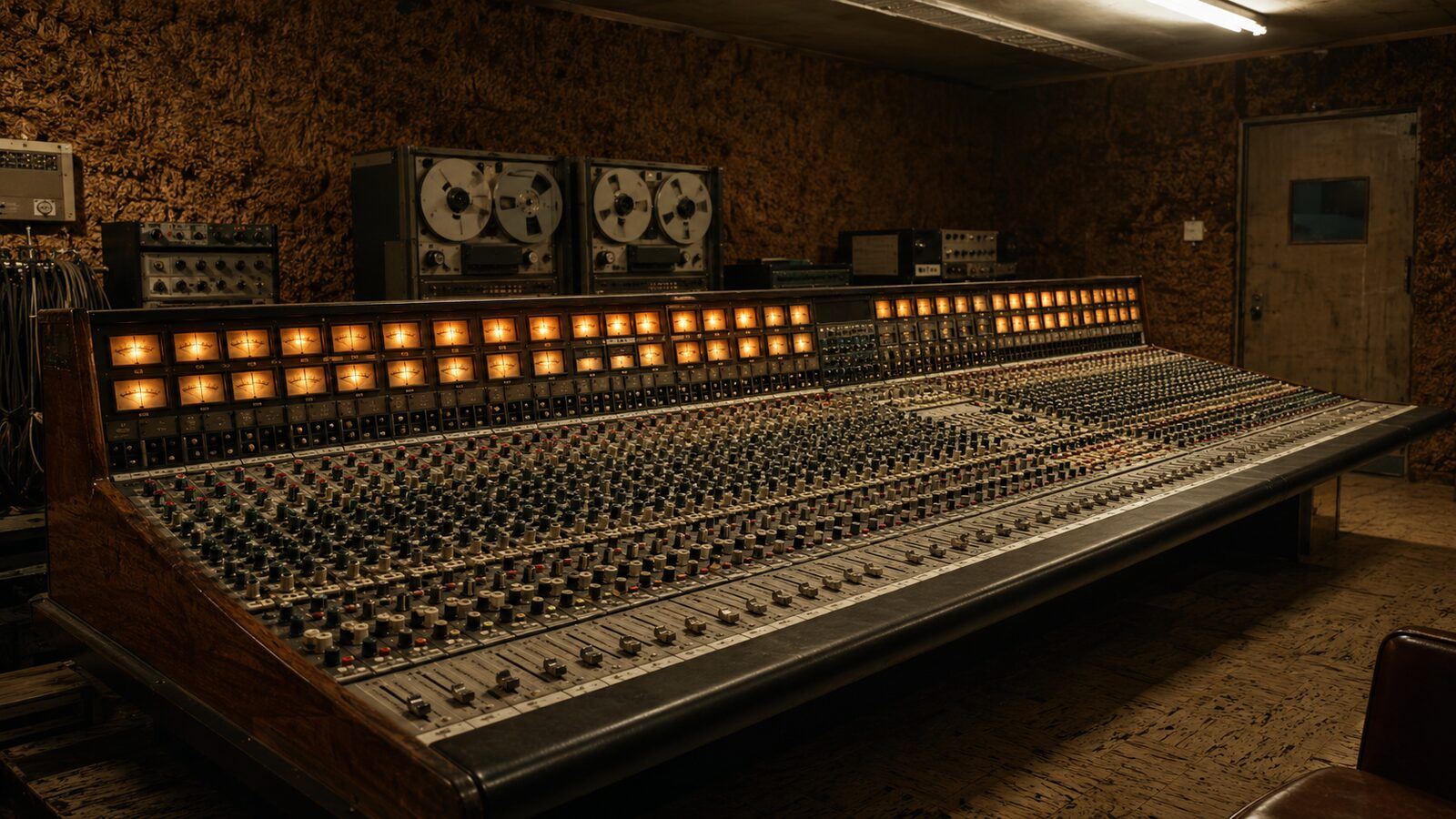
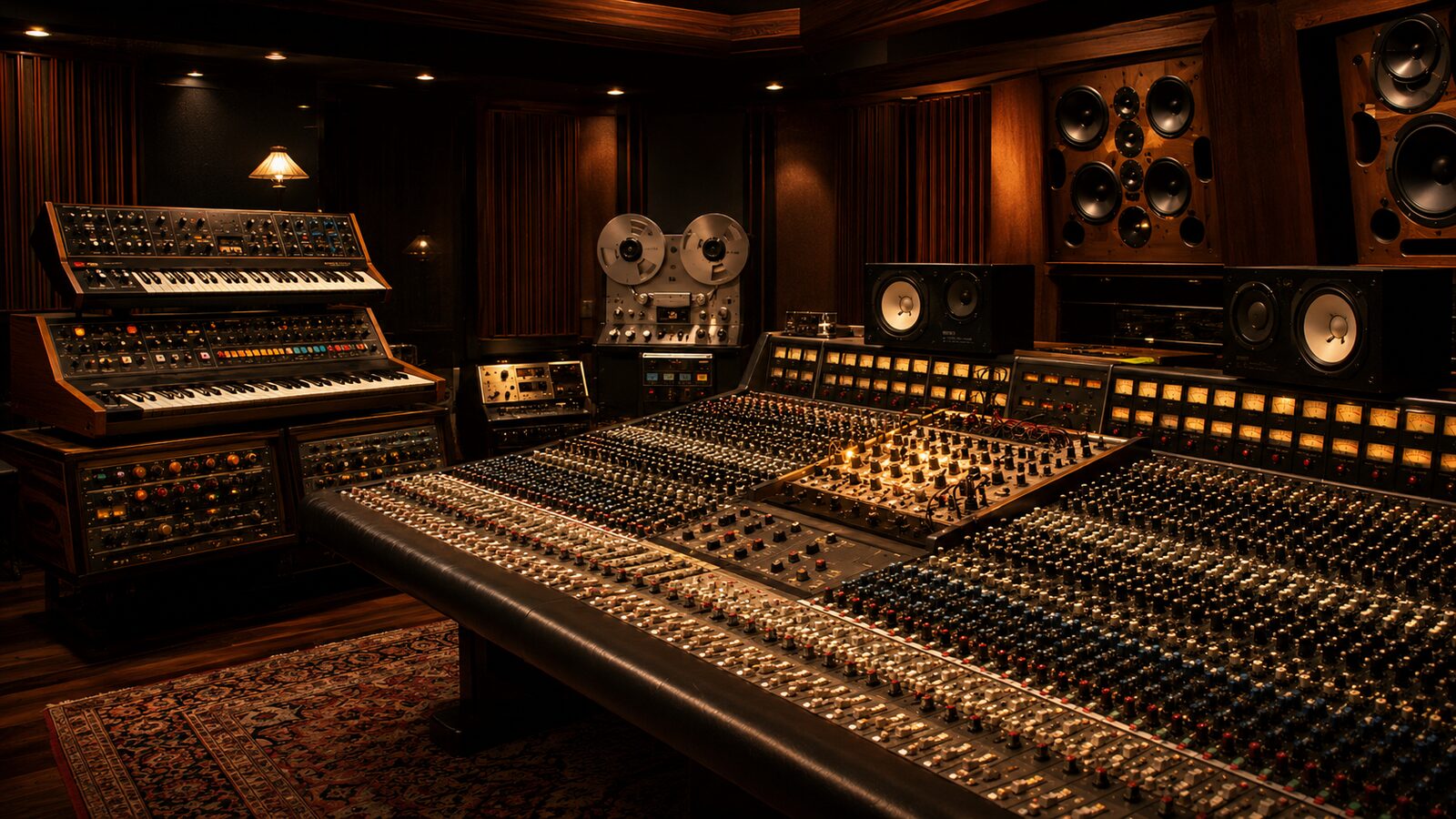
The signal chain on Random Access Memories reads like a vintage gear museum. At the center was the Neve 88R at Conway Studio C — a modern Neve console that maintains the Class A transformer-coupled sound of vintage Neves while adding modern routing and automation. It's the same desk that has recorded records for Beyoncé, Jay-Z, and Adele.
All tracking went to a Studer A827 24-track tape machine at 15 IPS with Dolby SR, giving the recordings the warmth and natural compression of analog tape while keeping noise to a minimum. The choice was deliberate — Bangalter wanted the album to breathe the way records breathed in the 1970s, before digital rigidity took over.
The synthesizer arsenal was staggering: a Sequential Prophet-5, Roland Jupiter-6, Roland Juno-106, and a Yamaha CS-80 — the Vangelis synth, one of the most sought-after keyboards in existence, worth $30,000+ when they appear at all. But the most exotic piece was the Sennheiser VSM-201 vocoder. Daft Punk reportedly had 18 custom copies built at approximately $20,000 each — a $360,000 investment in a single effect.
The recording approach was almost confrontationally analog. In an era when electronic music was made almost entirely in software, Bangalter and de Homem-Christo spent millions proving that the warmth, depth, and human imperfection of analog recording could produce something no plugin could match.
"We wanted to do the opposite of sampling. If you can't improve on a Fender Rhodes, play a real one."— Thomas Bangalter
Why It Matters
Random Access Memories is a monument to analog recording. Its commercial success — over three million copies sold worldwide, Album of the Year at the Grammys — proved that audiences could hear and appreciate the difference between analog and digital production, even if they couldn't articulate what that difference was. "Get Lucky" became the song of the summer because it sounded warm, live, and human in a way that most 2013 pop music didn't.
For the vintage gear market, the album was a catalyst. The Prophet-5, Jupiter-6, and Juno-106 all saw price increases in the years following the album's release, as producers and collectors chased the analog sound that Daft Punk had championed. The Yamaha CS-80 — already rare — became virtually unobtainable.
The album also elevated the Studer A827 from "professional studio equipment" to "aspirational creative tool." Home studios that had never considered tape machines began investigating them, driving a broader resurgence in reel-to-reel recording that continues today.
The Gear Cards
Affiliate disclosure: We may earn a commission from qualifying purchases made through links on this page, at no extra cost to you.
Neve 88R
The modern flagship of the Neve line. Class A discrete analog, transformer-coupled, with digital automation. The Conway Studio C desk that tracked Random Access Memories. A new 88R costs north of $500,000.
Studer A827
Swiss-made 24-track running at 15 IPS with Dolby SR. The last great Studer multitrack. Every note on Random Access Memories passed through this machine before it was heard.
Sennheiser VSM-201
Custom-built vocoder — Daft Punk reportedly commissioned 18 units at ~$20,000 each. The source of the duo's signature robot vocals on "Get Lucky," "Instant Crush," and "Lose Yourself to Dance."
Modern Alternatives
Sequential Prophet-5 (Rev 4)
~$3,500The modern reissue of the Prophet-5 used on Random Access Memories. Same analog voice architecture, updated reliability. Dave Smith's final masterpiece.
View on Amazon →Roland Juno-X
~$1,800Modern keyboard with faithful recreations of the Juno-106, Jupiter-8, and JX-8P sounds. The entire Roland polysynth legacy in one instrument.
View on Amazon →TASCAM Model 24
~$800Analog mixer with built-in 24-track digital recorder and analog-style workflow. The affordable way to record like it's 1979.
View on Amazon →