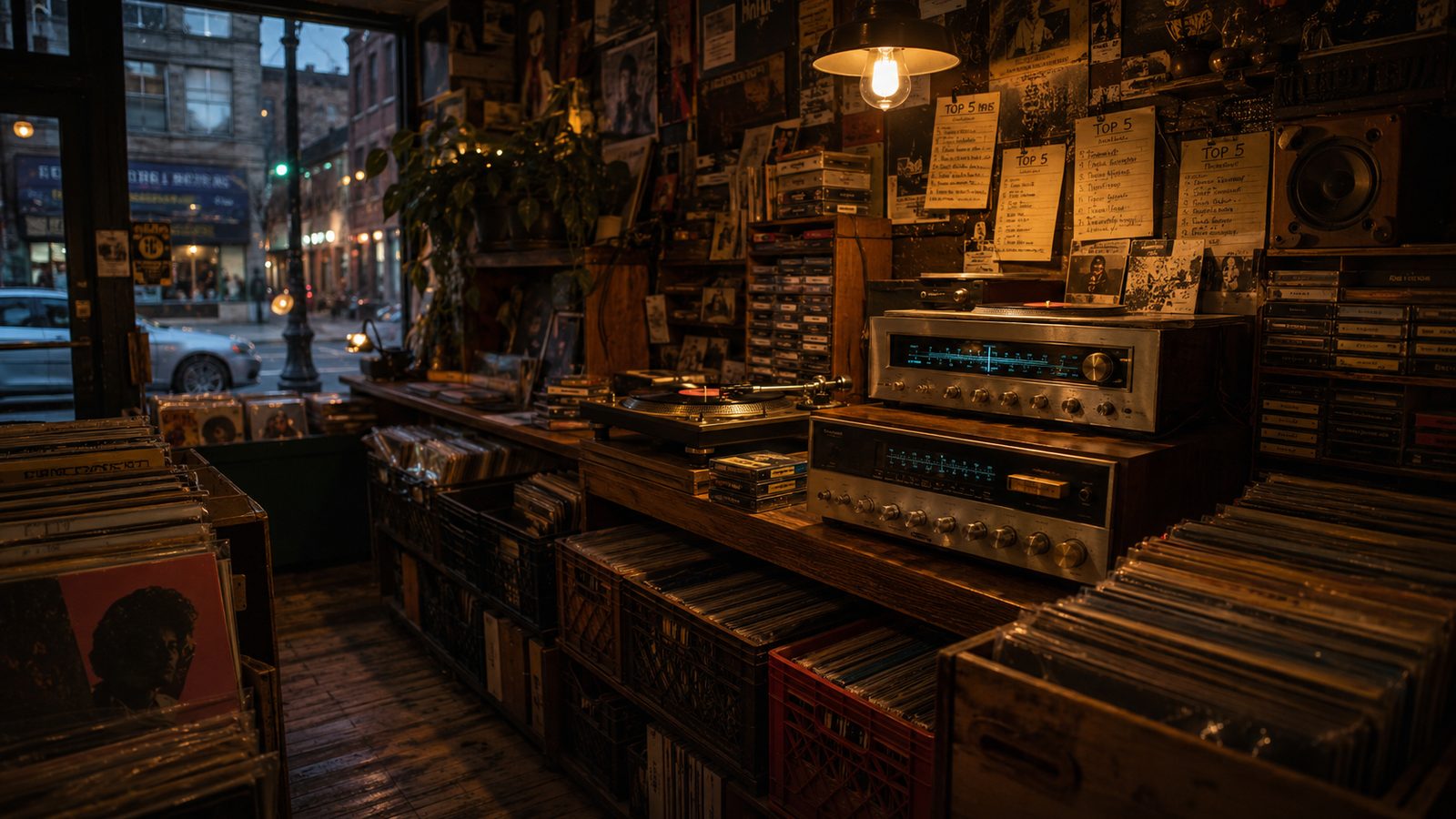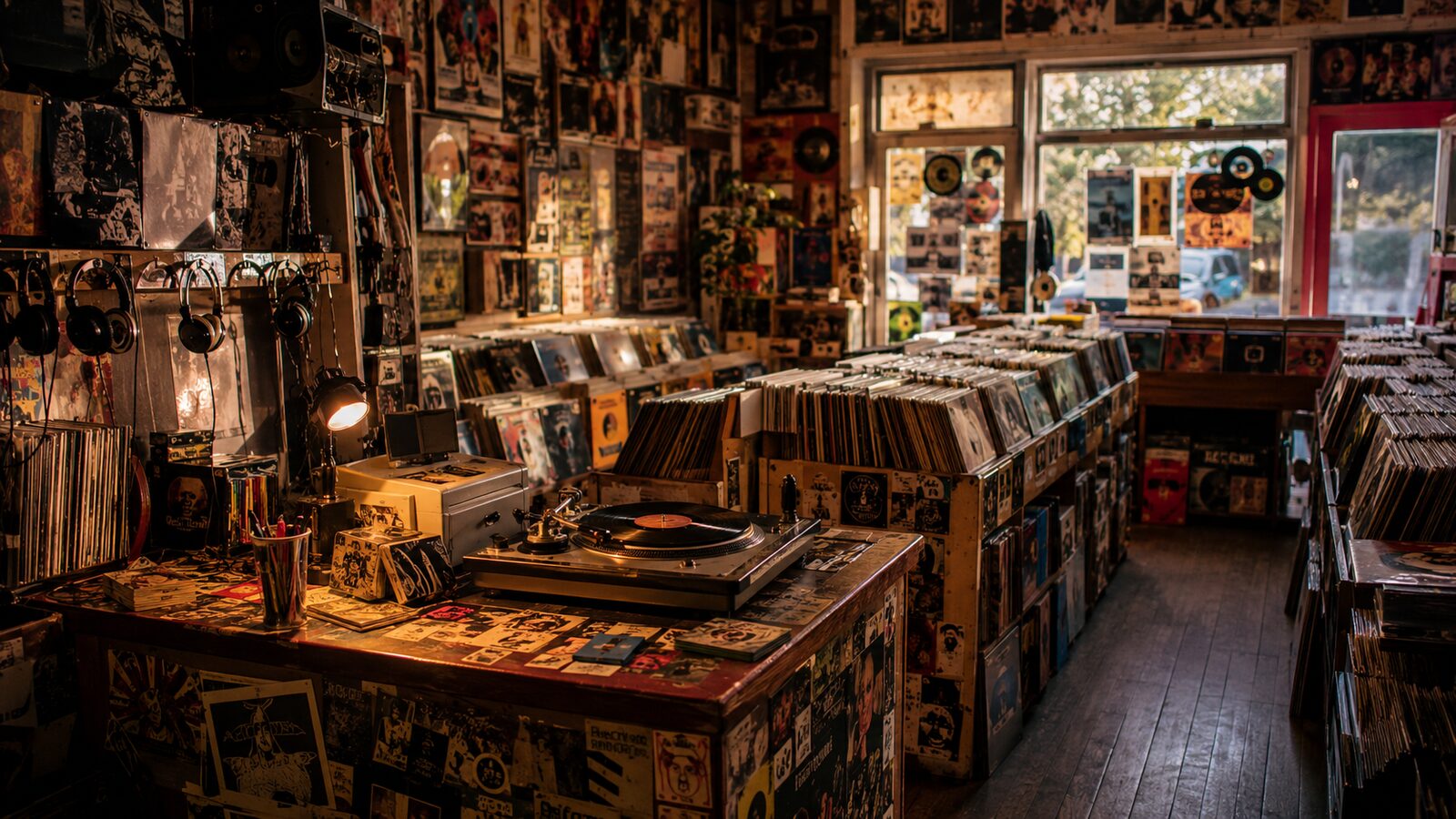
A 1990s independent record store, alive with color and noise. Vinyl crates line the walls and form aisles. A turntable sits on the counter near the register, a record spinning — whoever controls it controls the mood of the entire store. Posters cover every surface. Listening station headphones hang from hooks, inviting customers to sample before they buy. Stickers plaster the counter. Handwritten recommendation cards are pinned to the shelves.
Empire Records is the definitive record store movie. The store itself is the main character — its survival is the central conflict. When the owner threatens to sell to a corporate chain called Music Town, the staff launches a desperate one-day campaign to save it. Every scene takes place inside the store, surrounded by vinyl, cassettes, CDs, and the equipment that plays them.
The film is a time capsule of 1990s physical media culture, when record stores were community centers as much as retail spaces. The turntable behind the counter isn't just a playback device — it's a social tool, a taste-making instrument, a statement of identity. What you played told customers who you were, and by extension, who they might become.
The turntable behind the counter is the store's heartbeat. In the era before streaming algorithms, record store employees were the tastemakers — they decided what played on the store system, and those choices sold records. The turntable visible in the film is a standard consumer or semi-pro model, the kind that would have been found in thousands of independent record stores throughout the 1990s.
The listening station headphones were a fixture of 1990s music retail. Before you could preview any song on your phone, listening stations let you hear selected albums through quality headphones before committing to a purchase. It was a physical, communal experience — you stood in a store, surrounded by other music fans, and discovered new music through a pair of shared headphones.
The store PA system — the speakers mounted on the walls that fill the store with music all day — is as much a piece of gear as anything on a stage. The store PA is how the staff communicates with customers, sets the atmosphere, and makes the statement that a record store is not a quiet place. It's a live music experience with a cash register.
Who knows where thoughts come from? They just appear.— Lucas, Empire Records
Empire Records bombed at the box office in 1995 but became a massive cult classic on home video, driven by its soundtrack and its accurate, affectionate portrayal of record store culture. For a generation of music fans, it captured a specific feeling: walking into a store where every surface was covered with music, where the staff knew more about your taste than your friends did, and where the turntable behind the counter was the most powerful instrument in the room.
The vinyl revival that began in the 2010s has brought record stores back from near-extinction. But the record stores of 2024 — with their curated selections and Instagram-friendly aesthetics — are fundamentally different from the cluttered, overstuffed, slightly chaotic spaces depicted in the film. Empire Records captures the record store as it was, not as nostalgia wishes it had been.
Period turntables like the ones used in 1990s record stores sell for $100 to $400 on eBay. Vintage headphones from the era go for $50 to $200. But the real collectible here is the culture itself — the experience of physical music retail as a social institution, which the film preserves better than any other movie ever made.
Affiliate disclosure: We may earn a commission from qualifying purchases made through links on this page, at no extra cost to you.
The behind-the-counter turntable that ran the store — setting the mood, making the sales, and serving as the DJ booth for an all-day party that happened to sell records.
The modern record store workhorse. Direct drive, built-in preamp, USB output. Reliable enough to run all day, every day.
View on Amazon →Affordable powered bookshelf speakers. Plug directly into any turntable's output and fill a room with warm, clear sound.
View on Amazon →The modern listening station headphone. Detailed, comfortable, and durable enough for shared use.
View on Amazon →As an Amazon Associate we earn from qualifying purchases.