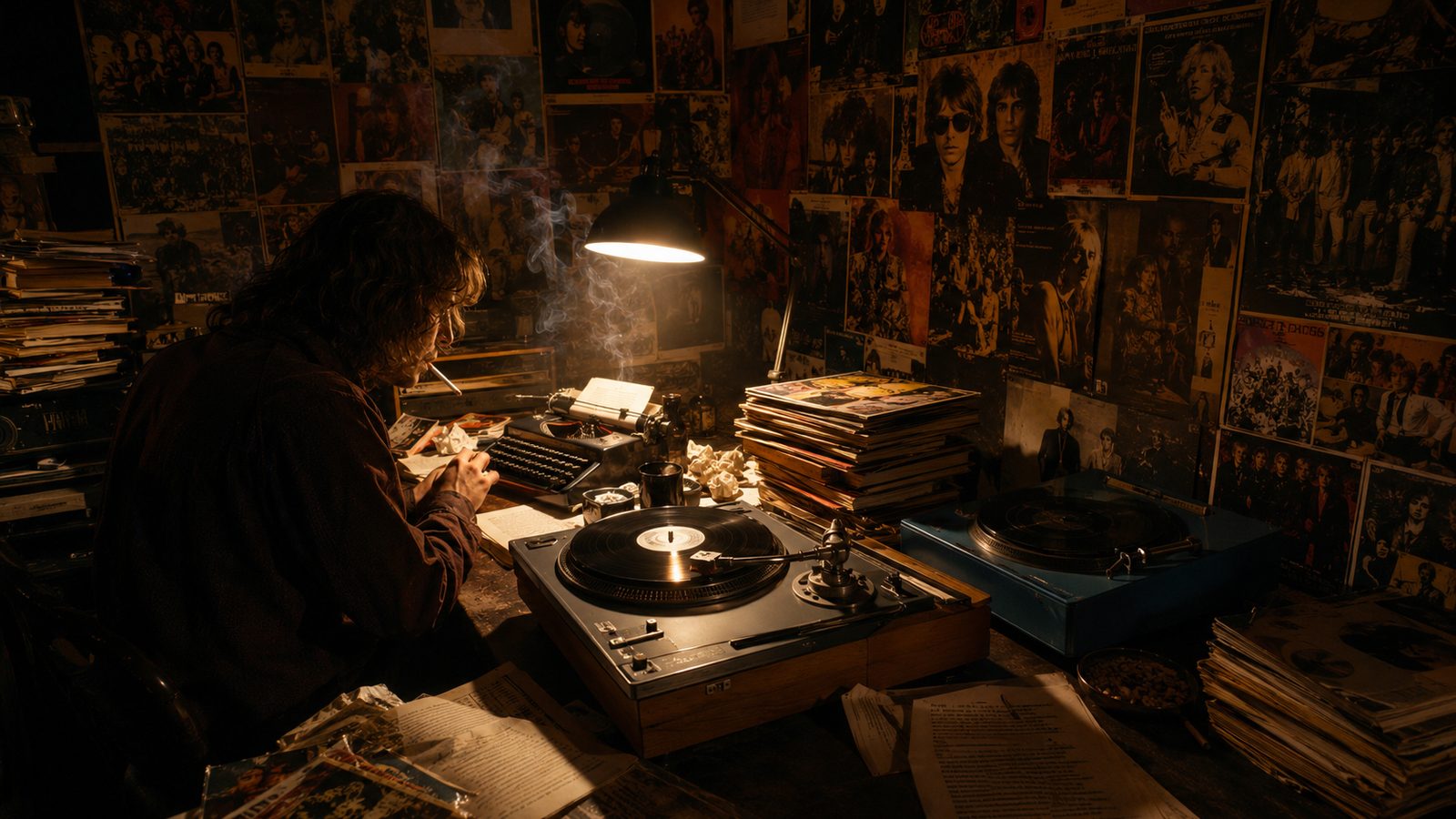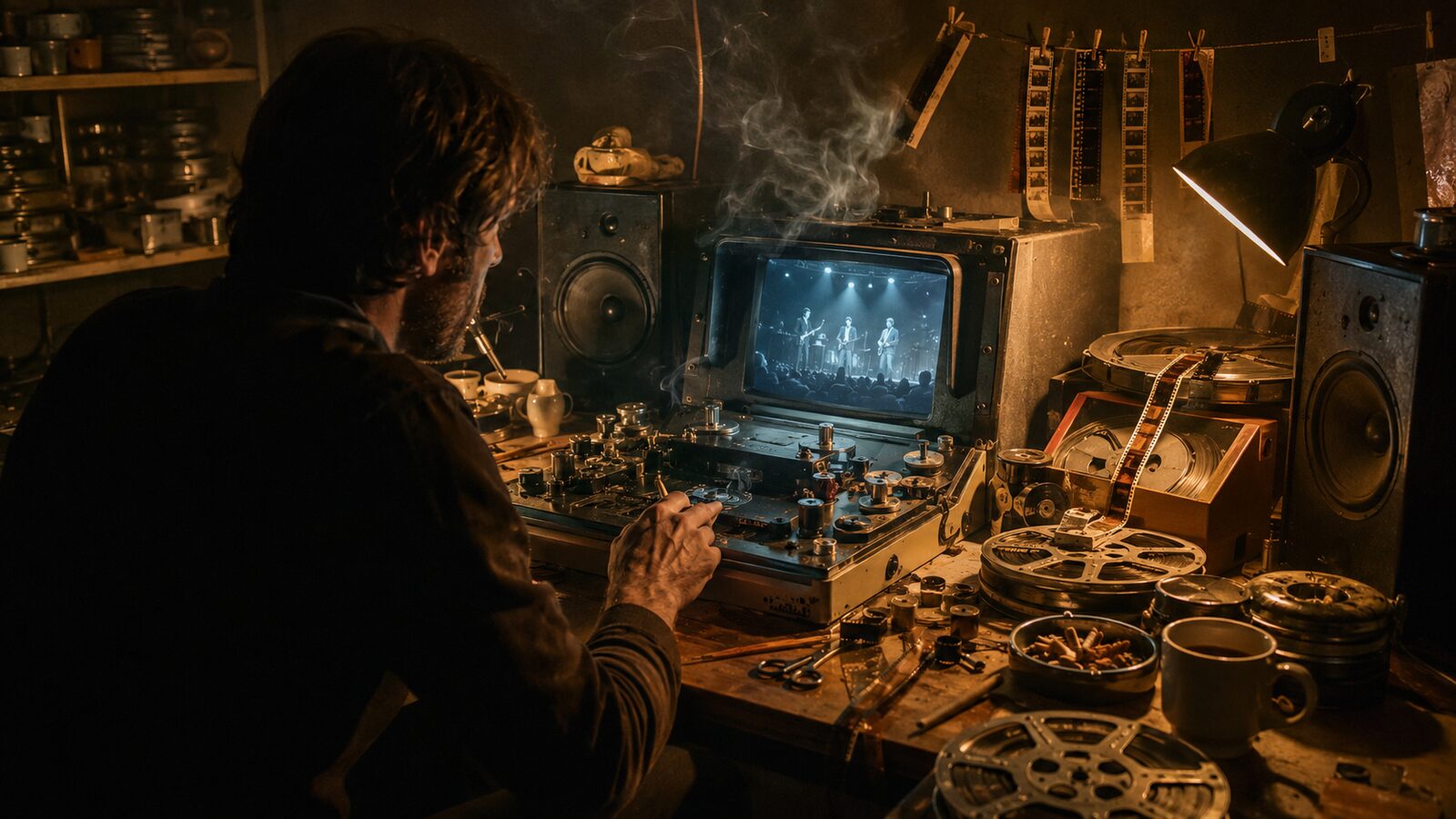
A film editing room, 1970. A Steenbeck flatbed editing machine sits on a table, its small screen glowing with concert footage. Film reels and audio tape are scattered across the desk. A pair of studio monitors sit on either side. Cut film strips hang from clips on a clothesline. Cigarette smoke curls through the lamplight. Coffee cups crowd the workspace. On the Steenbeck's screen, a concert plays — a moment captured at Altamont that hasn't been seen by the public yet.
Gimme Shelter — the Maysles Brothers' documentary about the Rolling Stones' 1969 American tour — culminates at the Altamont Free Concert, where a member of the audience was killed. The most chilling sequence in the film shows Mick Jagger watching the footage on a Steenbeck editing machine, frame by frame, as the reality of what happened becomes visible. Audio and video equipment becomes the lens through which horror is processed.
The film is built around the tension between celebration and catastrophe, and the gear is everywhere: the mobile recording truck that captured the live sound, the Marshall stacks on stage, the cameras that documented both the joy and the violence. But the most important piece of equipment in the film is the Steenbeck — the machine that reveals the truth.
The Steenbeck flatbed editing machine is the visual centerpiece of the film's most powerful scene. A precision-engineered German device for viewing and editing film and synchronized audio, the Steenbeck allowed editors to scrub through footage frame by frame, mark edit points, and assemble sequences. In Gimme Shelter, it becomes a truth-revealing device — as Jagger watches the Altamont footage on the small screen, the editing machine transforms from a technical tool into a moral instrument.
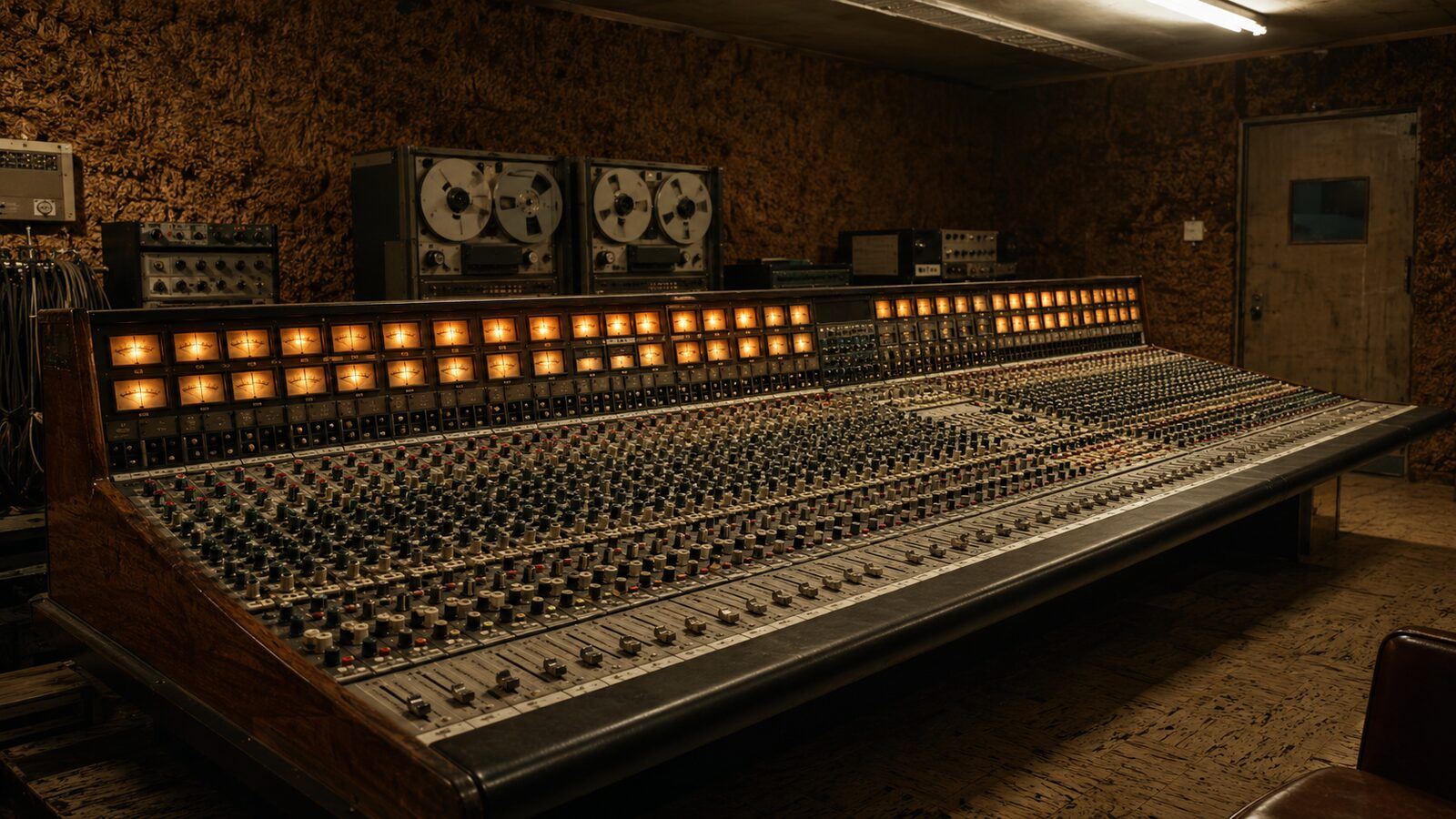
The mobile recording truck — operated by Wally Heider's crew — captured the live concert audio at Altamont. These trucks contained complete recording studios compressed into a vehicle: mixing consoles, multi-track tape machines, and outboard gear. The same Wally Heider operation that recorded Altamont also recorded The Last Waltz — the trucks were the mobile recording infrastructure of the American concert industry.
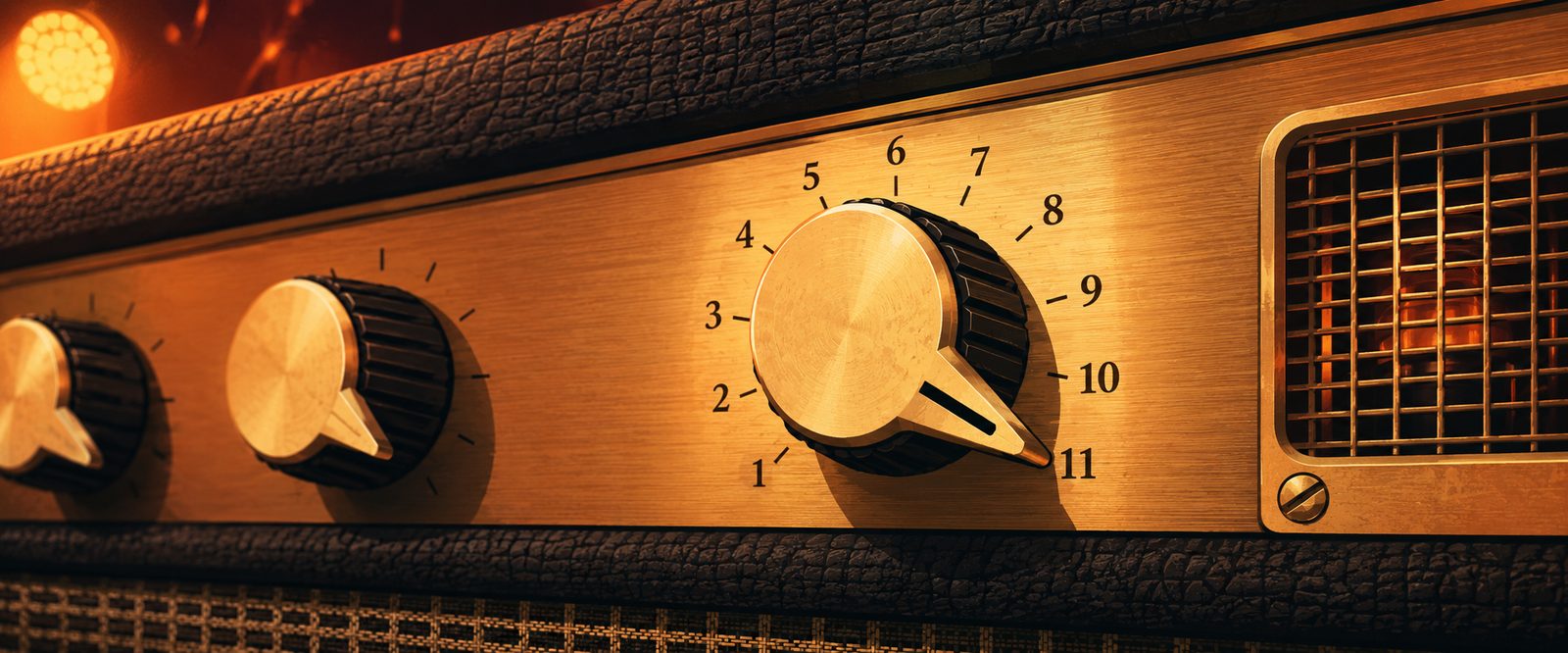
The Marshall amplifier stacks visible on the Altamont stage — and throughout the tour — were the Stones' signature stage equipment. The Marshall Plexi heads and 4x12 cabinets created the massive, overdriven guitar sound that defined late-1960s rock. On stage at Altamont, Keith Richards' Marshall stacks provided the visceral, physical wall of sound that the film captures.
Oh no... it's just a shot. Just a shot, is it?— Mick Jagger, watching Altamont footage on the Steenbeck
Gimme Shelter is one of the most important documentaries ever made — a film where the recording and playback equipment becomes central to the narrative. The Steenbeck scene, where Jagger watches the violence unfold frame by frame, is a masterclass in how audio-visual technology mediates our understanding of reality. The equipment doesn't just capture events; it forces us to process them.
Steenbeck editing machines, now obsolete in the digital era, sell for $500 to $2,000 on the vintage market as collector's items and film school training tools. Vintage Ampeg SVT bass amps — visible in the film's concert footage — command $1,500 to $3,500. Marshall Plexi heads from the late 1960s are serious collector's items at $2,000 to $5,000.
The film's legacy extends beyond music into documentary filmmaking itself. The Maysles Brothers' technique — showing the subjects watching their own footage — broke the fourth wall between documentary and subject in a way that remains powerful and influential. The gear made it possible: without the Steenbeck, without the mobile recording truck, without the cameras rolling at Altamont, the truth would have stayed invisible.
Affiliate disclosure: We may earn a commission from qualifying purchases made through links on this page, at no extra cost to you.
Precision German film editing machine. View and edit synchronized film and audio frame by frame. The device that revealed the truth about Altamont.
The amplifier that defined late-1960s rock — Keith Richards' weapon of choice. 100 watts of tube-driven power through a 4x12 cabinet.
Modern Marshall head with vintage Plexi-inspired circuit. Clean to crunch to classic rock, with built-in power reduction for home use.
View on Amazon →The modern equivalent of the Steenbeck — professional-grade video and audio editing software. The free version handles everything most editors need.
View on Amazon →20-watt tube head with classic Marshall tone. Enough power for gigging, quiet enough for home recording.
View on Amazon →As an Amazon Associate we earn from qualifying purchases.