Kanye West — 808s & Heartbreaks
The album named after a drum machine — and the machine that became the sound of modern music.
The scene
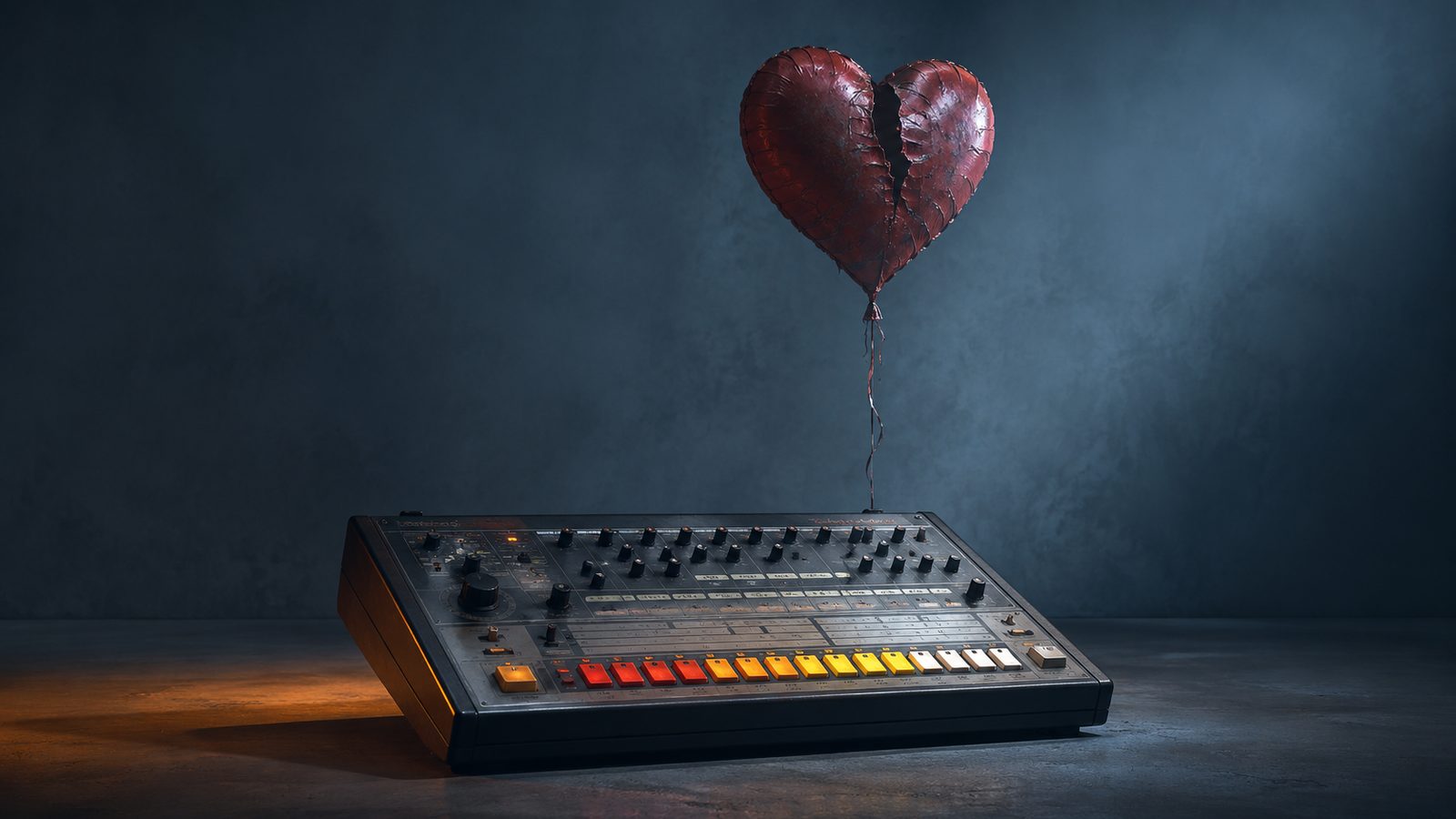
Kanye West named an entire album after a piece of audio equipment. That's how important the Roland TR-808 is. 808s & Heartbreaks isn't about the machine in the way a documentary would be — it's about what the machine sounds like: cold, synthetic, heartbroken. The booming 808 kick drum became the emotional foundation of an album about loss, alienation, and the space between human feeling and mechanical repetition.
Released in November 2008, the album was a sharp left turn from Kanye's previous maximalist soul-sampling style. Stripped down to Auto-Tuned vocals, sparse synths, and the deep, subharmonic thud of the 808 kick, it polarized fans and critics. Then it became the blueprint for the next decade of popular music. Drake, Travis Scott, Future, the entire trap movement — all of it traces back to 808s.
The gear
The Roland TR-808 Rhythm Composer was released in 1980 and discontinued in 1983 after selling approximately 12,000 units. It was a commercial failure. Roland intended it as a tool for songwriters and home musicians who needed a simple drum accompaniment — a practice machine, essentially. The 808's analog drum sounds were considered unrealistic compared to the newer digital drum machines like the Linn LM-1.
But those "unrealistic" sounds — especially the deep, booming bass drum and the snappy electronic snare — turned out to be the most influential drum tones in music history. Afrika Bambaataa's "Planet Rock" (1982) was the first hit to make the 808 the star. Marvin Gaye's "Sexual Healing" followed. Then hip-hop adopted it wholesale.
The 808's bass drum is unique because it produces a pitched, decaying sine wave rather than trying to emulate a real kick drum. At low tunings, it becomes a sub-bass tone that you feel in your chest more than hear with your ears. This is the sound that defines modern trap music, and it comes from a machine that Roland stopped making in 1983.
"Heartless."
Why it matters
The Roland TR-808 is arguably the single most influential piece of audio equipment ever manufactured. It didn't just change one genre — it created several. Hip-hop, electro, house, techno, trap, and modern pop all rely on 808 sounds as foundational elements. Kanye naming an album after it was an act of recognition: this machine IS the sound.
Original TR-808 units are among the most valuable pieces of vintage audio equipment on the market. With only ~12,000 ever made and many long since broken or cannibalized for parts, working units command $4,000–$6,000+. Museum-quality units with original documentation push even higher.
Roland has responded to the demand with several modern recreations: the TR-08 (Boutique series miniature), the TR-8S (performance-oriented modern version), and software emulations. Third-party clones from Behringer (RD-8) offer the analog sound at a fraction of the cost. But none of them carry the weight of the three letters and three numbers that changed music: 808.
Affiliate disclosure: We may earn a commission from qualifying purchases made through links on this page, at no extra cost to you.
Roland TR-808 Rhythm Composer
Analog drum machine. ~12,000 units made between 1980–1983. The bass drum sound that defines modern hip-hop, trap, and pop — from a machine Roland considered a failure.
- Era
- 1980–1983
- Type
- Analog drum machine
- eBay market
- $4,000–$6,000+
- Condition note
- Rare — check all voice circuits
Roland TR-08
Roland's official miniature recreation of the 808. Same sound engine philosophy, same iconic layout, battery-powered portable size. The closest Roland gets to admitting the original was perfect.
View on Amazon →Behringer RD-8
Full-size analog 808 clone with individual outputs and modern connectivity. Controversial (Behringer always is), but the sound is remarkably close to the original at 1/15th the price.
View on Amazon →Roland TR-8S
Modern performance drum machine with modeled 808, 909, and other classic sounds. Built for live performance and production. The 808's spirit in a modern body.
View on Amazon →