Magic Johnson
McIntosh, Nakamichi, and ReVox — the college radio DJ who became a basketball legend never stopped listening.
The Story
Before Magic Johnson was a five-time NBA champion, a three-time MVP, and a business empire unto himself, he was a college radio DJ at Michigan State. His show on WVIC featured soul, funk, and R&B — and his favorite song, the one he played more than any other, was Marvin Gaye's "Distant Lover."
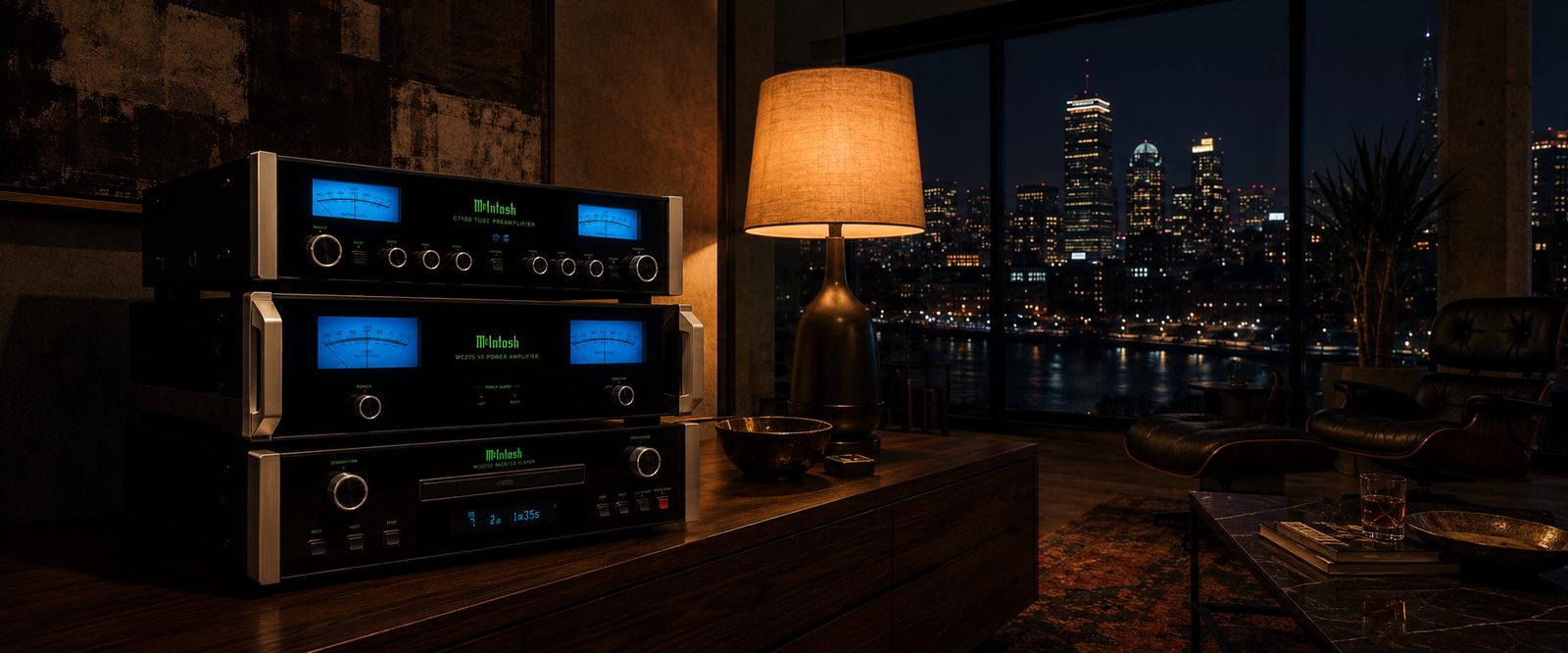
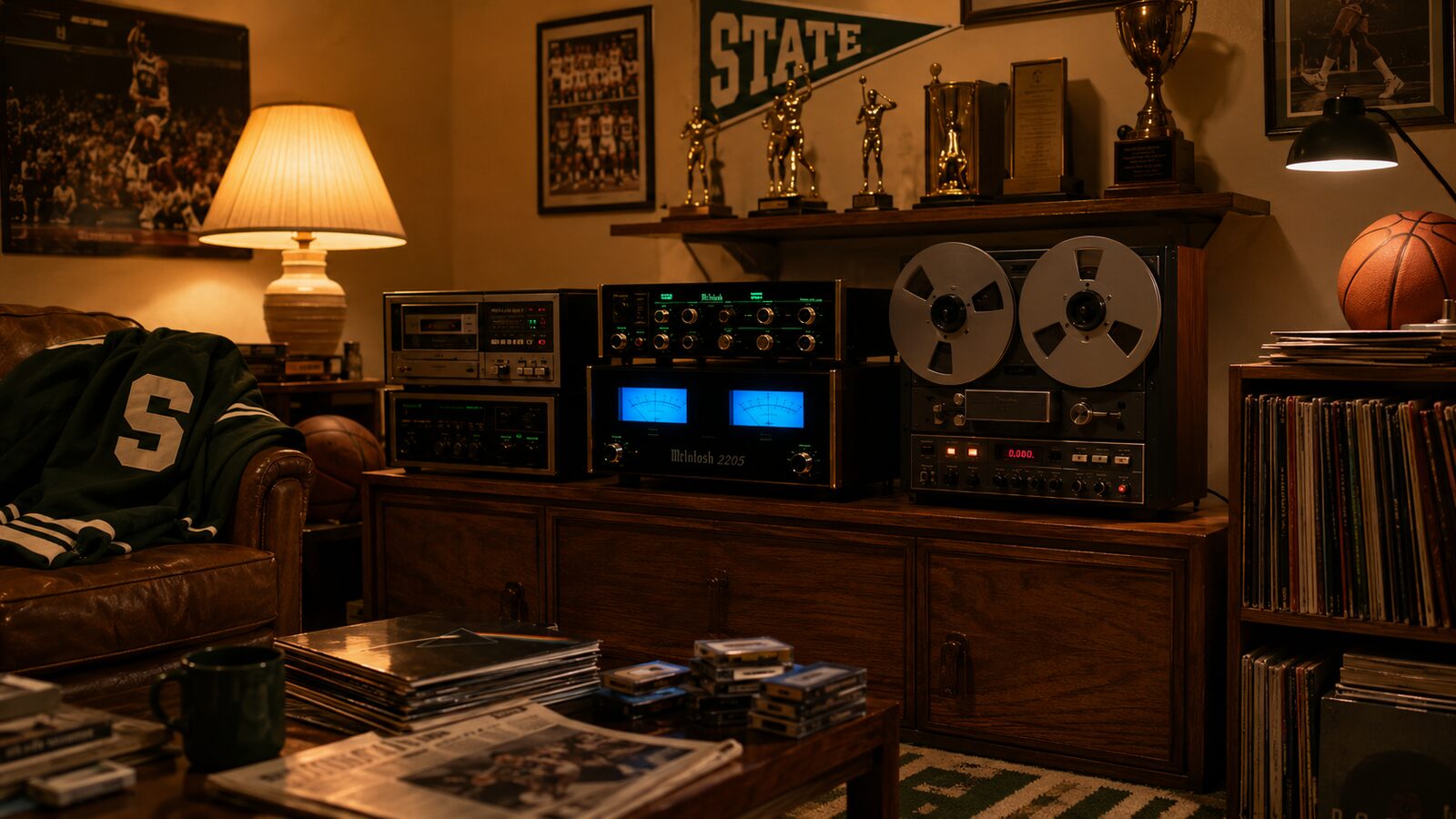
The audio system he built reflected that radio background: serious, component-level, designed for critical listening. A McIntosh MC2205 power amplifier — 200 watts per channel with those iconic blue meters — anchored the system. A McIntosh C34V preamplifier handled source selection. A Nakamichi RX-505 cassette deck — the one with the auto-reversing mechanism that physically flipped the cassette — recorded and played tapes. And a ReVox B77 reel-to-reel completed the chain.
Basketball trophies and Michigan State memorabilia shared shelf space with vinyl records and cassette tapes. The system bridged two identities: the athlete and the audiophile.
The Gear
The McIntosh MC2205 is a beast — 200 watts per channel of solid-state power, weighing over 80 pounds, with the signature McIntosh glass faceplate and blue VU meters. It's one of the most powerful home amplifiers McIntosh produced in the 1970s, and its clean, authoritative sound made it a favorite among both audiophiles and professionals.
The Nakamichi RX-505 is perhaps the most mechanically fascinating cassette deck ever made. Its auto-reverse system doesn't just switch the head — it physically lifts the cassette, rotates it 180 degrees, and reinserts it, so both sides play with forward-facing azimuth alignment. It's engineering theater.
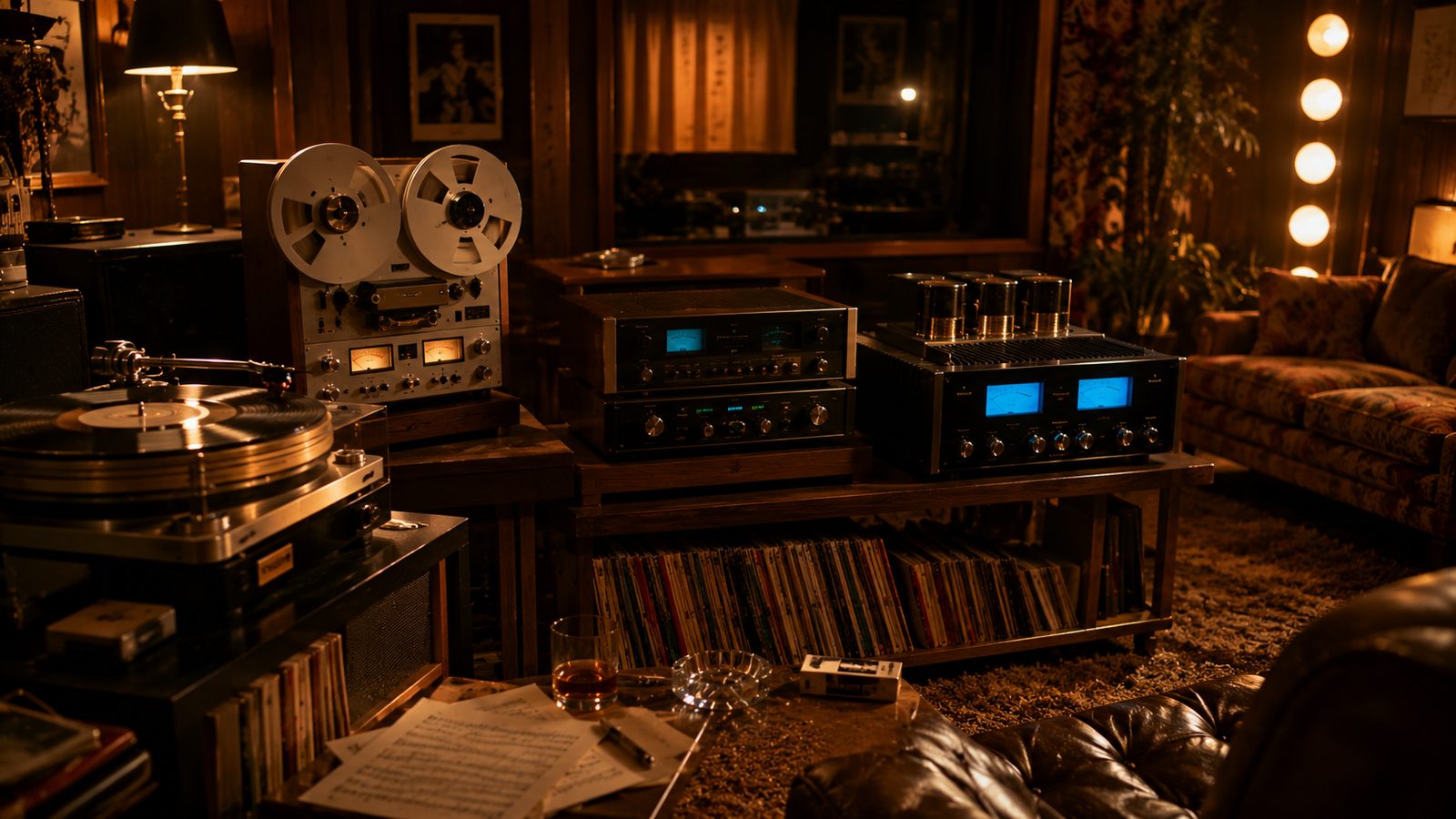
The ReVox B77 reel-to-reel, Swiss-made by Studer's consumer division, brought broadcast-quality tape recording home. With its distinctive VU meters and professional transport mechanism, the B77 was the choice of serious home recordists and tape collectors.
Ask not what your teammates can do for you. Ask what you can do for your teammates.
— Magic Johnson
Why It Matters
Magic Johnson's system tells the story of a man who never stopped being the college radio DJ. The NBA career, the business empire, the global fame — none of it replaced the fundamental pleasure of sitting down with a great recording and hearing it properly. The McIntosh, the Nakamichi, the ReVox: these are the choices of someone who takes sound seriously.
On the collector market, the MC2205 trades for $2,000 to $4,000 — a relative bargain for a 200-watt McIntosh. The Nakamichi RX-505, one of the most collectible cassette decks ever made, commands $1,500 to $3,000 for working units. The ReVox B77 ranges from $800 to $2,000 depending on condition and head wear.
Together, they form a system that covers every format: vinyl, cassette, reel-to-reel, and FM radio. Magic's rig isn't about digital convenience. It's about the ritual of physical media — choosing a record, threading a tape, dropping the needle. The same discipline that made him great on the court.
The Original Gear
Affiliate disclosure: We may earn a commission from qualifying purchases made through links on this page, at no extra cost to you.
McIntosh MC2205
$2,000–$4,000200 watts per channel. 80+ pounds. Blue meters. The McIntosh power amplifier for people who believe more is more.
Nakamichi RX-505
$1,500–$3,000The cassette deck that physically flips the tape. Auto-reverse perfection. Mechanical engineering as art.
ReVox B77
$800–$2,000Swiss-made reel-to-reel from Studer's home division. Broadcast quality in a domestic package.
Modern Alternatives
McIntosh MA5300
~$5,500Modern McIntosh integrated with 100W per channel, DA1 digital module, and those blue meters. The updated Magic rig in one box.
View on Amazon →Nakamichi Dragon (if you can find one)
$3,000–$8,000The ultimate Nakamichi. If the RX-505 is the athlete, the Dragon is the hall of famer. Auto-azimuth alignment on every tape.
View on Amazon →