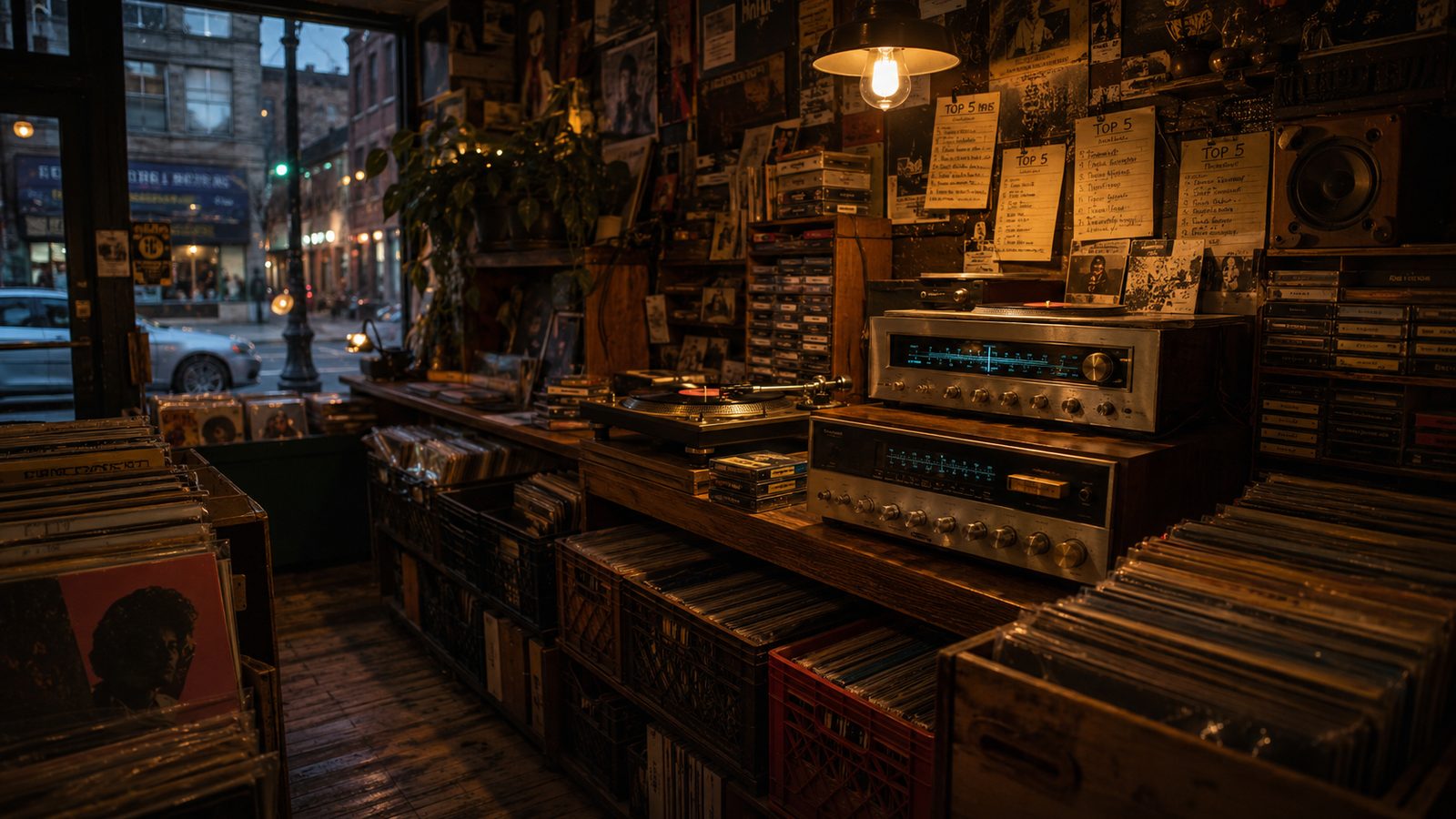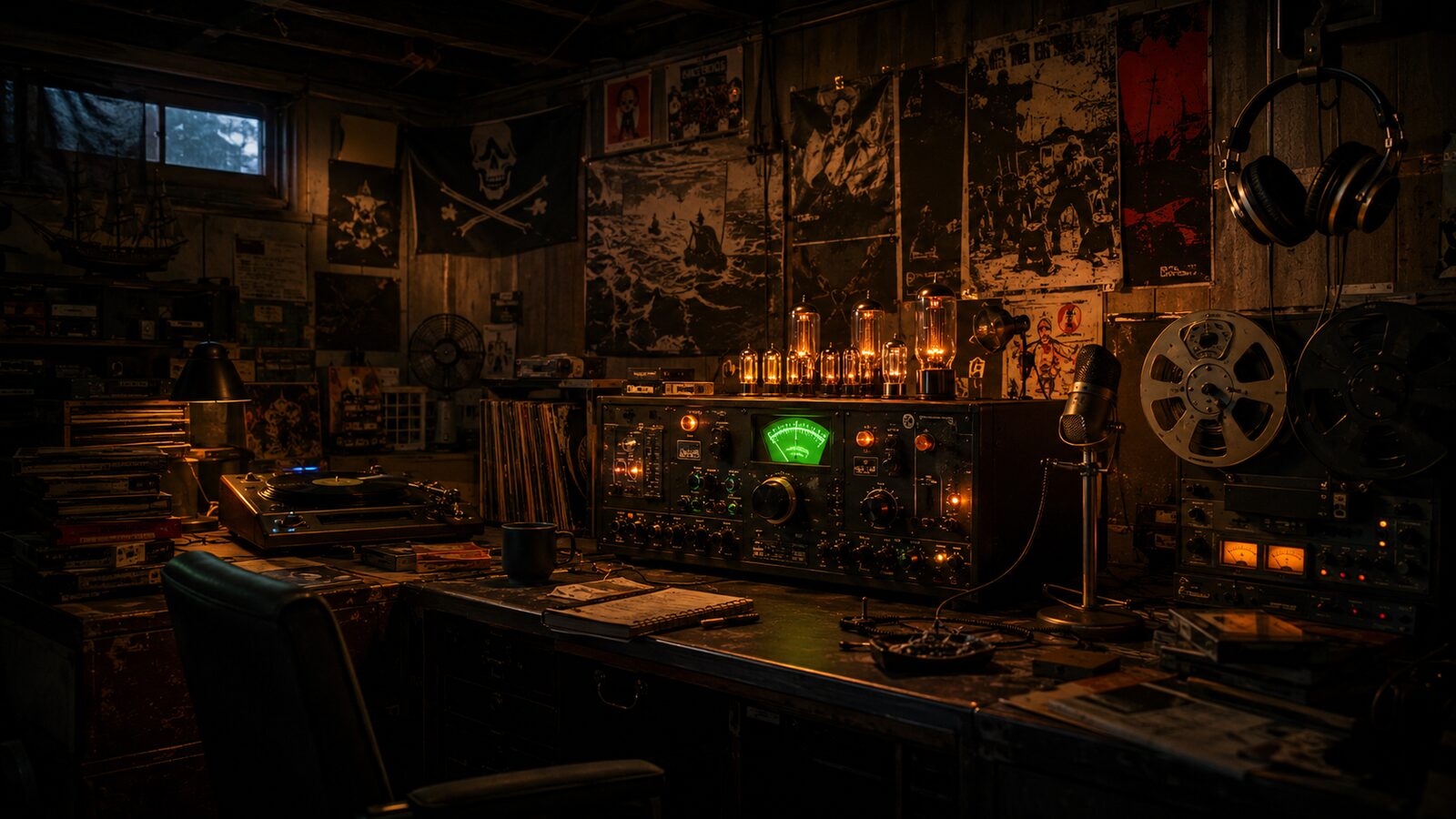
Every night after his parents go to bed, Mark Hunter locks the door to his basement bedroom, powers up a shortwave radio transmitter, and becomes Hard Harry — the anonymous voice of teenage rebellion in a suburban Arizona town. The transmitter's tubes glow amber in the dark. The green eye of the VU meter flickers with each word. A turntable spins beside him, loaded with the Beastie Boys or Leonard Cohen, depending on his mood.
Pump Up the Volume is a love letter to analog broadcasting and the power of a lone voice with the right equipment. The entire plot revolves around the gear — the transmitter that can't be traced, the microphone that disguises his voice, the turntable that provides the soundtrack. When the FCC closes in, it's the equipment they're hunting for, not the kid.
The film captures something that feels almost impossible in the age of podcasts and social media: the genuine danger and thrill of broadcasting without permission, using equipment you built or bought from surplus catalogs, reaching an audience that had no other way to hear what you were saying.
The shortwave radio transmitter at the center of the film is a low-power unit typical of ham radio and pirate broadcasting setups of the late 1980s. These transmitters used vacuum tubes that glowed amber during operation, and their limited range — usually a few miles — is what made them both intimate and difficult to trace. The FCC's direction-finding equipment plays a major role in the film's climax.
The turntable visible in the film appears to be a consumer-grade direct-drive unit, likely a Technics or similar Japanese model from the era. Mark uses it to play vinyl records between his monologues, creating a radio show format that alternates between talk and music — essentially inventing the modern podcast format three decades early.
The reel-to-reel tape deck and microphone complete the basement studio. The mic is mounted on a cheap desk stand, and the tape deck serves as both a recording device and a source for pre-recorded segments. The setup is deliberately modest — this isn't a professional operation, it's a teenager with a hundred dollars worth of surplus equipment and something to say.
Talk hard.— Hard Harry, Pump Up the Volume
Pump Up the Volume arrived in 1990, just as pirate radio was having its last real cultural moment before the internet made anonymous broadcasting trivially easy. The film captured the romance of analog transmission — the physical reality of radio waves traveling through the air from a homemade antenna, the warmth of vacuum tubes, the crackle of a signal at the edge of its range.
The film developed a devoted cult following among ham radio operators, audio enthusiasts, and anyone who ever fantasized about broadcasting their own show. Vintage shortwave transmitters like the ones depicted in the film now sell for $200 to $1,000 on eBay, depending on condition and power rating. Period turntables go for $100 to $400.
What makes this entry resonate is the DIY ethos. Mark Hunter didn't need a studio or a license or anyone's permission. He needed a transmitter, a microphone, a turntable, and something worth saying. The gear was the means, but the message was the point.
Affiliate disclosure: We may earn a commission from qualifying purchases made through links on this page, at no extra cost to you.
Low-power AM/shortwave transmitter with vacuum tubes, VU meter, and limited-range broadcasting capability. The essential gear for pirate radio operations in the pre-internet era.
Consumer-grade Japanese turntable from the late 1980s — the kind you'd find at a garage sale or surplus store. The backbone of any bedroom DJ or pirate radio setup.
Modern direct-drive turntable with USB output. The descendant of the Japanese turntables that powered bedroom DJs and pirate radio stations.
View on Amazon →The broadcast standard. If Hard Harry were broadcasting today, this is what he'd be talking into.
View on Amazon →USB audio interface for modern broadcasting and podcasting. The digital equivalent of Mark's analog signal chain.
View on Amazon →As an Amazon Associate we earn from qualifying purchases.