Sly Stone
A Teac A-3340S reel-to-reel, a bedroom full of funk, and the tape machine that bridged home and studio.
The Story
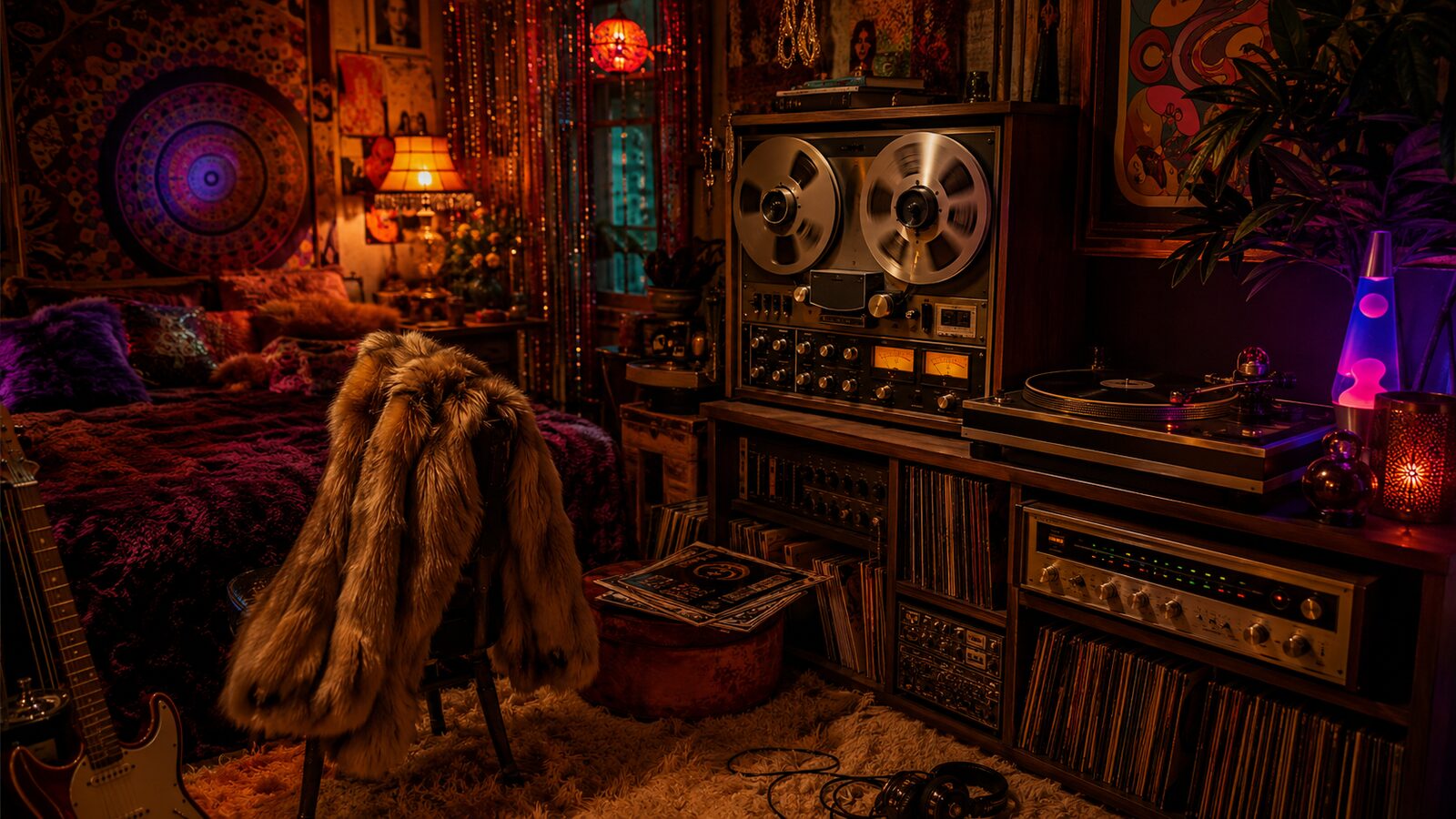
Sly Stone didn't wait for studio time. The leader of Sly and the Family Stone brought the studio home — specifically, to his bedroom, where a Teac A-3340S four-track reel-to-reel tape machine sat alongside a turntable, a receiver, and enough vinyl to fuel a revolution.
The famous photograph shows it all: the Teac running, reels spinning, capturing something that might become the next single or might just disappear into the archive. A fur coat draped over a chair. Bold fabrics, psychedelic art, the visual language of funk-era maximalism. The room is loud even in a photograph.
The Teac A-3340S was the bridge between consumer and professional recording. It was affordable enough for a home setup but capable enough to produce releasable music. Sly used it to sketch ideas, layer parts, and build the dense, polyrhythmic arrangements that defined the Family Stone's sound.
The Gear
The Teac A-3340S was a four-track, four-channel reel-to-reel recorder running at 7½ and 15 ips on ¼-inch tape. Its four independent channels allowed multitrack recording — laying down drums, then bass, then guitar, then vocals, all on the same piece of tape. This was the same basic process used in professional studios, scaled down to bedroom size.
The Teac became the instrument of choice for home recording in the 1970s. Bruce Springsteen recorded "Nebraska" on a similar Teac four-track. Trent Reznor's early Nine Inch Nails demos came from one. For Sly Stone, it was the tool that let him work on his own schedule — which, famously, was no schedule at all.
Alongside the Teac: a turntable for reference listening, a receiver for amplification, and the ever-present vinyl crates that served as both inspiration and furniture.
I want to take you higher.
— Sly Stone
Why It Matters
Sly Stone's bedroom setup represents the birth of home recording as a creative philosophy. Before Pro Tools, before GarageBand, before the laptop studio, there was a four-track Teac and a vision. The idea that you didn't need a million-dollar facility to make important music — that the bedroom could be the studio — starts here.
The Teac A-3340S commands $500 to $1,500 on the vintage market, depending on condition and whether the heads have been replaced. Fully serviced units with low-wear heads are the most desirable, as the quality of the recording heads directly affects sound quality. The machine is heavy (~45 lbs) and requires regular maintenance, but for tape enthusiasts, there's no substitute.
For modern producers, the Teac represents a workflow philosophy as much as a piece of gear. Constraints breed creativity. Four tracks forces decisions. When you can't undo everything, everything matters.
The Original Gear
Teac A-3340S
$500–$1,500Four-track reel-to-reel that brought multitrack recording home. The bedroom studio starts here.
Modern Alternatives
TASCAM Model 12
~$500Modern multitrack recorder/mixer with analog-style controls and digital recording. The Teac lineage continues (TASCAM is a Teac subsidiary).
View on Amazon →Zoom R20 Multitrack
~$400Portable multitrack recorder with 16 tracks, built-in effects, and touchscreen. The four-track philosophy, expanded.
View on Amazon →