The Sony Discman D-50
The world's first portable CD player — the bridge between the Walkman era and the iPod.
The Story
In November 1984, Sony did something no one had done before: they made the compact disc portable. The Sony D-50 — later rebranded as the "Discman" — was the world's first portable CD player, and it changed the rules of personal audio for the second time in five years.
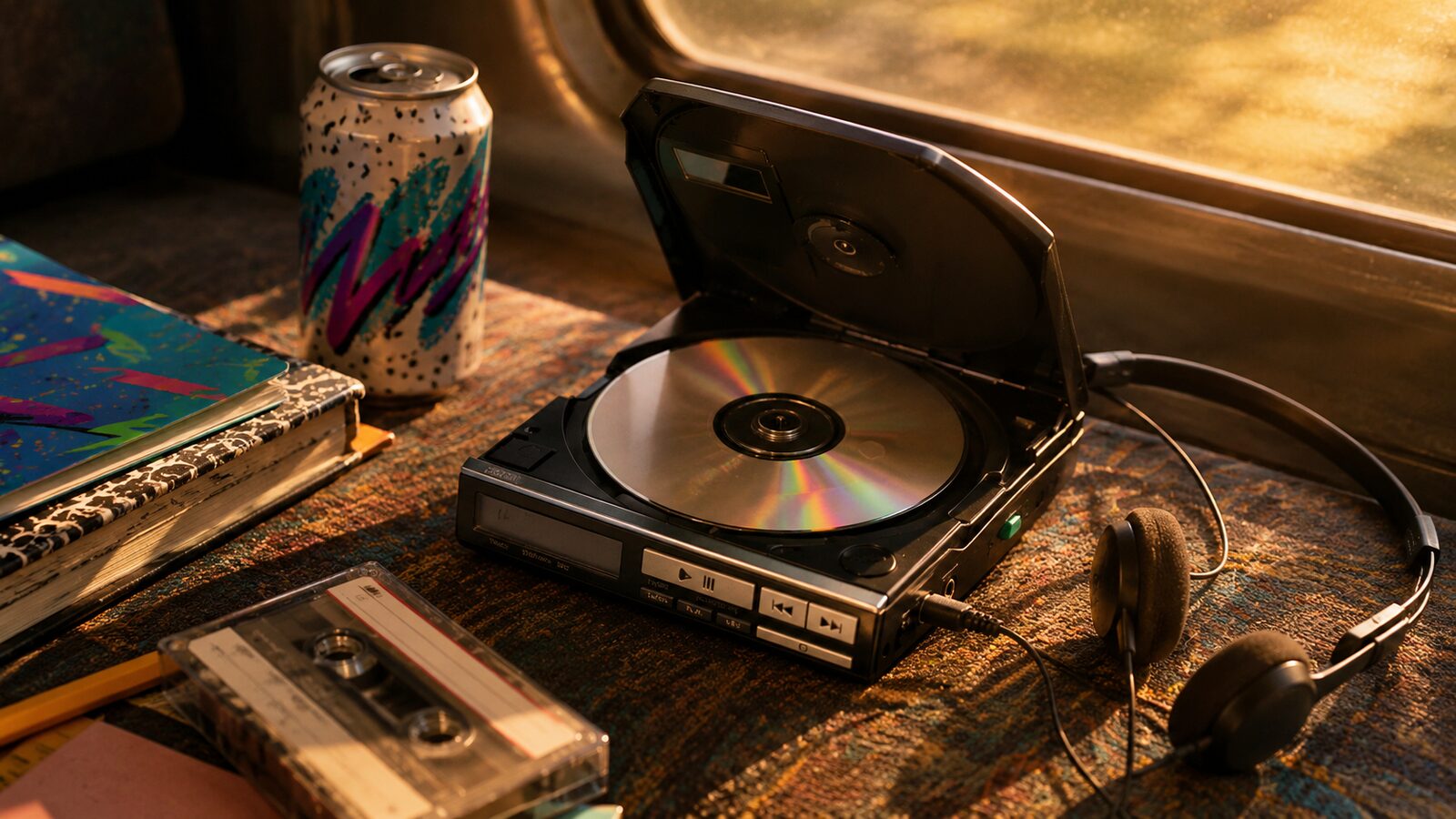
The D-50 was a miracle of miniaturization. At just 5 inches across and weighing under a pound, it was barely larger than the CDs it played. The design was elegant, almost jewelry-like: a clamshell lid, silver-and-black finish, and a precision that felt closer to a camera than a stereo component. Sony's engineers had compressed an entire CD playback mechanism into something you could carry in a jacket pocket.
If the Walkman had freed music from the living room, the Discman freed it from the cassette tape. Suddenly, you could hear the full dynamic range and clarity of digital audio anywhere — on the bus, at the beach, on a park bench. The era of portable high-fidelity had begun.
The Gear
The Sony D-50 featured a single-beam laser pickup, 16-bit digital-to-analog conversion, and a frequency response of 20Hz to 20kHz — specifications that matched full-size home CD players of the era. Playback was powered by four AA batteries or an optional rechargeable battery pack, with a battery life of approximately two hours.
The D-50's anti-shock protection was minimal — this was 1984, and electronic skip protection wouldn't arrive for another decade. Walking with a D-50 meant accepting the occasional skip. Jogging was out of the question. But for seated or stationary listening, the audio quality was extraordinary for a portable device.
The unit included a 3.5mm headphone jack and an RCA line-out, making it double as a portable CD transport for home audio systems. Sony shipped it with their MDR-A20 headphones, which featured the foam earpads that would define portable headphone design for the next fifteen years.
The Discman was the middle child — too early to be cool again, too late to be first. But without it, there's no iPod.
— Audio history
Why It Matters
The Sony D-50 sits at an awkward but crucial point in audio history. It's sandwiched between two icons — the Walkman and the iPod — and it rarely gets the same cultural recognition. But without the Discman proving that consumers wanted portable high-fidelity, Apple's eventual leap to digital files would have been a much harder sell.
On the collector market, the D-50 ranges from $100 to $500, depending on condition and completeness. Working units with original packaging and accessories — the carrying case, the headphones, the battery pack — command the highest prices. The D-50 is particularly valued because it was the first: every portable CD player that followed, across every brand, was chasing what Sony had done.
For nostalgia collectors, the D-50 is a time machine. It's the school bus, the study hall, the back seat of a car on a family road trip. It's the moment when "skip-free" was a marketing feature and carrying a CD wallet was a personality trait. The bridge between analog warmth and digital convenience, before streaming made both irrelevant.
The Original Gear
Affiliate disclosure: We may earn a commission from qualifying purchases made through links on this page, at no extra cost to you.
Sony D-50 (Discman)
$100–$500The original. World's first portable CD player, 1984. Clamshell design, 16-bit DAC, and the beginning of portable digital audio.
Sony D-250 (later model)
$75–$300The refined follow-up with improved battery life and slimmer profile. Same clamshell DNA, better portability.
Modern Alternatives
FiiO M11S
~$450A modern digital audio player with hi-res support, dual DAC chips, and Bluetooth. The spiritual successor to portable high-fidelity, updated for the streaming age.
View on Amazon →Sony NW-A306 Walkman
~$350Sony's modern Walkman with hi-res audio, Android OS, and streaming app support. The Discman's grandchild, carrying the family name.
View on Amazon →Apple AirPods Max
~$550Premium wireless headphones with computational audio and spatial sound. The endpoint of the journey the D-50 started — portable hi-fi, no disc required.
View on Amazon →