Steve Jobs — The Apartment
The most famous empty room in tech history had one thing in it: a world-class stereo.
The scene
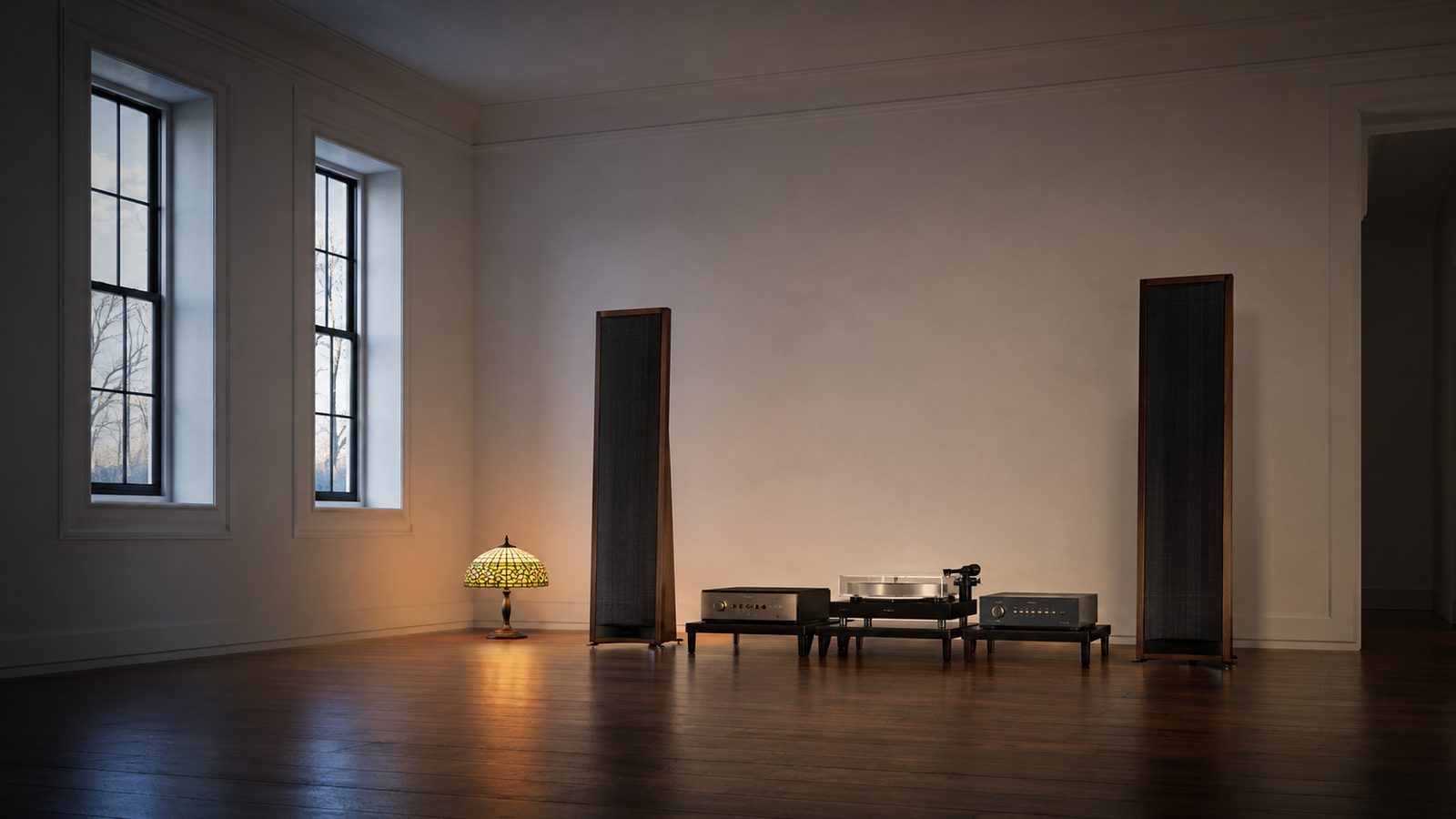
The photograph is legendary. Steve Jobs sits cross-legged on the floor of his Los Gatos mansion — a huge, mostly empty room. Hardwood floors, white walls, nothing on them. A single Tiffany lamp. And against the wall, a stereo system: tall electrostatic speakers, amplification, a turntable. That's it. That's the entire room.
Diana Walker captured the image in 1982 for Time magazine, and it became the defining visual of Jobs' design philosophy years before anyone had heard of the iMac or iPhone. The emptiness isn't poverty — it's intention. Jobs could afford anything. He chose almost nothing. But the stereo made the cut.
The gear
The speakers are Acoustat Monitor 3 electrostatic speakers — tall, panel-style speakers that produce sound by vibrating a thin membrane between two charged plates. Electrostatics are revered by audiophiles for their transparency, detail, and lifelike imaging. The Acoustat Monitor 3 was a full-range electrostatic that stood over five feet tall — more like a piece of furniture than a traditional speaker.
The amplification is Threshold — specifically a FET-One preamplifier and STASIS-1 power amplifier, both designed by Nelson Pass. Threshold was one of the first companies to use MOSFET transistors in audio amplification, and Nelson Pass is now considered one of the greatest amplifier designers in history. The STASIS-1 was a statement product: massive, expensive, and capable of driving difficult loads like electrostatic speakers with ease.
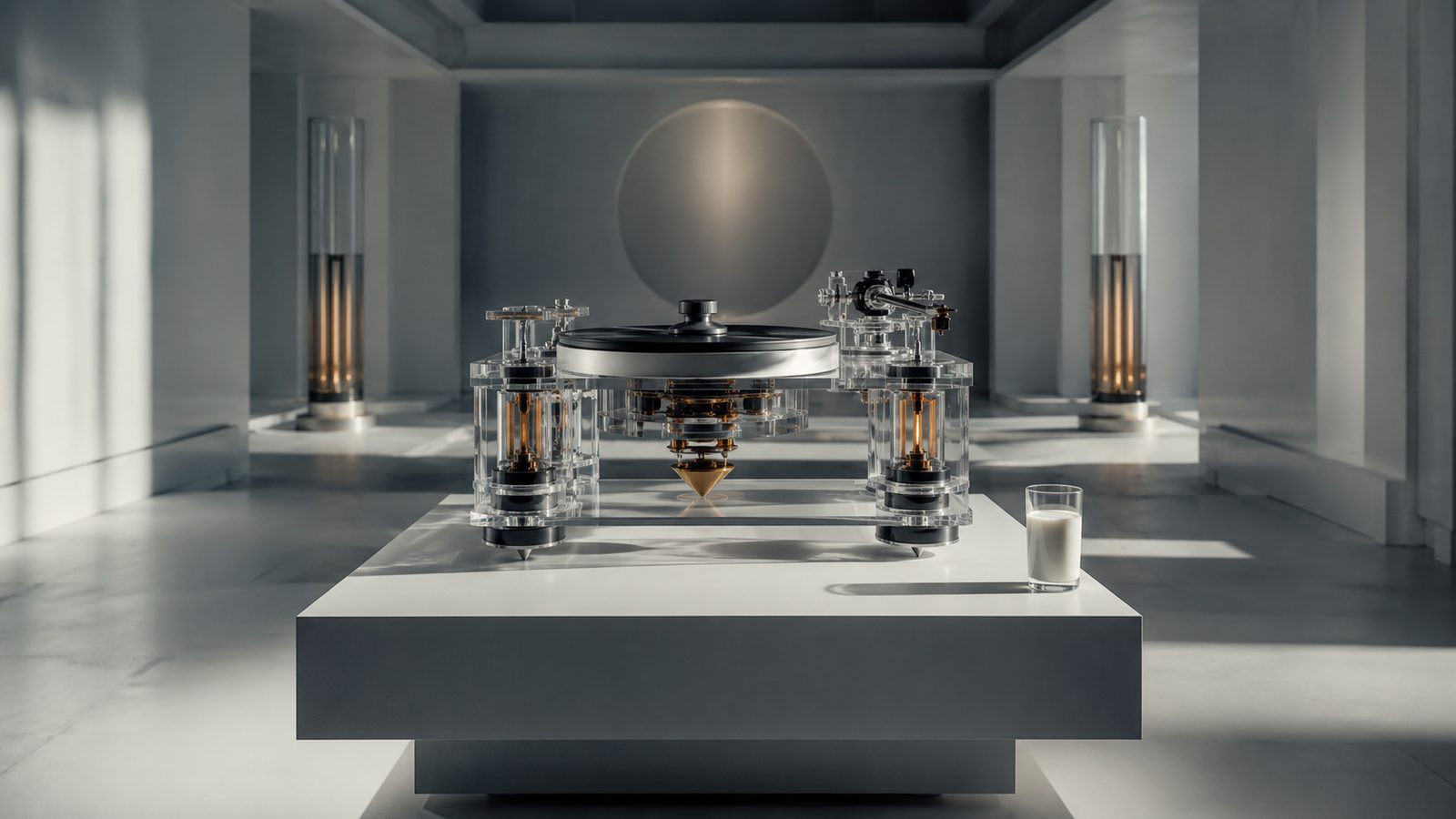
The turntable is a Michell GyroDec — a British turntable with a distinctive transparent acrylic platter suspended on a precision bearing. The GyroDec is an engineering-forward design that exposes its mechanism, much like the Transcriptors turntable in A Clockwork Orange. For Jobs, the connection is obvious: beauty through exposed function.
"Design is not just what it looks like and feels like. Design is how it works."
Why it matters
The apartment photograph became a Rosetta Stone for understanding Jobs' design philosophy. He didn't fill rooms with objects — he selected the essential ones and gave them space. The stereo system wasn't decoration. It was, alongside the Tiffany lamp, the only thing in the room that Jobs deemed necessary for daily life. Music was essential. Everything else was optional.
The gear choices are revealing. Acoustat electrostatics, Threshold amplification, and a Michell turntable are not mainstream consumer products. They're deep-cut audiophile selections that you'd only know about if you'd done serious research or had serious advisors. Jobs didn't buy the most expensive system — he bought the most transparent one. He wanted to hear the music as it was recorded, with nothing added and nothing subtracted. It's the same philosophy he'd later apply to product design at Apple.
All three brands remain collectible. Acoustat was acquired and discontinued, making original panels rare. Threshold lives on through Nelson Pass's current company, Pass Labs. The Michell GyroDec is still in production — one of the few components from the photograph you can still buy new.
Affiliate disclosure: We may earn a commission from qualifying purchases made through links on this page, at no extra cost to you.
Acoustat Monitor 3
Full-range electrostatic panels standing over five feet tall. Transparent, detailed, lifelike sound reproduction. The speakers Jobs chose when he could have chosen anything.
- Era
- Late 1970s–1980s
- Type
- Electrostatic speakers
- eBay market
- $500–$2,000/pair
- Condition note
- Panels and transformers may need service
Michell GyroDec
British turntable with transparent acrylic platter and exposed precision bearing. Still in production. Engineering as aesthetic — the turntable equivalent of Jobs' design philosophy.
- Era
- 1981–present
- Type
- Belt-drive turntable
- eBay market
- $500–$2,000
- Condition note
- Still manufactured — new units available
MartinLogan Motion XT F200
Modern electrostatic hybrid speakers. The folded motion tweeter delivers the transparency Jobs loved, with a dynamic woofer for bass weight. The closest modern equivalent to the Acoustat experience.
View on Amazon →Michell GyroDec (New)
Still in production after 40+ years. Same transparent platter, same precision bearing, same exposed engineering. One of the few things from the 1982 photo you can still buy new.
View on Amazon →Pass Labs INT-25
Nelson Pass's current company. Class A integrated amplifier — the direct descendant of the Threshold gear in Jobs' apartment. Pure, transparent, uncompromising.
View on Amazon →