Vinyl
Scorsese and Mick Jagger's 1970s music industry drama — the most audio-equipment-dense television show ever made, where every frame is a vintage gear showcase.
The scene
HBO's Vinyl had the pedigree of a masterpiece: Martin Scorsese and Mick Jagger as executive producers, Terence Winter (The Sopranos, Boardwalk Empire) as showrunner, and a setting — the 1970s New York music industry — that demanded wall-to-wall vintage audio equipment.
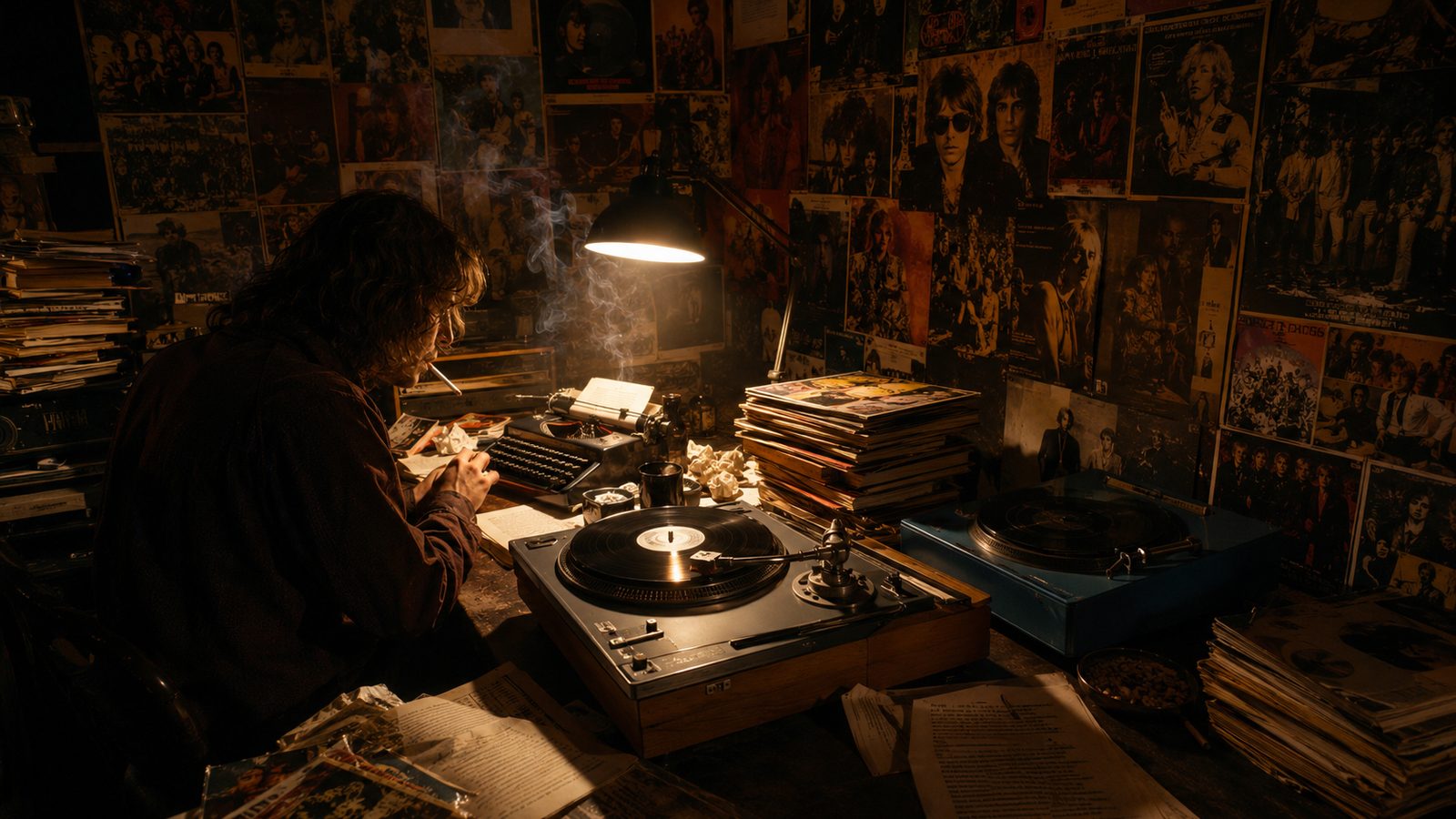
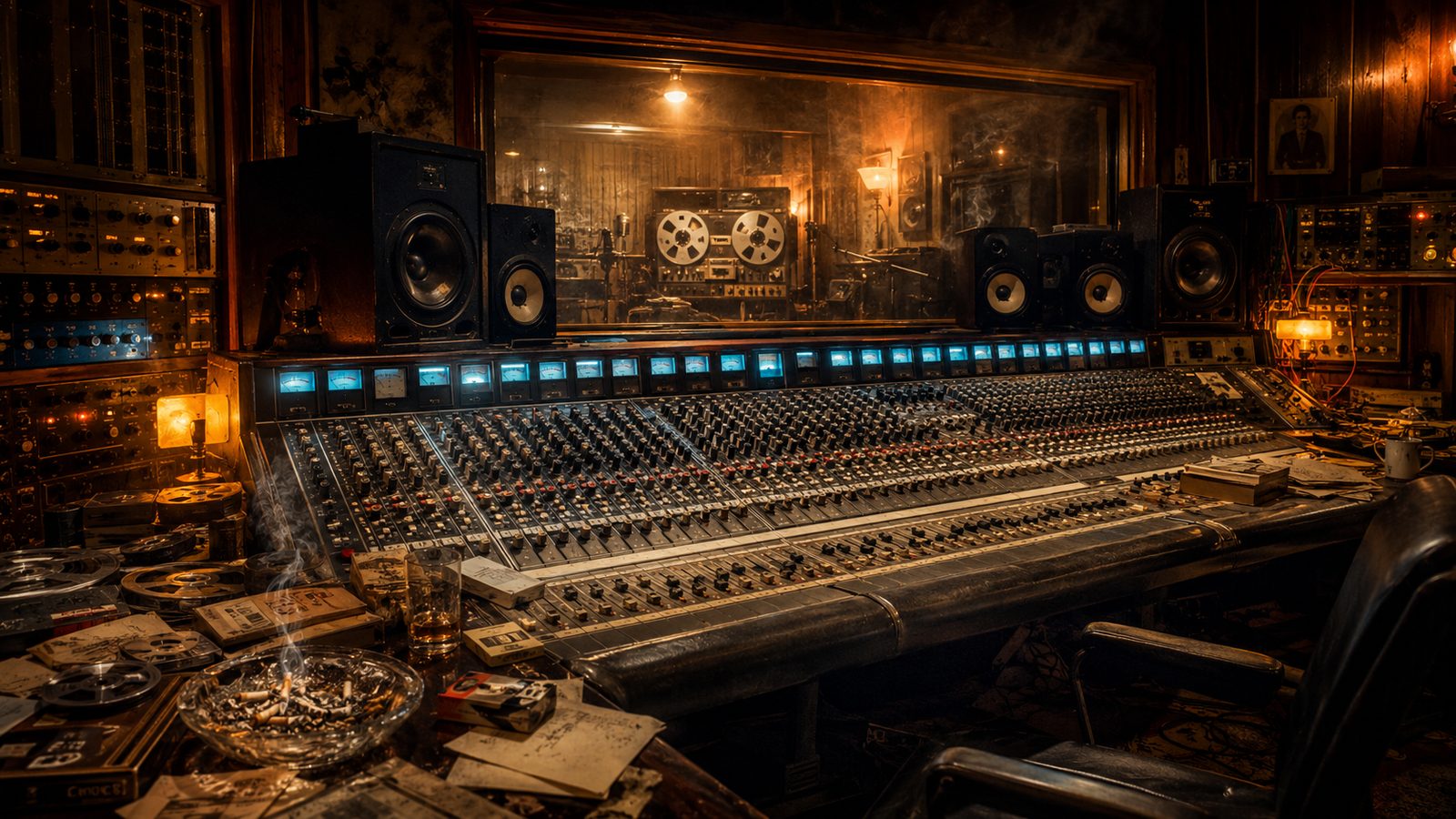
The show follows Richie Finestra, a record label president navigating the collision of punk, disco, and hip-hop in 1970s Manhattan. Every scene is drenched in period audio: recording studios with massive analog mixing consoles, reel-to-reel tape machines spinning in control rooms, turntables in offices and nightclubs, and studio monitors glowing behind glass.
Though cancelled after one season, Vinyl remains the most audio-equipment-dense television show ever produced. The prop department sourced authentic 1970s studio gear for every frame — making it a treasure trove for anyone interested in the golden age of analog recording.
The gear
The recording studio scenes feature period-accurate equipment including large-format analog mixing consoles — likely Neve or API boards, the industry standard for 1970s rock and R&B recording. These consoles are the visual centerpiece of every control room scene: rows of faders, knobs, and VU meters stretching across the frame.
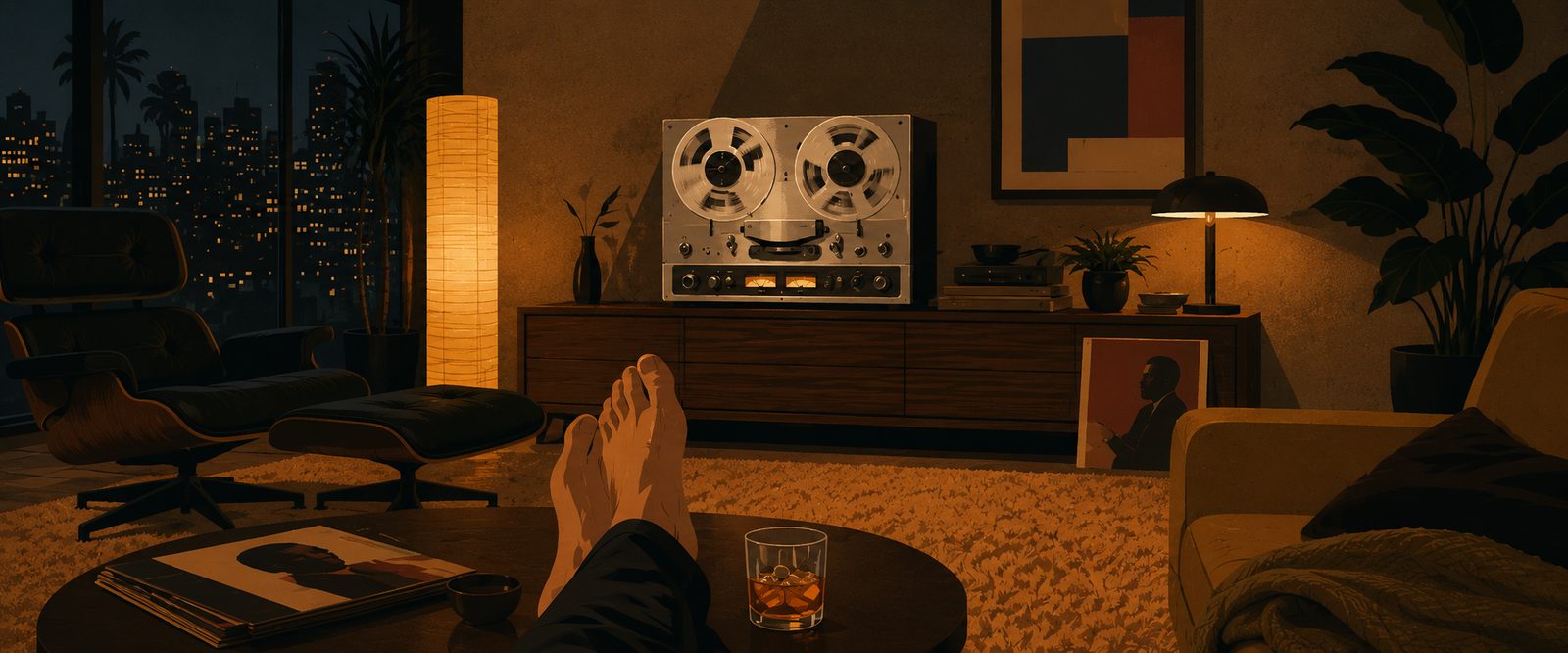
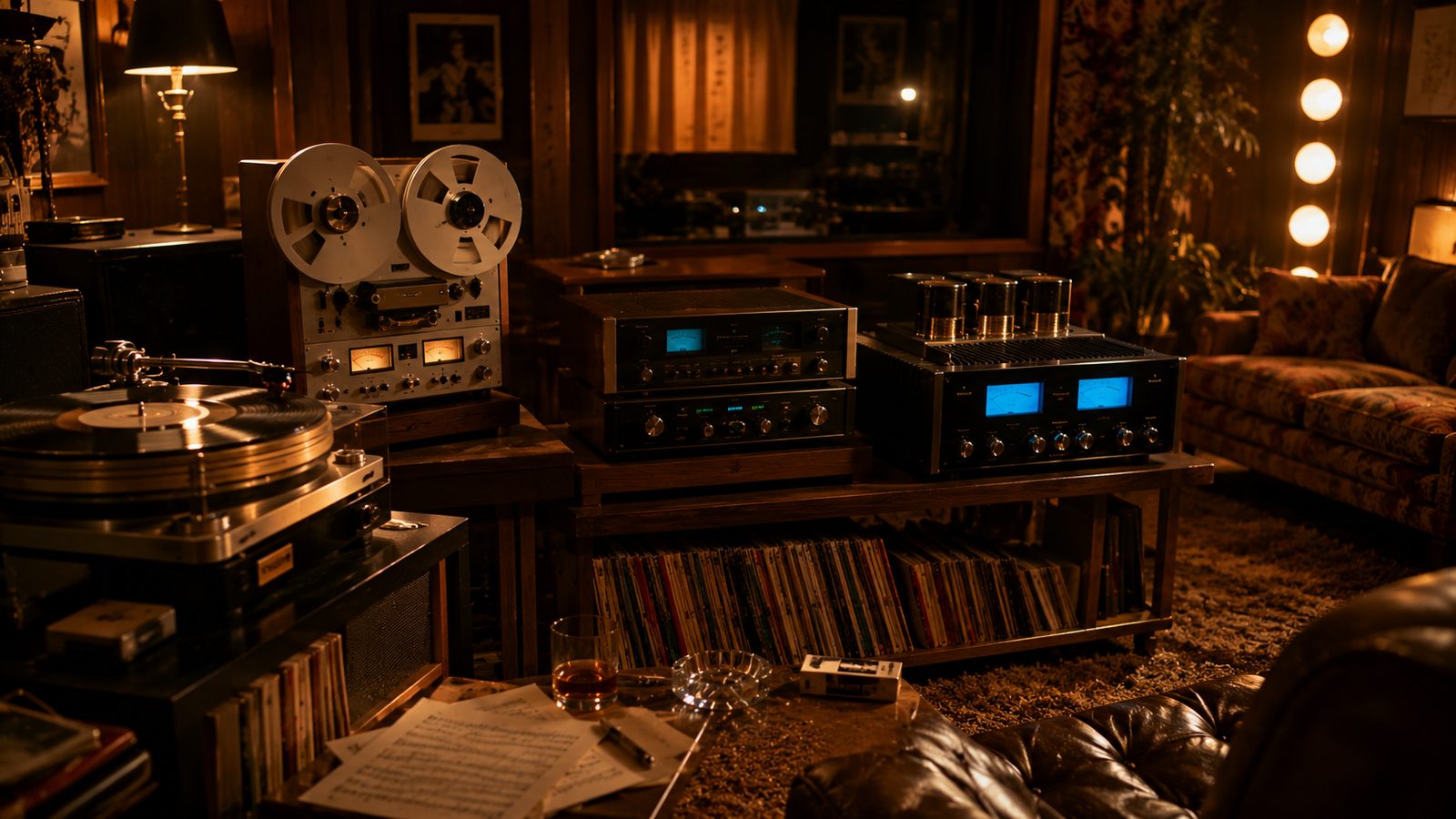
Reel-to-reel tape machines — visible behind the glass in the live room and in the control room — are consistent with Studer and MCI multitrack recorders. These were the workhorses of professional recording: 2-inch tape at 15 or 30 inches per second, capturing the performances that became the records.
Studio monitors — speakers designed for accurate playback in recording environments — are visible throughout. The 1970s standard included JBL 4311, Altec 604, and Auratone 5C (the "Mix Cube" for checking how records would sound on cheap speakers). Turntables in offices and A&R rooms complete the picture.
"Rock and roll is a brutal business — and the guys who run it are even more brutal."
— Richie Finestra (Bobby Cannavale)
Why it matters
Vinyl's cancellation after one season is widely regarded as one of HBO's biggest missed opportunities. The show had everything — pedigree, casting (Cannavale, Jagger, Olivia Wilde, Ray Romano), and a setting that hadn't been explored at this scale on television. The production design alone was worth the price of admission.
For audio enthusiasts, Vinyl is essential viewing. Every episode contains multiple scenes of vintage studio equipment in use — not as museum pieces, but as working tools. The mixing console scenes alone are a masterclass in how analog recording worked: engineers riding faders in real time, making decisions that couldn't be undone, committing to tape.
Vintage 1970s studio gear varies enormously on eBay. Neve and API mixing console channels sell for $2,000–$10,000+ each. Studer reel-to-reel machines command $3,000–$15,000. JBL 4311 monitors sell for $500–$1,500/pair. This is the gear that made the records that defined a generation.
Universal Audio Apollo Twin X
~$1,000Modern recording interface with analog-modeled preamps. Captures the warmth of a 1970s console in a desktop unit — Neve and API emulations included.
View on AmazonTASCAM Model 24
~$1,000Hybrid analog mixer with digital recording. The closest thing to a 1970s studio console that you can buy new — real faders, real knobs, multitrack recording to SD card.
View on AmazonJBL 306P MkII Studio Monitors
~$300/pairModern studio monitors descended from the JBL 4311 lineage. Accurate, powerful, and purpose-built for hearing exactly what's on the tape.
View on Amazon