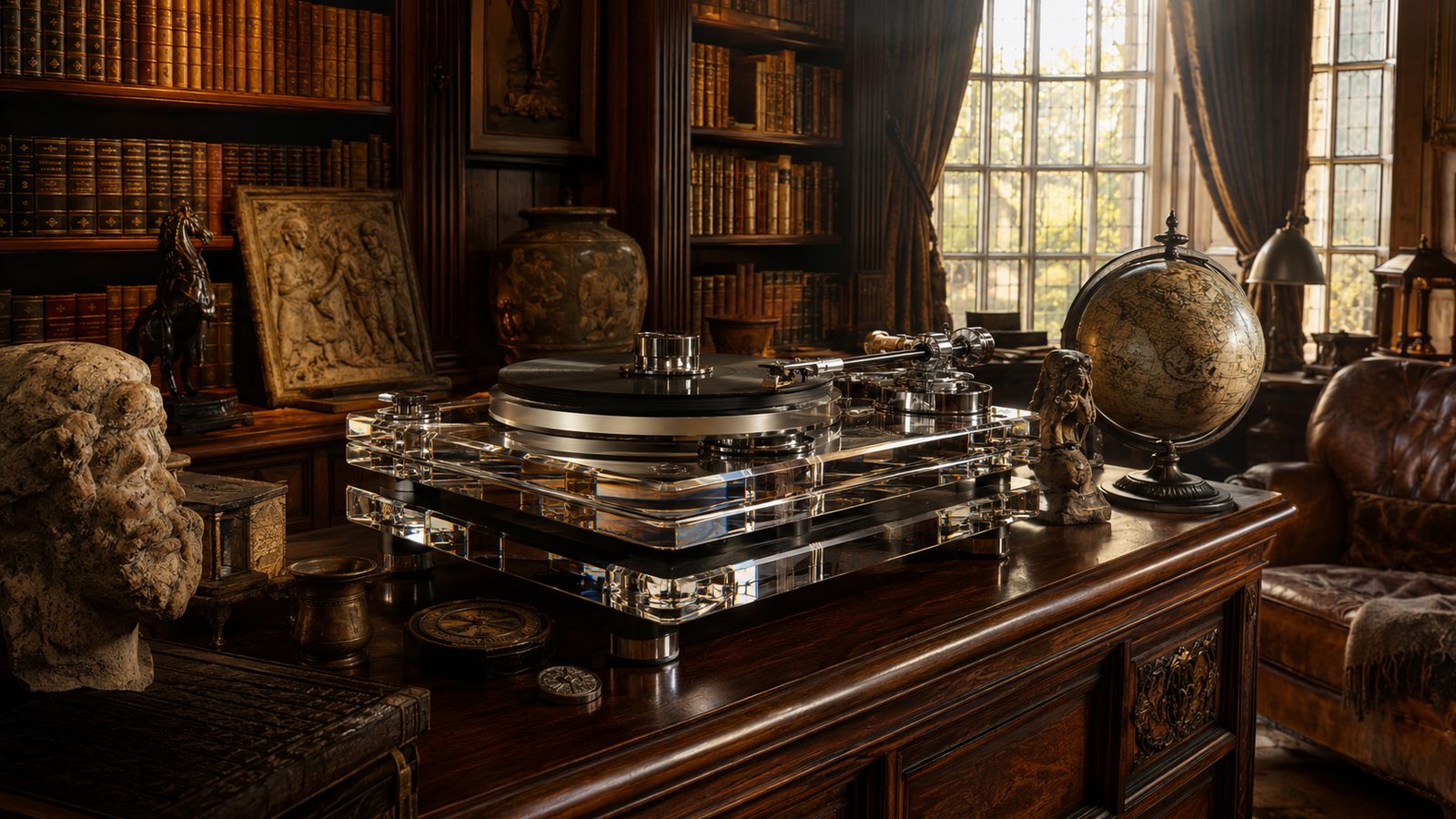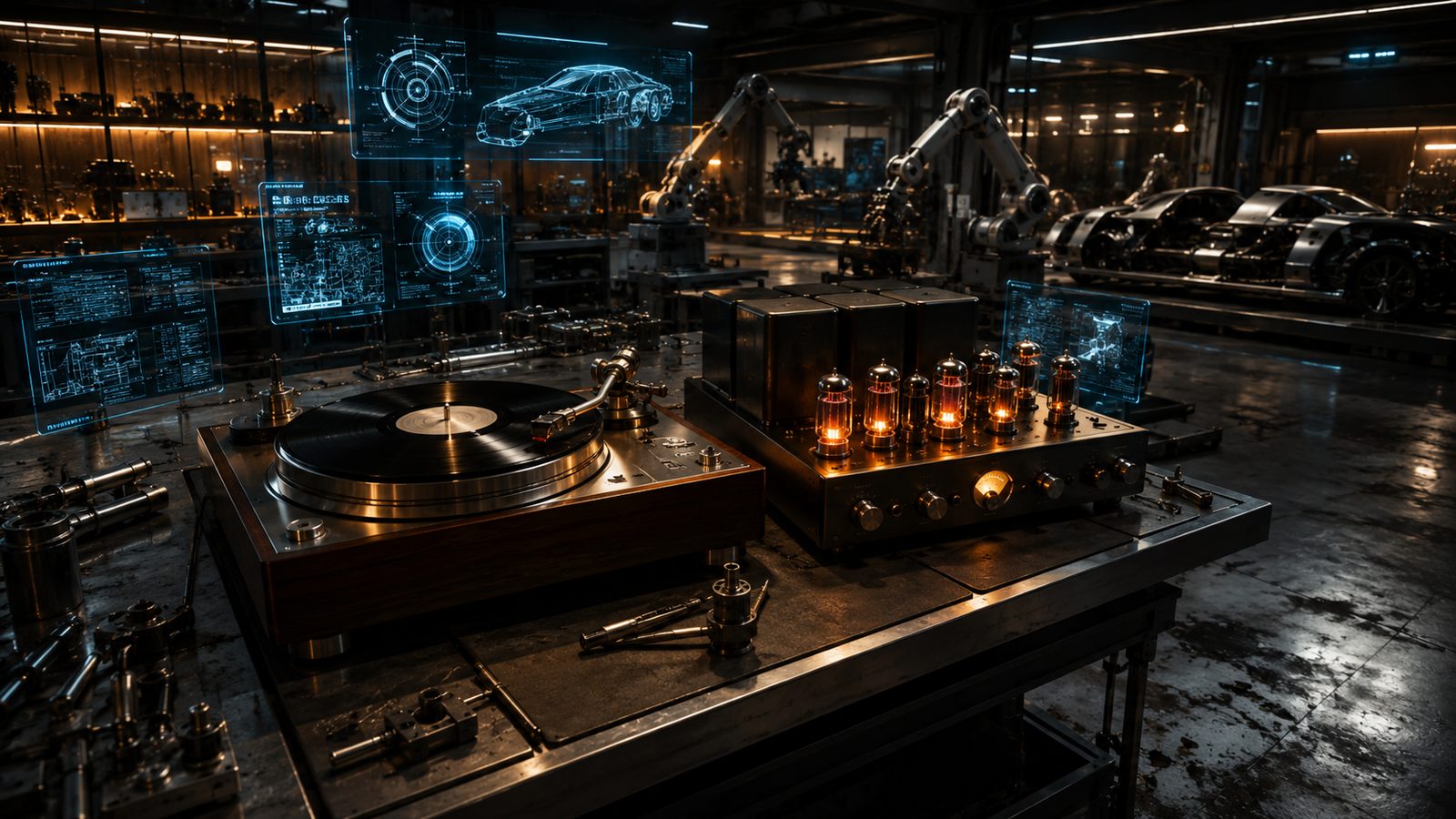
Lara Croft keeps a Clearaudio Master Reference turntable in the library of Croft Manor — a massive, sculptural piece of audio engineering that costs more than most cars, displayed among ancient artifacts like the precision instrument it is. Tony Stark has a Technics turntable and a vintage tube amplifier in his Malibu workshop, spinning vinyl while robotic arms build Iron Man suits around him.
Both are billionaires. Both are geniuses. Both have turntables. The similarity ends there.
The Croft rig: Clearaudio Master Reference
The Clearaudio Master Reference is not a turntable for people who listen to records. It's a turntable for people who worship records. Built in Germany, it features a multi-layered acrylic and aluminum plinth, a magnetic bearing that suspends the platter in a frictionless field, and a level of engineering precision that would make a Swiss watchmaker nervous.
At $10,000+ (and that's before you add a tonearm and cartridge — figure another $2,000–$10,000 for those), the Master Reference is one of the most expensive turntables ever mass-produced. In Tomb Raider, it sits in Croft Manor's library like an artifact itself — because that's exactly what it is. It's not just a music player. It's a statement about the intersection of engineering and art.
Lara Croft, a woman who raids tombs full of ancient technology, would naturally appreciate a turntable that looks like it was engineered by a civilization more advanced than our own.
The Stark rig: Technics + vintage tubes
Tony Stark's setup is the anti-Clearaudio. A Technics turntable (the specific model isn't confirmed, but the Technics silhouette is unmistakable) sits on a workbench next to a vintage tube amplifier, surrounded by holographic displays, welding equipment, and DUM-E the robot arm. The turntable shares desk space with tools that can build a suit of powered armor. It is neither precious nor protected. It just works.
This is deliberate character design. Stark is a futurist — he builds bleeding-edge technology for a living. His choice to listen to music on analog equipment isn't nostalgia; it's a conscious preference for the warmth and imperfection of vinyl in a world he's made too digital. The contrast between the warm orange glow of vacuum tubes and the cold blue light of holographic displays tells you everything about what Stark values when he's not saving the world.
A Technics turntable runs $400–$1,200 depending on model. A good vintage tube amp adds $500–$3,000. Stark's entire audio system probably costs less than the tonearm on Croft's Clearaudio.
Croft treats her turntable like a museum piece. Stark treats his like a tool. One is reverence. The other is love. There's a difference.
The verdict
Croft wins on hardware, and it's a landslide. The Clearaudio Master Reference is in a completely different league than any Technics consumer turntable. It's like comparing a Patek Philippe to a Casio — both tell time, but one is a feat of engineering art.
But Stark wins on usage. His turntable is a living, working part of his creative process. He listens while he builds. The music is fuel. Croft's Clearaudio sits in a library — beautiful, pristine, and possibly lonely. The best turntable in the world is the one that gets played.
Final call: Stark. Not because his turntable is better — it isn't, not by any technical measure — but because he uses his. Every day. While building the future. That's what turntables are for.