Ferris Bueller is a teenage con artist in suburban Chicago, 1986. Harvey Specter is a senior partner at a Manhattan law firm, 2011. One skips school; the other bills $1,000 an hour. One has a bedroom full of gear paid for by his parents; the other has a corner office with a vinyl rig that costs more than most people's cars. On paper, this shouldn't be a contest. In practice, it's closer than you think.
The Bueller rig: Carver + E-MU madness
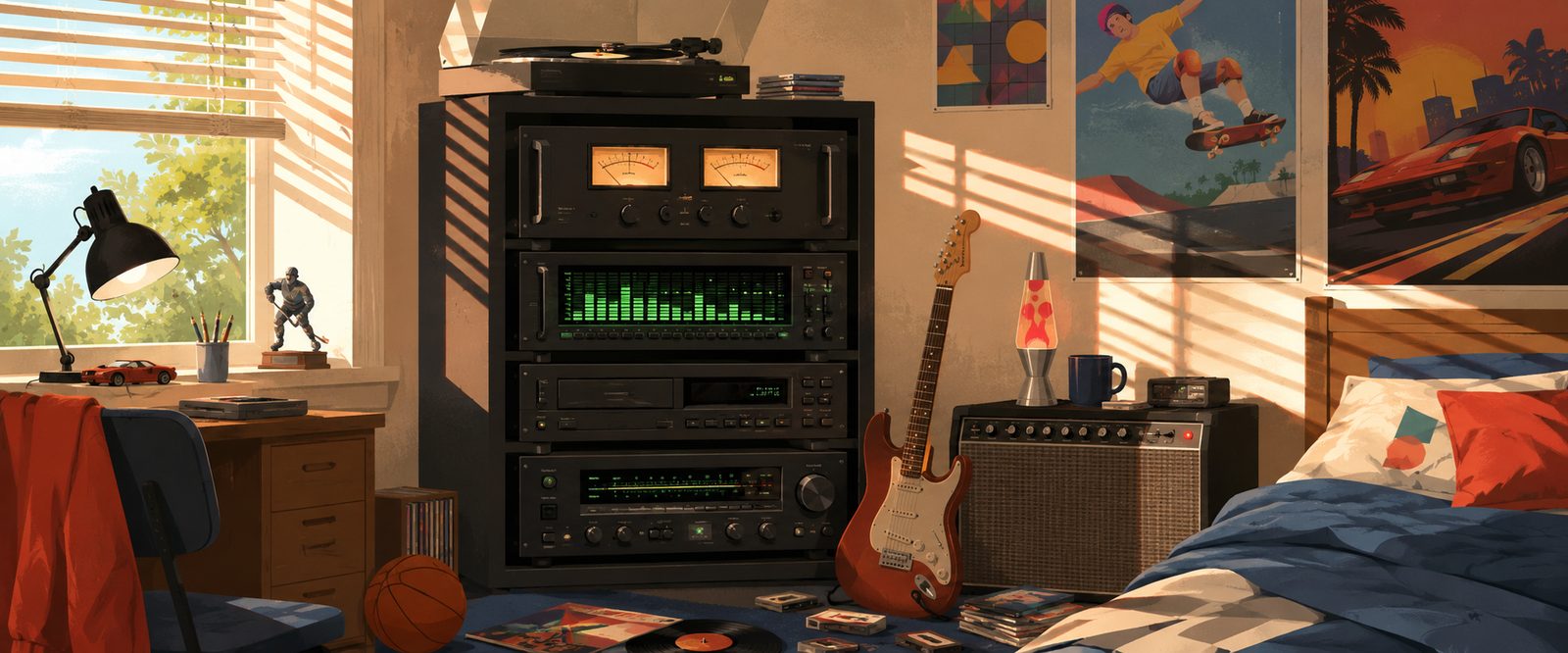
Ferris's bedroom is a masterclass in 1980s audio excess. The kid has a Carver M-500t power amplifier with its distinctive VU meters, an AudioSource EQ-One equalizer/spectrum analyzer (the kind with the dancing LED bars that every teenager in 1986 wanted), a Carver DTL-100 CD player, and a Carver Receiver 2000. There's also a Fender Bassman blackface amp being used as a bedside table, because of course there is.
But the real showpiece is the E-MU Emulator II — a $10,000 sampling keyboard that Ferris uses to fake coughing and snoring sounds for his sick-day scheme. In 1986, this was a professional studio instrument used by Depeche Mode and New Order. Ferris has one in his bedroom. His parents are either extremely generous or extremely inattentive.
The Carver stack runs $500–$1,500 on today's vintage market. The Emulator II, if you can find one working, is $2,000–$5,000+. The Gretsch White Falcon guitar visible in the background? That's another $2,500–$5,000. This bedroom contains more audio gear than most recording studios of the era.
The Specter rig: vinyl and tubes
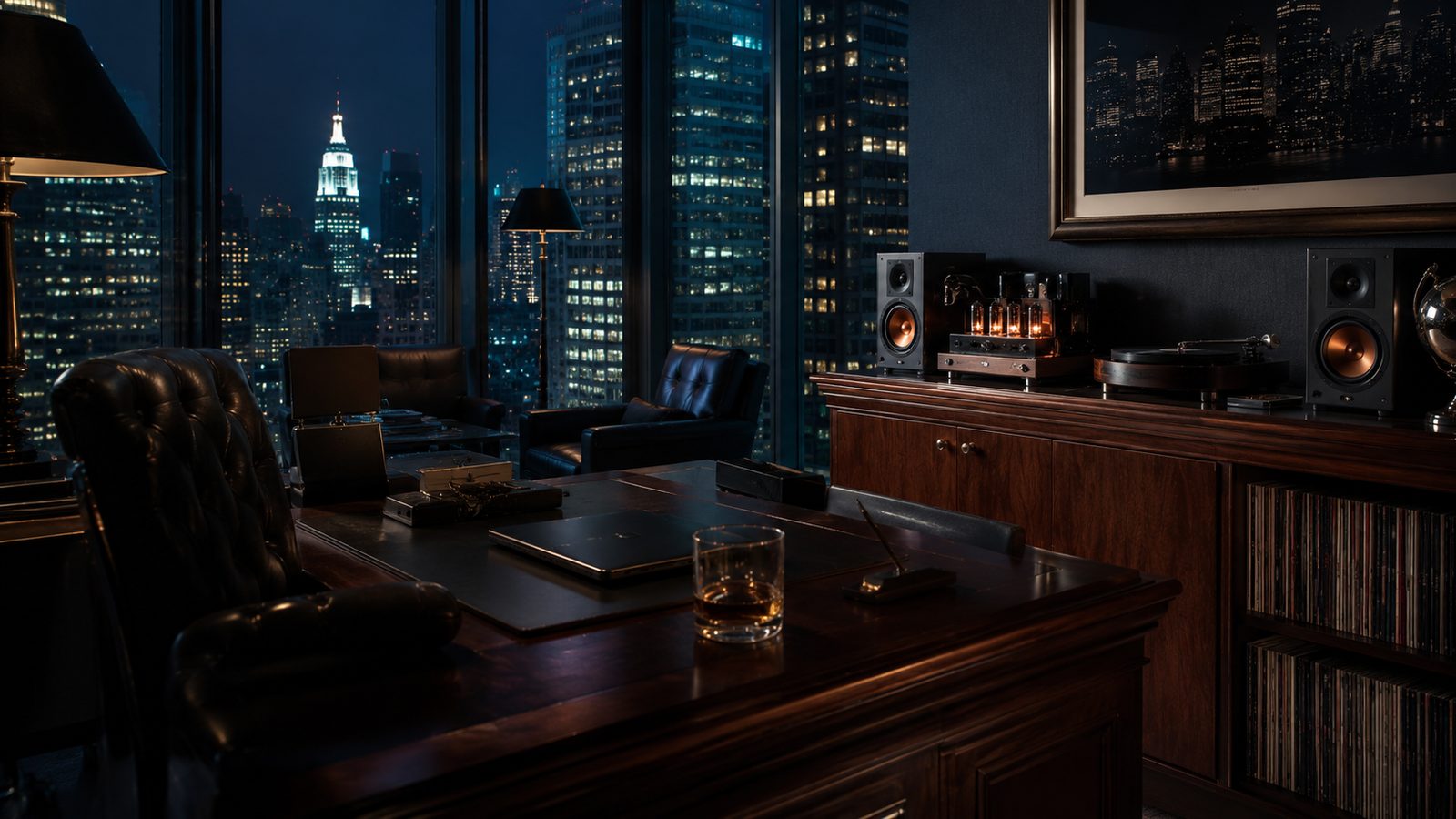
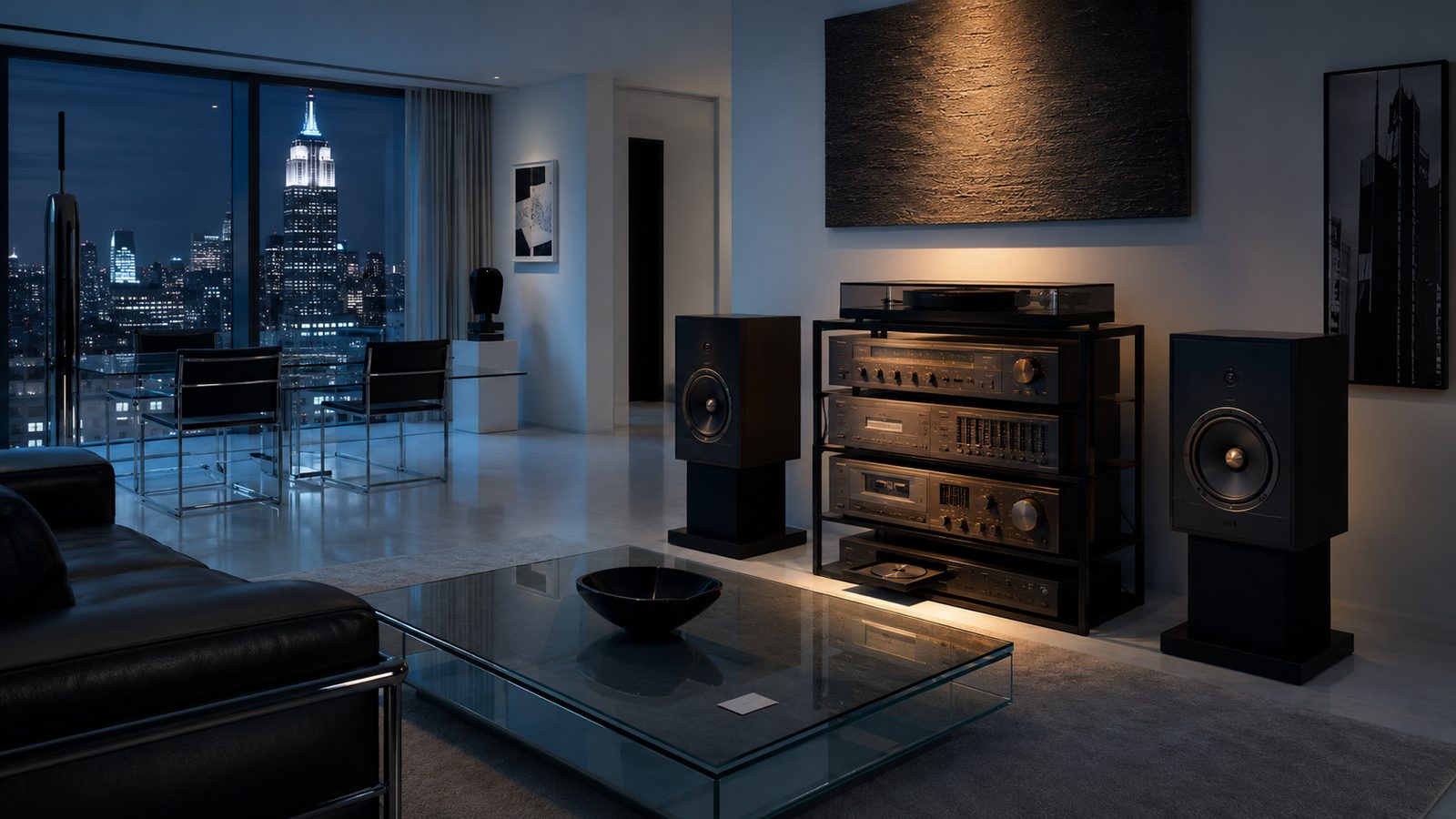
Harvey Specter's approach is the opposite of Ferris's — deliberate, curated, minimal. Behind his mahogany desk sits a Pro-Ject RPM 1.3 Genie turntable, a PrimaLuna tube amplifier with its warm, glowing vacuum tubes, and a pair of Klipsch Reference R-14M bookshelf speakers. It's a three-component system that does one thing — play vinyl records — and does it with the kind of quiet confidence that Harvey brings to everything.
The Pro-Ject is a serious entry-level audiophile turntable ($300–$600). The PrimaLuna is the real investment at $1,000–$3,000 — a tube integrated amp that delivers that warm, rich sound that vinyl collectors obsess over. The Klipsch speakers are efficient and punchy, perfect for a smaller room. Total system cost: around $2,000–$4,000.
Ferris's setup says "I have everything." Harvey's says "I have exactly what I need." Both are power moves — they just operate at different frequencies.
The verdict
Harvey Specter wins on sound quality. Ferris wins on sheer audacity. The PrimaLuna tube amp driving Klipsch speakers from a Pro-Ject turntable will produce a warmer, more engaging listening experience than Ferris's Carver stack playing CDs through a graphic equalizer. Harvey's system is built for listening. Ferris's system is built for looking at.
But let's be honest — if you were seventeen in 1986 and you walked into that bedroom and saw the Carver VU meters dancing, the EQ spectrum analyzer bouncing, and an Emulator II sitting there ready to sample anything, you would have lost your mind. Harvey Specter wins the audiophile contest. Ferris Bueller wins the "coolest room in cinema" contest. We're calling it a split decision.