As Good as It Gets
Melvin Udall's McIntosh system — where obsessive-compulsive precision meets audiophile-grade sound in the apartment of cinema's most difficult perfectionist.
The scene
Melvin Udall is a bestselling romance novelist who hates people, avoids sidewalk cracks, eats at the same restaurant every day, and demands his regular waitress. He's also, it turns out, an audiophile.
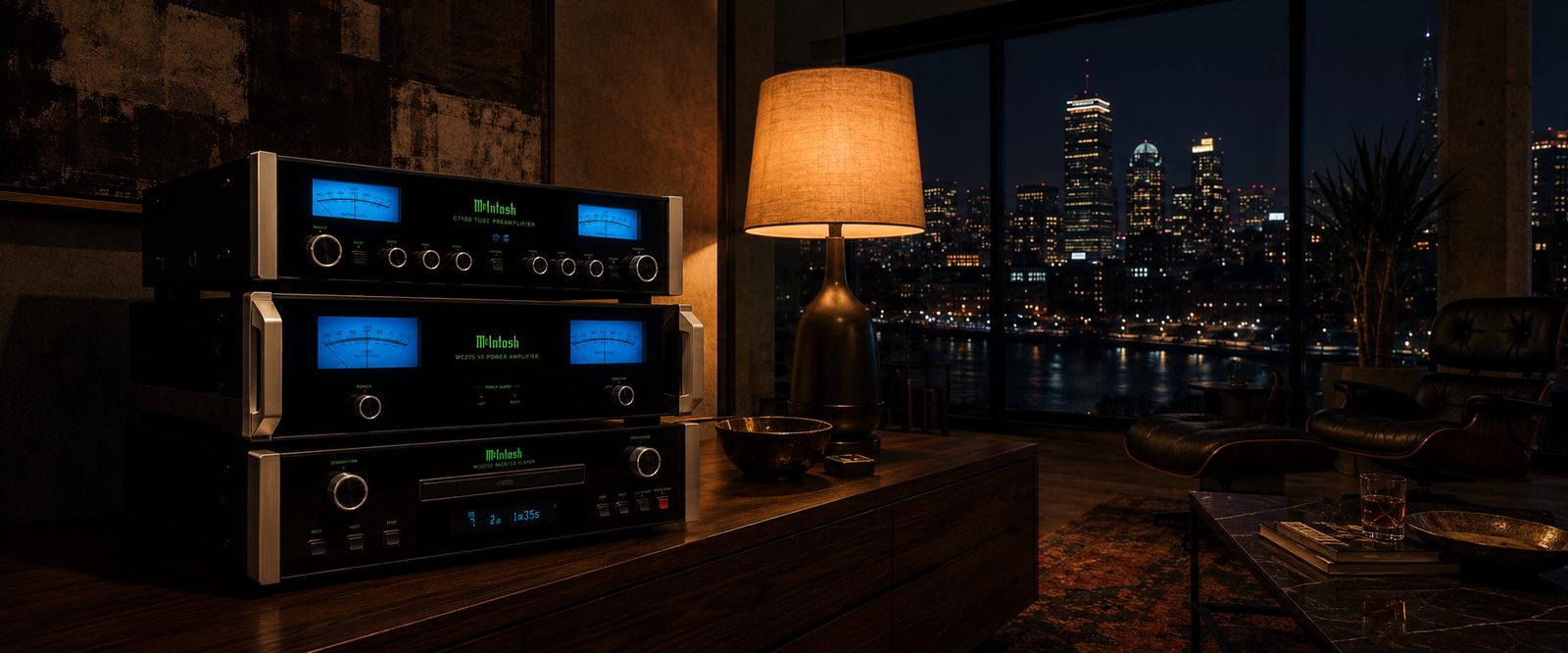
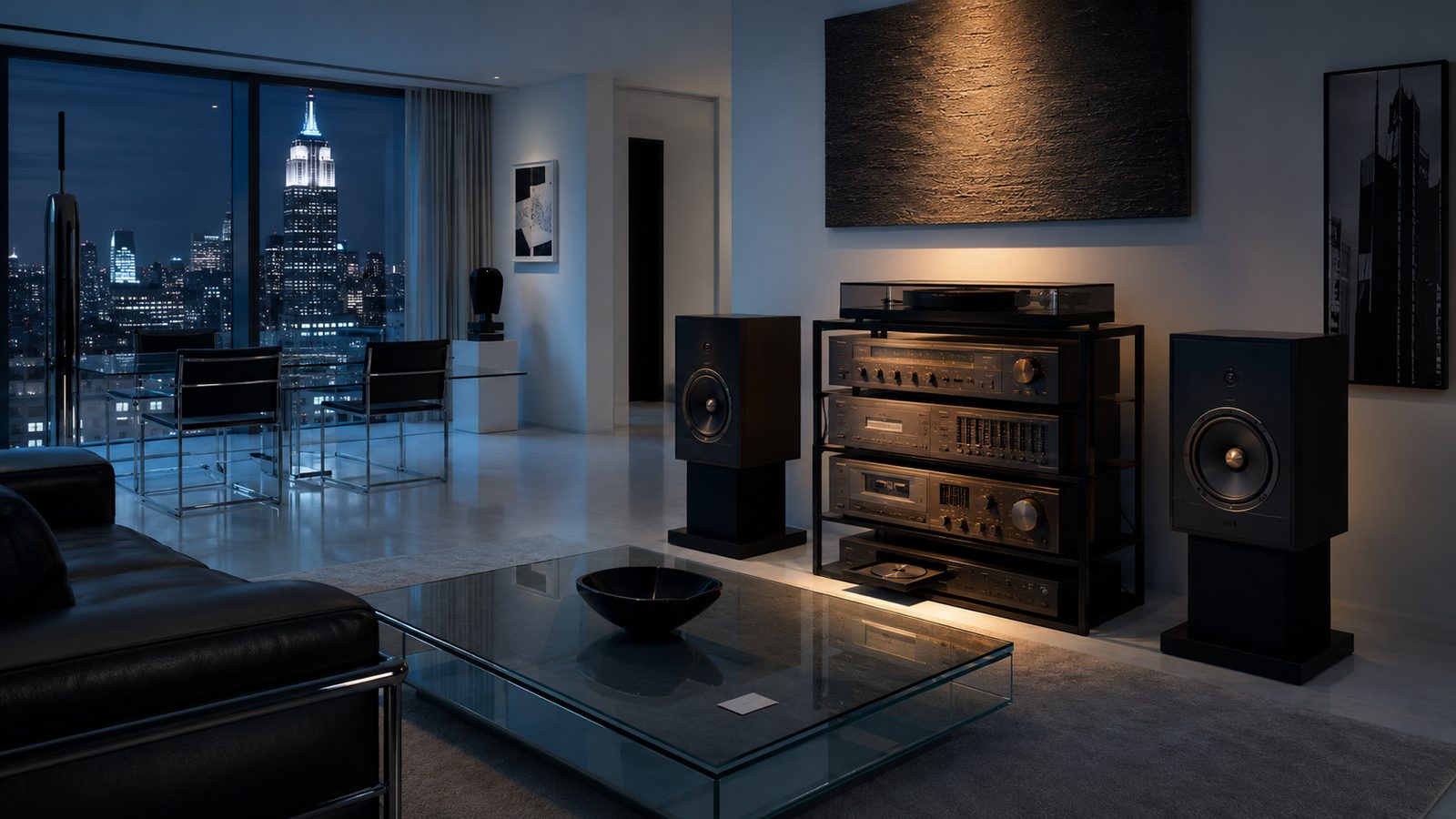
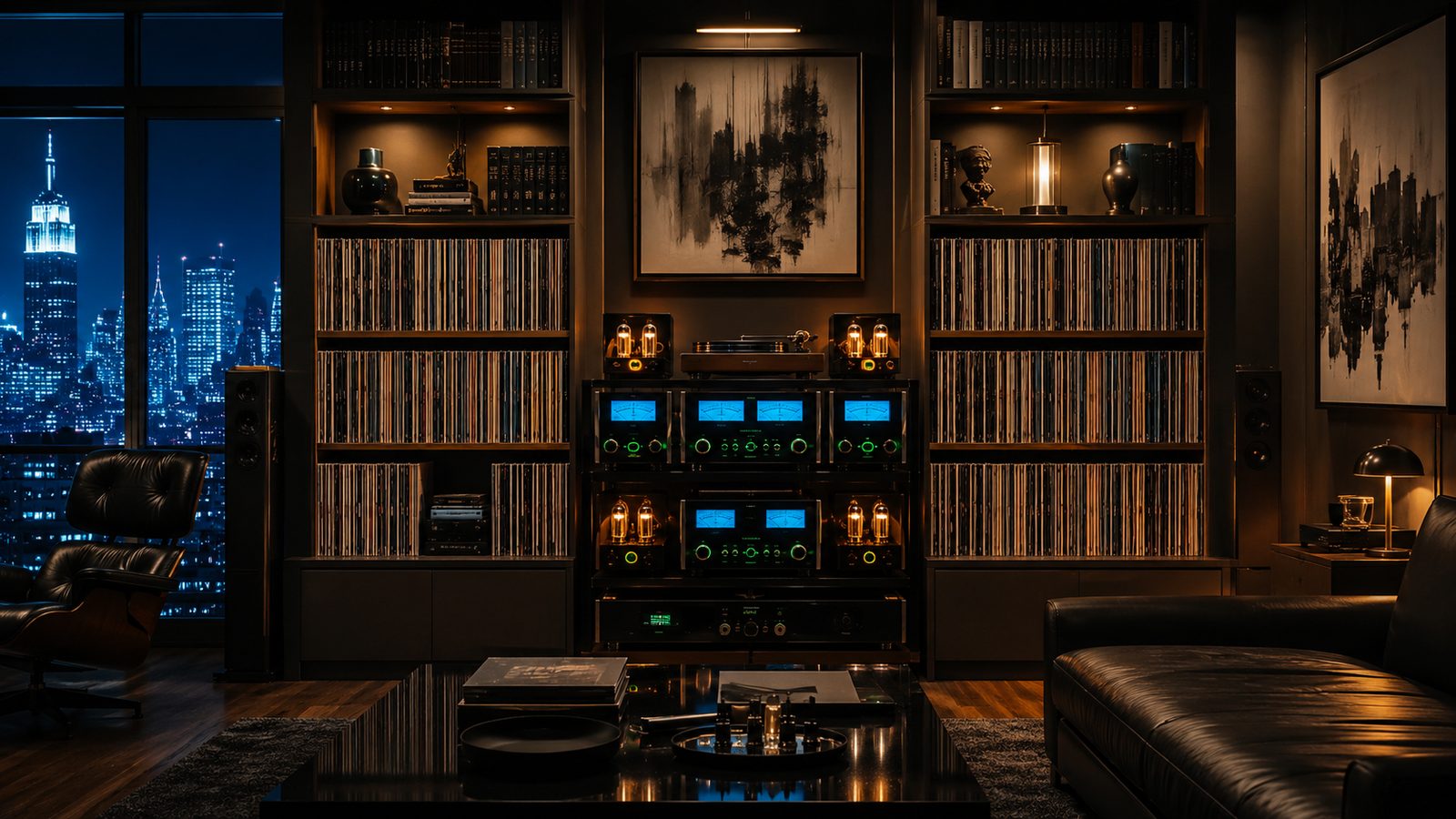
His Manhattan apartment is a temple of obsessive order. Everything has its place. The books are aligned. The surfaces are spotless. And against one wall, glowing with the unmistakable blue and green VU meters that signal money well spent, sits a McIntosh audio system surrounded by alphabetized vinyl records.
The McIntosh isn't just decoration — it's character exposition. Melvin demands perfection in every domain of his life, and his audio system reflects that. McIntosh is the audiophile's audiophile brand: meticulous engineering, legendary reliability, and those iconic illuminated glass faceplates that say "I accept nothing less than the best."
The gear
The specific McIntosh components in Melvin's apartment haven't been conclusively identified model-by-model, but the visible stack includes what appears to be a McIntosh preamplifier and power amplifier — likely vintage units from the 1970s or 1980s, given the film's 1997 setting and the character's preference for established, proven equipment.
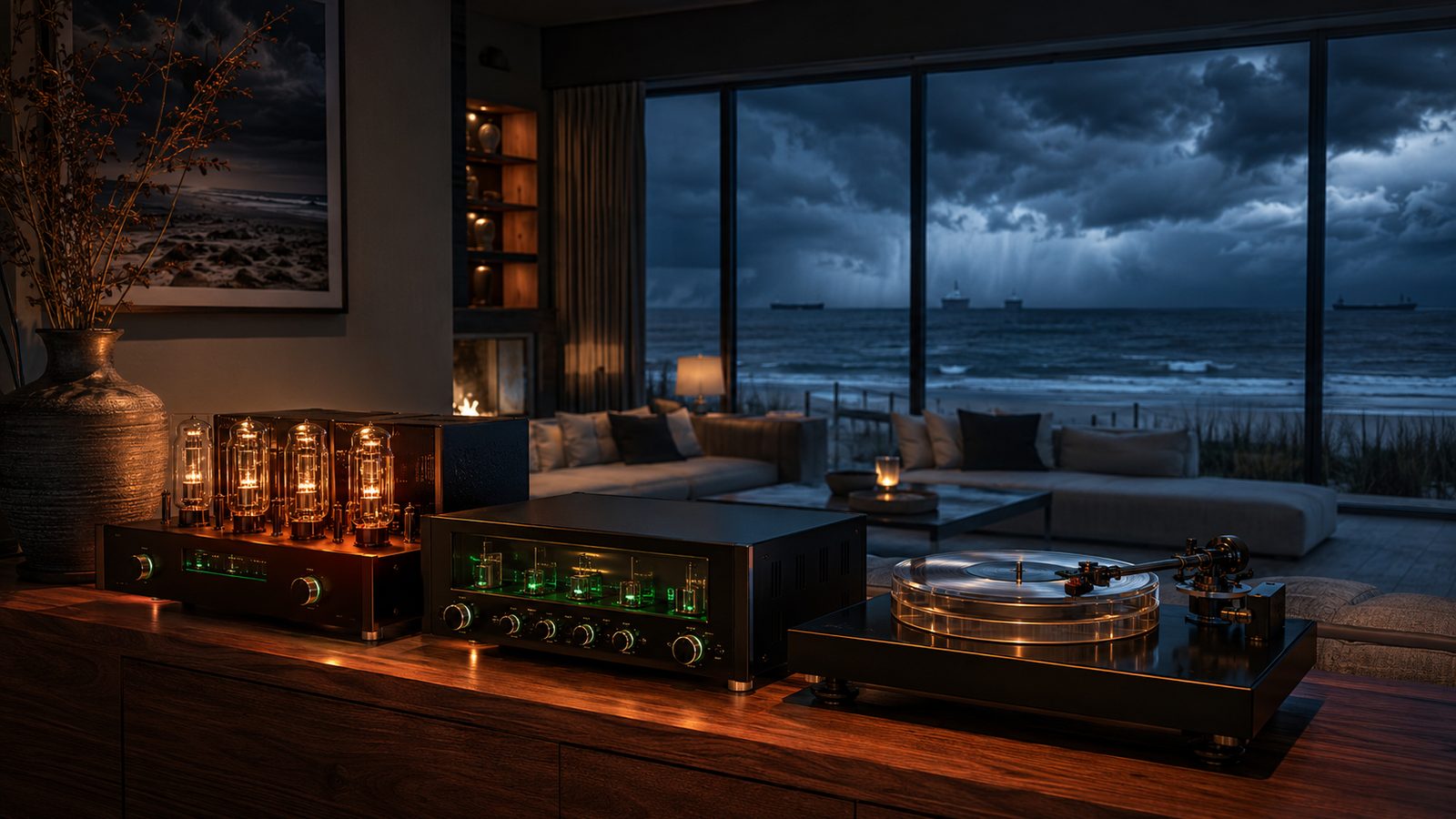
McIntosh Laboratory, founded in 1949 in Binghamton, New York, is one of the most revered names in American audio. Their components are instantly recognizable: black glass faceplates, green lettering, blue VU meters, and power output meters that dance with the music. A McIntosh system doesn't just play music — it performs.
The vinyl collection visible in Melvin's apartment is meticulously organized — alphabetized, uniformly spaced, each record in its designated slot. This is what vinyl collecting looks like when filtered through obsessive-compulsive disorder: not messy crates at a record store, but a library with the precision of a card catalog.
"You make me want to be a better man."
— Melvin Udall (Jack Nicholson)
Why it matters
As Good as It Gets won Jack Nicholson his third Academy Award, and the McIntosh system is a quietly brilliant piece of production design. It tells you everything you need to know about Melvin: he has exceptional taste, unlimited budget for things he cares about, and an absolute inability to compromise on quality.
The McIntosh-as-character-shorthand is a pattern across cinema and TV — it appears in The Departed, Leave the World Behind, Elementary, and Bosch. When a set designer puts McIntosh in a character's home, they're communicating a specific kind of personality: demanding, knowledgeable, and willing to pay for the best. In Melvin's case, the McIntosh system is the audio equivalent of his perfectly aligned books and compulsively locked door.
Vintage McIntosh components are among the most stable investments in audio. Amplifiers and preamplifiers from the 1960s–1980s routinely sell for $1,000–$5,000+ on eBay, and many have appreciated in value over the decades. McIntosh gear is built to last — many 50-year-old units still perform to factory specifications.
Affiliate disclosure: We may earn a commission from qualifying purchases made through links on this page, at no extra cost to you.
Marantz PM6007
~$550Integrated amplifier with a warm, musical character. Not McIntosh money, but the same philosophy — meticulous engineering for people who care about how music sounds.
View on AmazonCambridge Audio CXA81
~$1,000British integrated amp with DAC. Clean, powerful, and refined — the kind of obsessive engineering Melvin Udall would approve of.
View on AmazonMcIntosh MA252
~$3,500If you want the real thing: McIntosh's hybrid integrated amplifier with vacuum tubes and solid-state power. Those green meters. That glass faceplate. Perfection demands McIntosh.
View on Amazon