Jimmy Carter
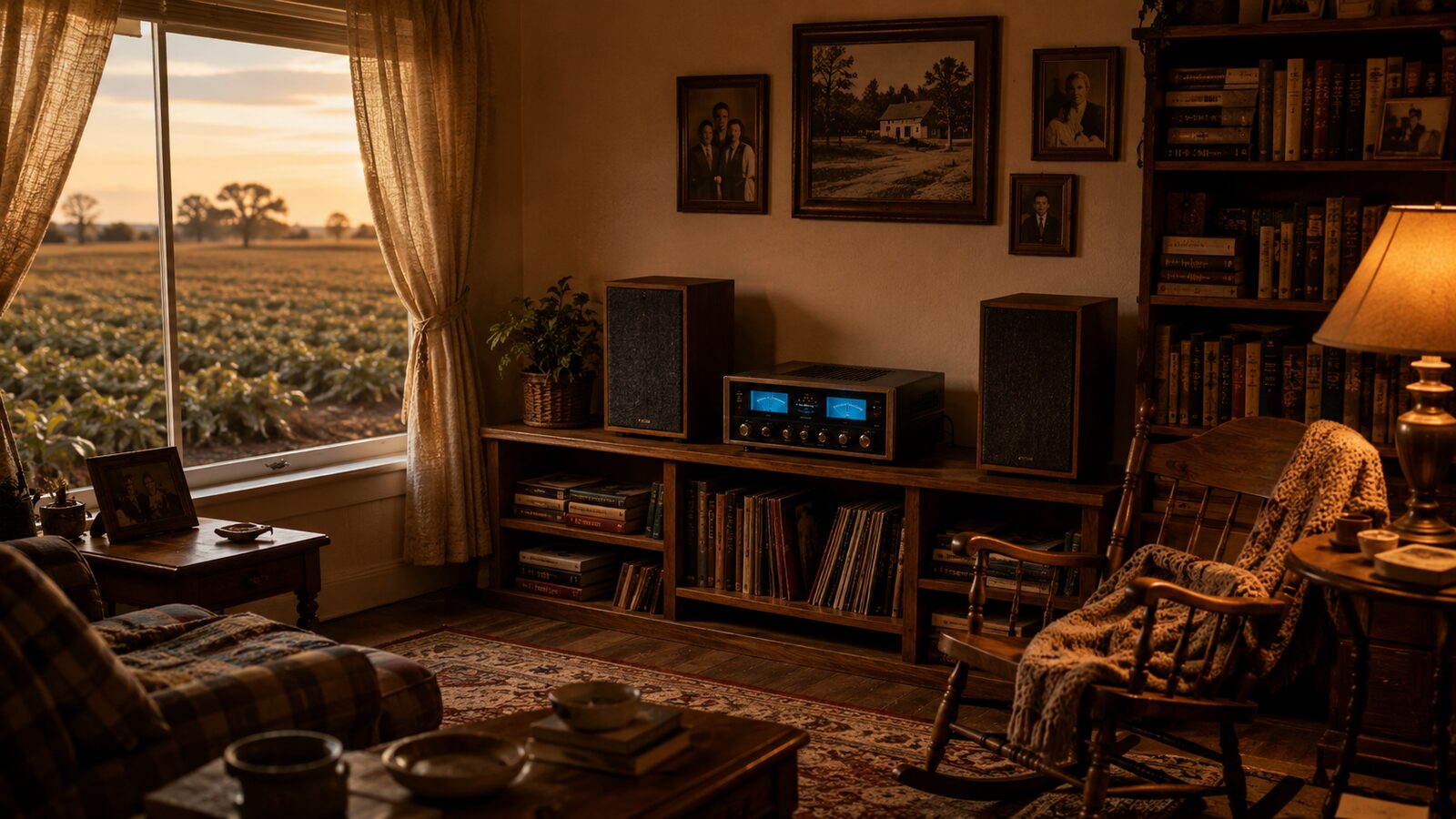
A McIntosh amplifier and AR1 speakers in Plains, Georgia — the most powerful man in the world listened on equipment anyone could afford.
The Story
Jimmy Carter was, by all accounts, a man who valued substance over display. His home in Plains, Georgia — where he lived before, during, and after the presidency — reflected that ethos: modest, comfortable, unpretentious. So did his audio system.
A McIntosh amplifier with blue meters sat on a simple wooden shelf alongside a pair of Acoustic Research AR1 speakers — the compact, bookshelf-style acoustic suspension speakers that Edgar Villchur and Henry Kloss introduced in 1954 and that fundamentally changed what home audio could be. No towering floorstanders. No six-figure system. Just honest American engineering in a room full of family photos and bookshelves.
Carter's son Chip once told the LA Times that his father listened to classical music and gospel on the system, often in the evening, in his rocking chair, after a day of building houses for Habitat for Humanity. The most consequential ears in the free world, served by equipment that valued accuracy over ostentation.
The Gear
The Acoustic Research AR1 was revolutionary. Before the AR1, high-fidelity speakers were enormous — horn-loaded cabinets that required dedicated rooms. The AR1 proved that a sealed "acoustic suspension" design could produce deep, accurate bass from a compact enclosure. It made good sound democratic. You didn't need a mansion. You needed a bookshelf.
The McIntosh amplifier — the specific model isn't well documented, but likely from the 1970s solid-state era — provided the clean, authoritative power that McIntosh is known for. It's telling that Carter chose McIntosh: American-made, built to last, no frills beyond what affects the sound. The brand matches the man.
The combination of AR speakers and McIntosh amplification was one of the most common high-quality setups of the 1960s and '70s — the kind of system a well-informed buyer would assemble after reading Stereo Review. Carter was that buyer: informed, deliberate, and uninterested in showing off.
We become not a melting pot but a beautiful mosaic.
— Jimmy Carter
Why It Matters
Carter's system is the antithesis of the celebrity rig. Where other entries on this list feature six-figure Wilson Audio speakers and rooms designed by acoustic consultants, Carter listened on speakers originally designed to prove that good sound didn't require enormous cabinets or enormous budgets. The AR1's legacy is democratization.
Original AR1 speakers are rare and collectible, trading for $1,000 to $3,000 per pair when they surface. Later AR models — the AR-3a, the AR-2ax — are more commonly available at $300 to $800 and carry the same acoustic suspension DNA. Vintage McIntosh amplifiers from the era range from $1,000 to $3,000.
For anyone intimidated by the prices on other pages of this site, Carter's setup is the reminder that the hobby isn't about spending. It's about listening. The 39th President of the United States didn't need Wilson Audio or Magico. He needed a good amplifier, honest speakers, and a quiet evening in Plains.
The Original Gear
Affiliate disclosure: We may earn a commission from qualifying purchases made through links on this page, at no extra cost to you.
Acoustic Research AR1
$1,000–$3,000 (rare)The speaker that made hi-fi accessible. Acoustic suspension bass from a bookshelf-sized cabinet. Revolutionary in 1954, still respected today.
McIntosh Amplifier (1970s era)
$1,000–$3,000American-made, built to last, no frills. Glass faceplate, blue meters, and the sound quality to justify every dollar.
Modern Alternatives
KEF LS50 Meta
~$1,500/pairThe modern AR1 — a compact bookshelf speaker that produces sound far beyond its size. Metamaterial absorption technology for cleaner treble.
View on Amazon →Marantz PM6007
~$600Affordable integrated amplifier with phono input and a warm, musical character. Honest hi-fi at a democratic price.
View on Amazon →