Paul McCartney
A Garrard turntable, a country home, and the modest setup of someone who made the records everyone else collects.
The Story
Paul McCartney doesn't need an expensive stereo to hear great music. He made the great music. But even the man who co-wrote "Yesterday" and "Let It Be" sits down to listen — and what he listens on is characteristically understated.
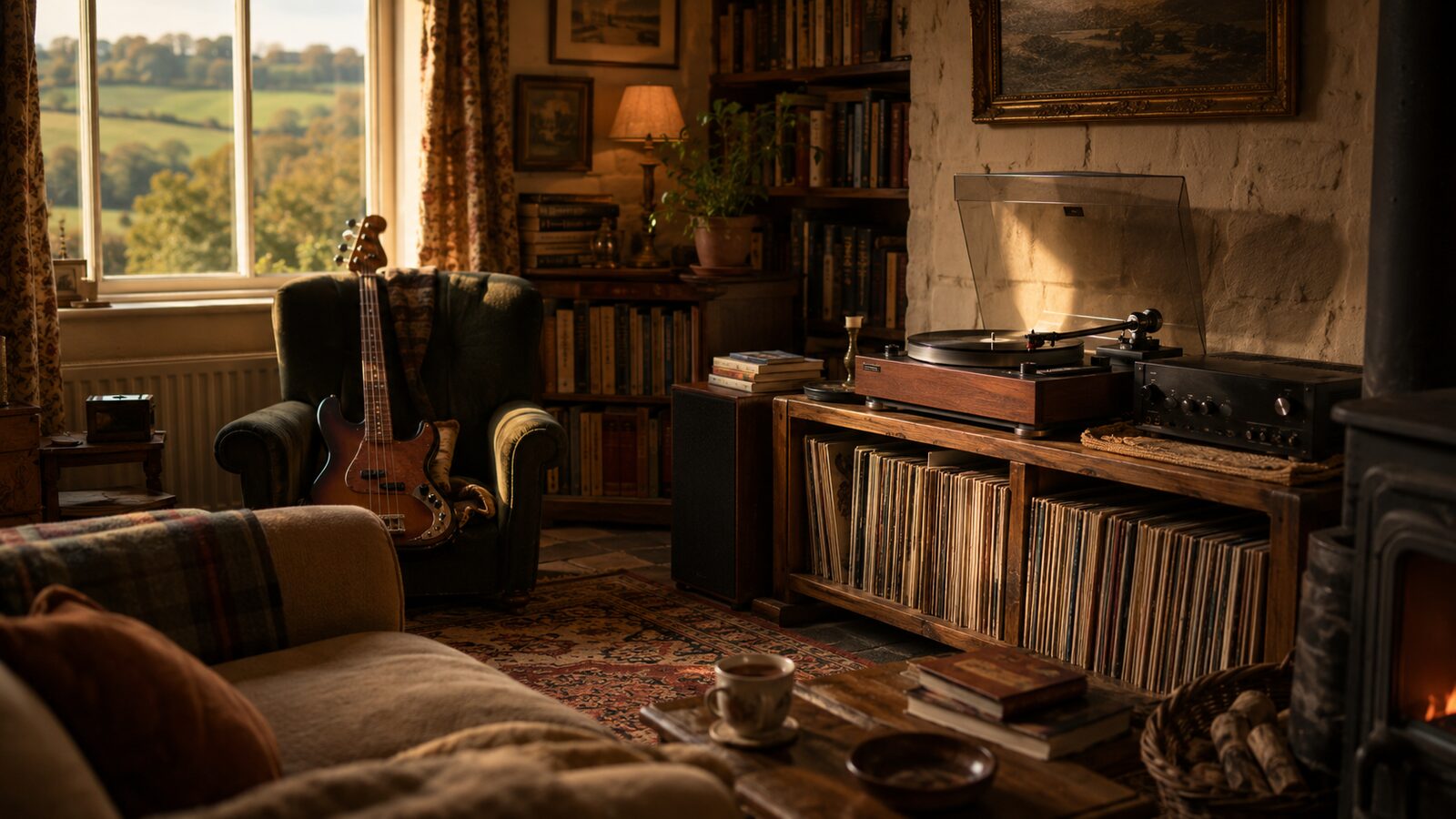
In his Sussex countryside home, a Garrard turntable sits on a wooden shelf alongside vinyl records, a simple amplifier, and the general atmosphere of a comfortable English country house. A bass guitar leans against a chair. Books fill the shelves. A cup of tea sits on the side table. Through the window: rolling green hills. The room is as far from a stadium as you can get, and that's the point.
McCartney's listening habits are well documented: he revisits Beatles recordings, listens to new music that catches his attention, and plays records for guests. The Garrard — a British turntable brand with deep roots in the UK's audio heritage — is a fitting choice for a man who is essentially part of Britain's cultural architecture.
The Gear
The Garrard turntable brand represents British audio engineering at its most storied. Garrard supplied turntables to the BBC, to recording studios, and to the homes of anyone who cared about sound in postwar Britain. Their idler-drive and later belt-drive models — the 301, the 401, and various consumer models — have become collector's items that command serious prices.
McCartney's specific Garrard model isn't precisely documented, but the brand's association with British cultural life makes it a natural fit. The same turntables that played Beatles test pressings at Abbey Road were Garrards. The continuity is poetic.
The rest of the system is deliberately modest. McCartney doesn't need to prove anything with his audio equipment. He proved everything with his music. The system's job is to play records faithfully, and a quality Garrard does exactly that.
And in the end, the love you take is equal to the love you make.
— The Beatles, "The End"
Why It Matters
McCartney's setup is the ultimate argument against equipment snobbery. The man who has access to any stereo system on earth — who could call McIntosh or Wilson Audio and have a system delivered tomorrow — listens on a Garrard turntable in a country cottage. The music matters. The system serves the music. End of story.
Garrard turntables range widely on the collector market. The legendary 301 commands $2,000 to $8,000 depending on plinth and condition. The 401 trades for $1,000 to $3,000. Later consumer models are available for $300 to $1,500. All share the same British engineering DNA and the same connection to the golden age of vinyl.
For collectors who feel overwhelmed by the price tags on other pages, McCartney's message is clear: buy what sounds good to you, put it in a room you love, and play the records that move you. That's all there is to it.
The Original Gear
Affiliate disclosure: We may earn a commission from qualifying purchases made through links on this page, at no extra cost to you.
Garrard Turntable
$300–$1,500 (consumer models)British engineering, BBC heritage, and the turntable brand that played the Beatles' test pressings. History on a platter.
Modern Alternatives
Rega Planar 3
~$1,100British turntable, hand-assembled in Essex. The modern Garrard alternative — understated, musical, and built by people who care about records.
View on Amazon →Cambridge Audio CXA81
~$1,000British integrated amplifier with 80W per channel, Bluetooth, and USB DAC. Clean, musical, and unpretentious. McCartney-approved energy.
View on Amazon →