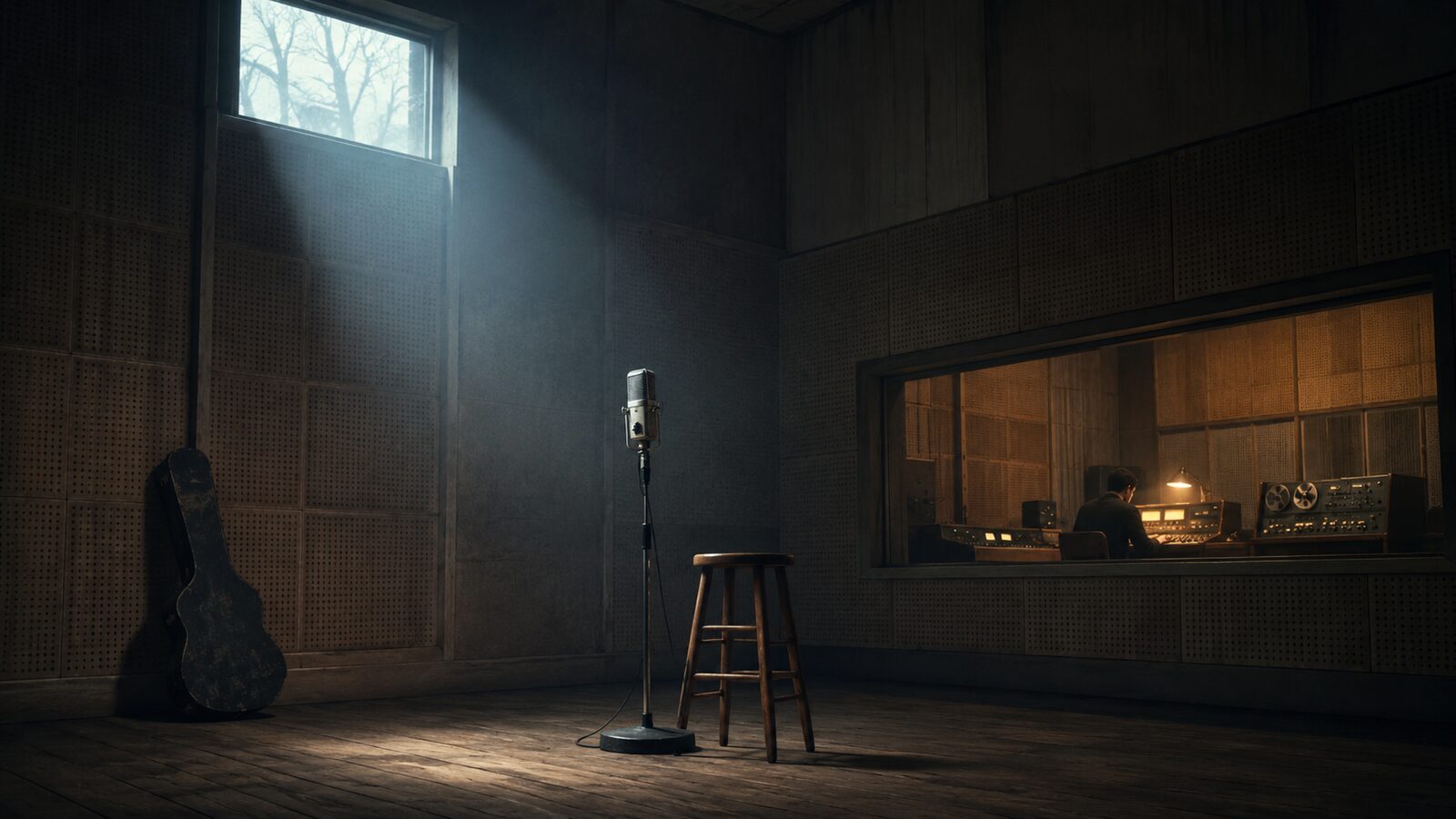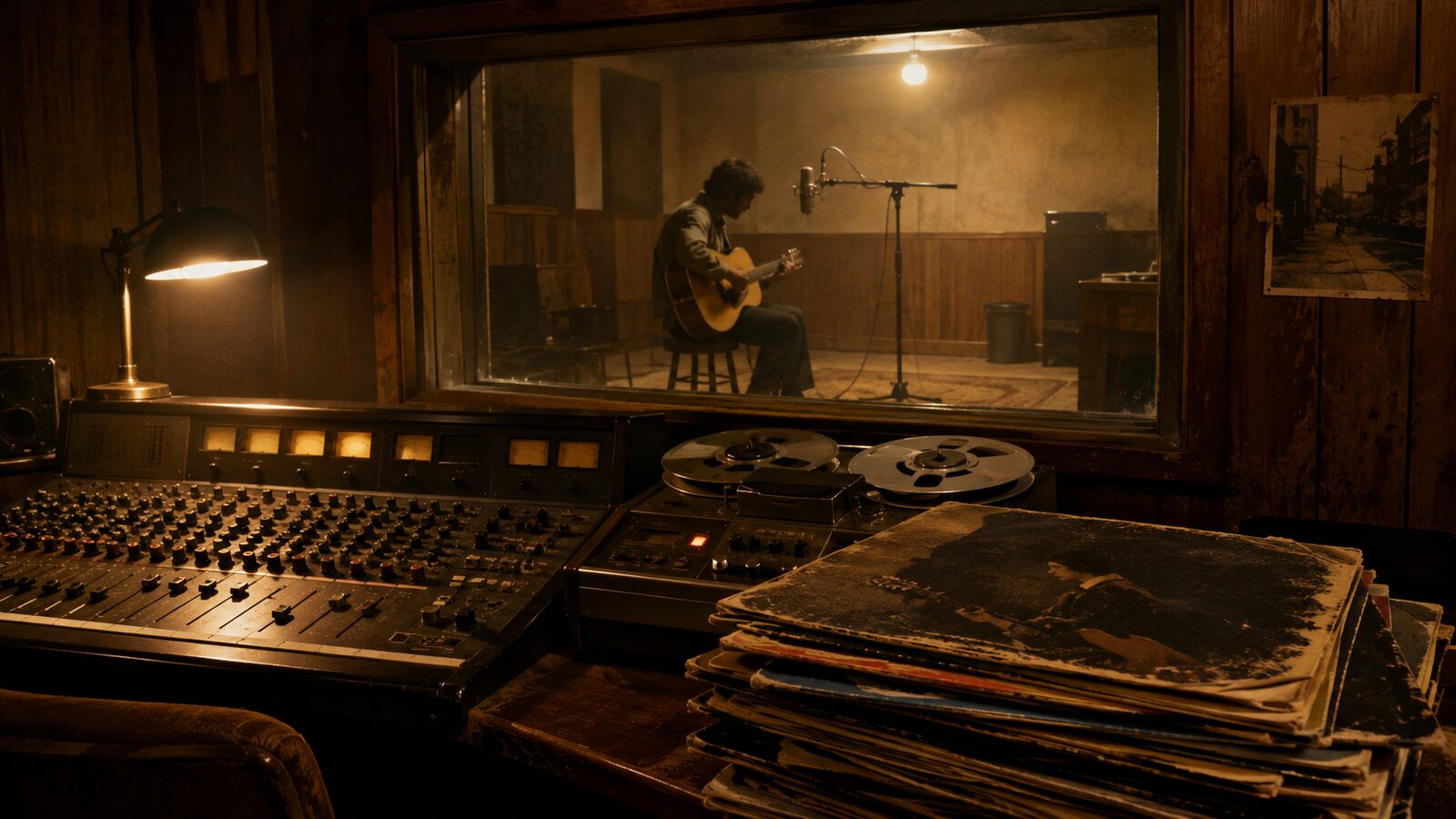
Sussex Records, Detroit, early 1970s. A modest mixing console and a tape machine sit in a wood-paneled control room. Through the glass, a lone musician sits on a stool with an acoustic guitar, facing a single microphone. The studio is quiet, unremarkable — the kind of room where a record could be made and forgotten in the same week. On the console, a stack of vinyl records with worn sleeves sits like cargo that's traveled across the world. Because it has.
Searching for Sugar Man tells the story of Sixto Rodriguez, a Detroit musician who recorded two albums for Sussex Records in the early 1970s. Both albums flopped in America. Unknown to Rodriguez, his music became massive in South Africa — spread entirely through vinyl copies, word of mouth, and bootleg tapes. For decades, South Africans believed Rodriguez was dead. The documentary follows two Cape Town fans who set out to discover what happened to him.
The film won the Academy Award for Best Documentary. But its deepest theme is about physical media: vinyl records and cassette tapes carried Rodriguez's music across an ocean, kept it alive for thirty years, and built a legend without the artist's knowledge or participation.
The Sussex Records studio equipment — visible in archival footage and recreations — represents the modest, workmanlike recording infrastructure of a small 1970s label. A compact mixing console, an Ampex or similar tape machine, and studio microphones. Nothing exotic, nothing expensive. The equipment captured Rodriguez's performances with the straightforward fidelity of the era: warm, slightly compressed, and honest.
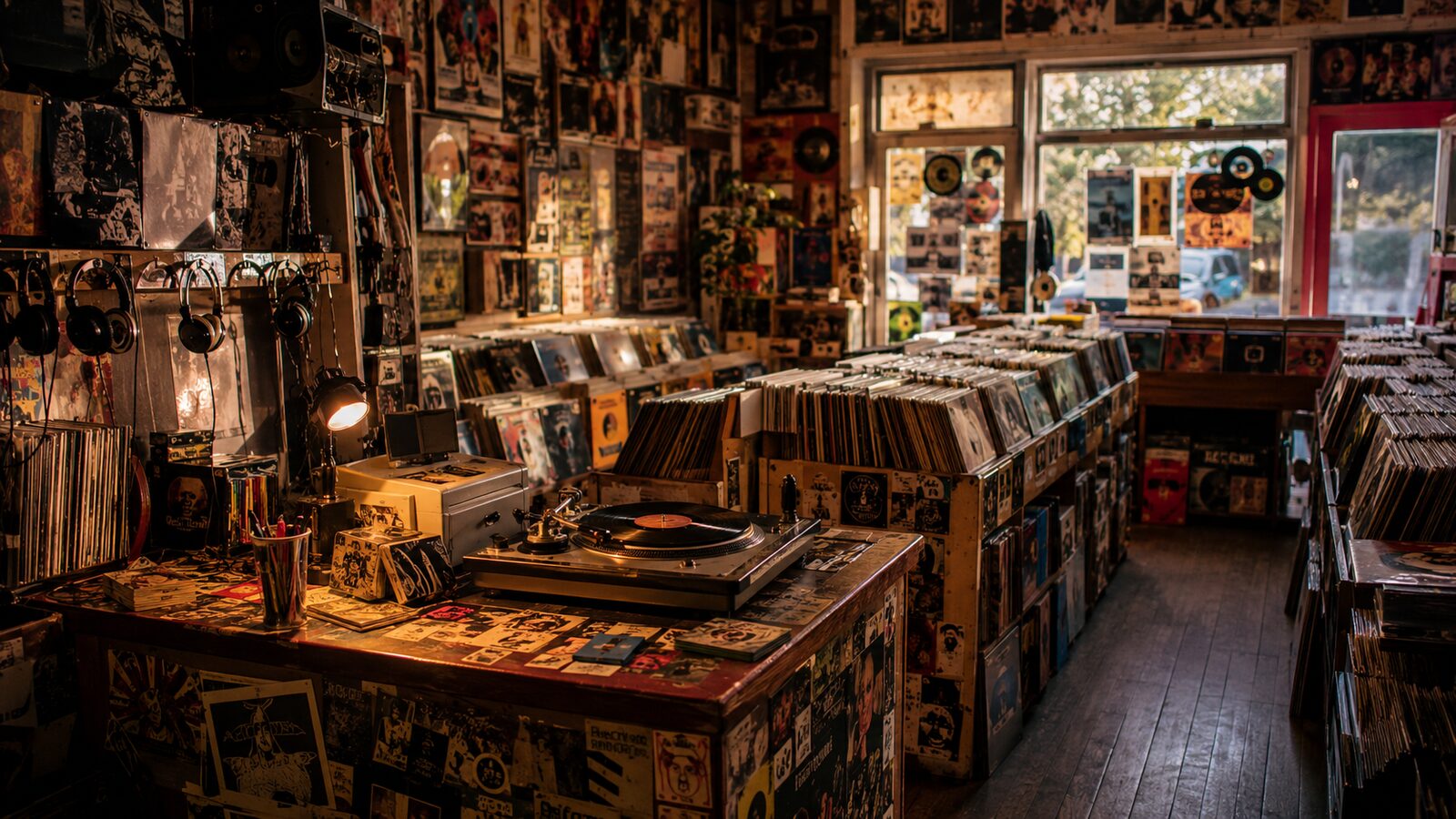
The vinyl records that carried Rodriguez's music to South Africa are the documentary's most important pieces of equipment. Physical vinyl — pressed at a plant, shipped in cardboard sleeves, sold in record stores, lent between friends — was the only distribution medium available. Each copy that arrived in South Africa was a physical object that someone had carried, mailed, or smuggled across borders.
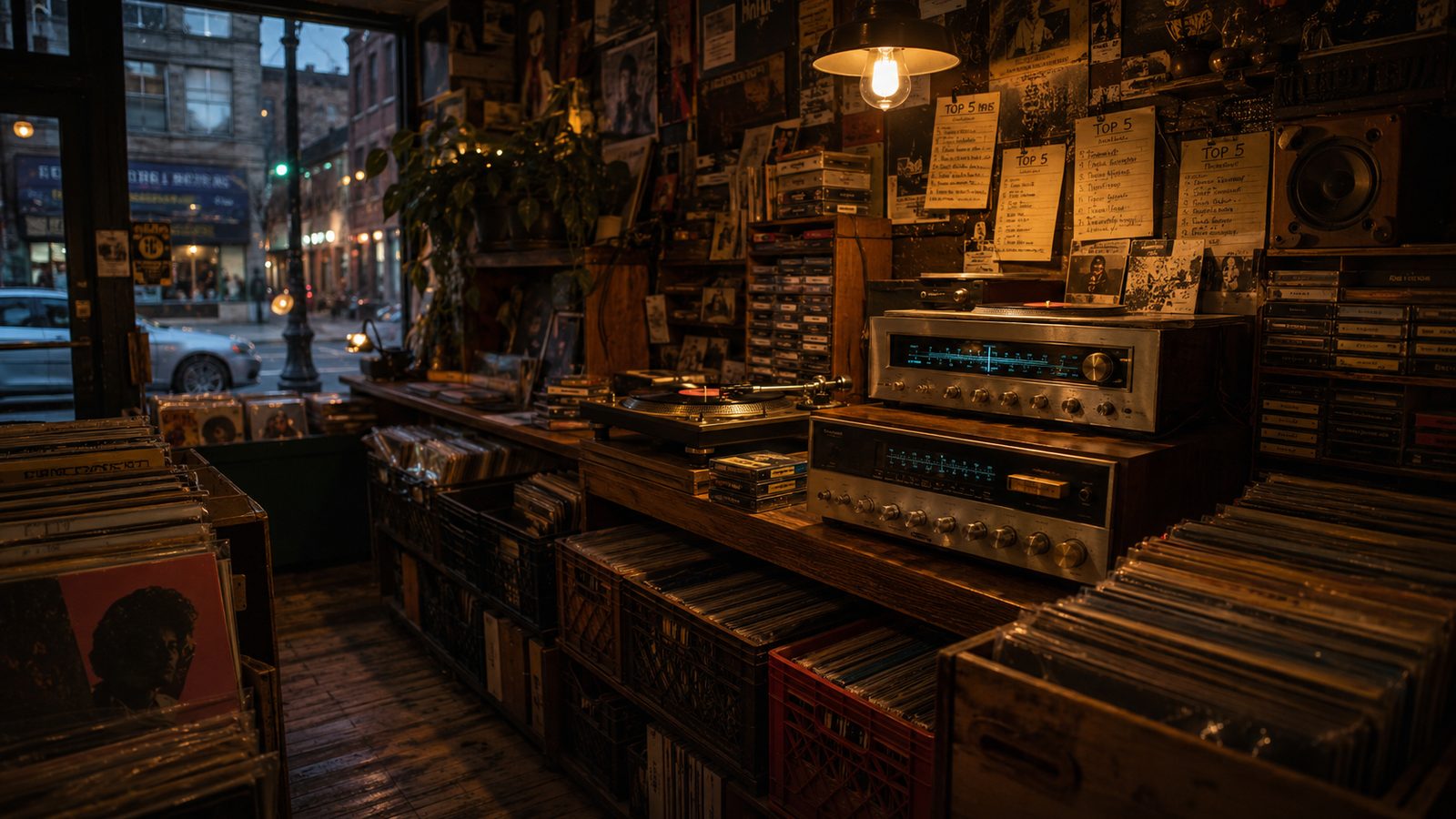
The turntables and tape decks of South African music fans — shown throughout the documentary — preserved Rodriguez's music through decades of apartheid, cultural isolation, and technological change. While the rest of the world forgot Rodriguez, South Africans kept his vinyl spinning.
I think the music spoke for itself. It crossed oceans.— Stephen Segerman, Searching for Sugar Man
Searching for Sugar Man is the most powerful argument for physical media ever made. Rodriguez's music survived because it existed as physical objects — vinyl records that could be carried, shared, copied to tape, and passed between generations. If his albums had been released only as digital files on a platform that went bankrupt, they would have vanished. Instead, pressed into vinyl, they became indestructible.
Rodriguez original pressings from Sussex Records now sell for $50 to $500 on eBay, with South African pressings commanding particular interest from collectors. Vintage turntables of the kind shown in the documentary range from $100 to $500. The film itself drove a massive surge in Rodriguez vinyl sales — Cold Fact re-entered charts worldwide after the documentary's release.
For anyone who collects vinyl, this is the ultimate validation: a record you bought at a garage sale might contain music that changed a country. The gear doesn't have to be expensive. The studio doesn't have to be famous. The artist doesn't even have to know. The vinyl carries the music forward, regardless.
Affiliate disclosure: We may earn a commission from qualifying purchases made through links on this page, at no extra cost to you.
The physical records that carried Rodriguez's music from Detroit to South Africa — pressed in vinyl, shipped across an ocean, and kept alive for three decades by fans who didn't know the artist was still alive.
Fully automatic belt-drive turntable. The entry point for vinyl listening — simple, reliable, and ready to spin records that might change your life.
View on Amazon →Powered bookshelf speakers that pair perfectly with any turntable. Warm, clear, and affordable enough to start a vinyl journey.
View on Amazon →Archival-quality inner sleeves to protect your vinyl. Because the records you buy today might be someone's treasure in fifty years.
View on Amazon →As an Amazon Associate we earn from qualifying purchases.